

More about the book
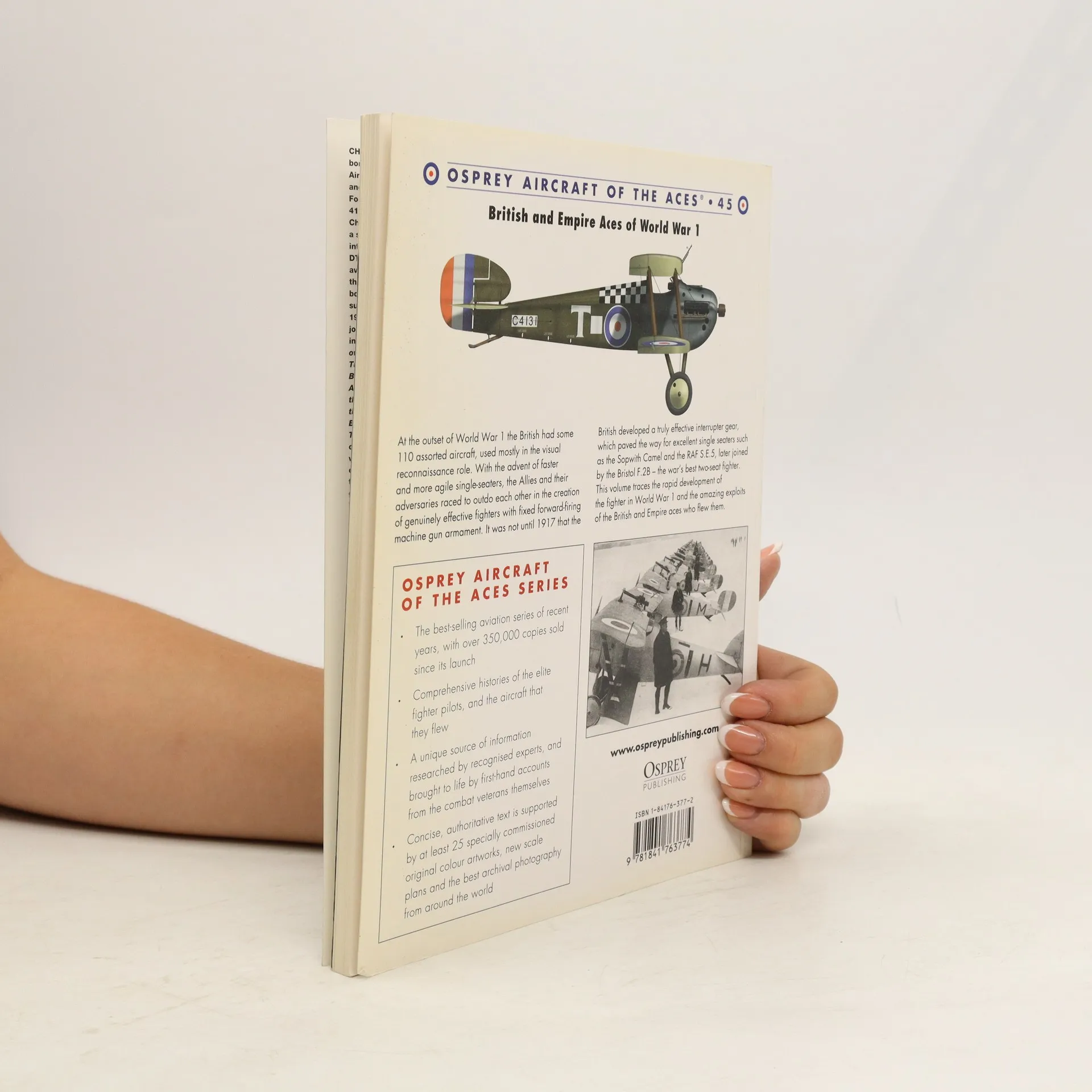
At the outset of World War I the British had some 110 assorted aircraft, used mostly for the visual reconnaissance role. With the advent of faster and more agile single-seaters, the Allies and their adversaries raced to outdo each other in the creation of genuinely effective fighters with fixed forward-firing machine gun armament. It was not until 1917 that the British developed a truly effective interrupter gear, which paved the way for excellent single seaters such as the Sopwith Triplane Camel and the RAF S.E.5., later joined by the Bristol F.2B - the war's best two-seat fighter. This volume traces the rapid development of the fighter in World War I and the amazing exploits of the British and Empire aces who flew them.
Book purchase
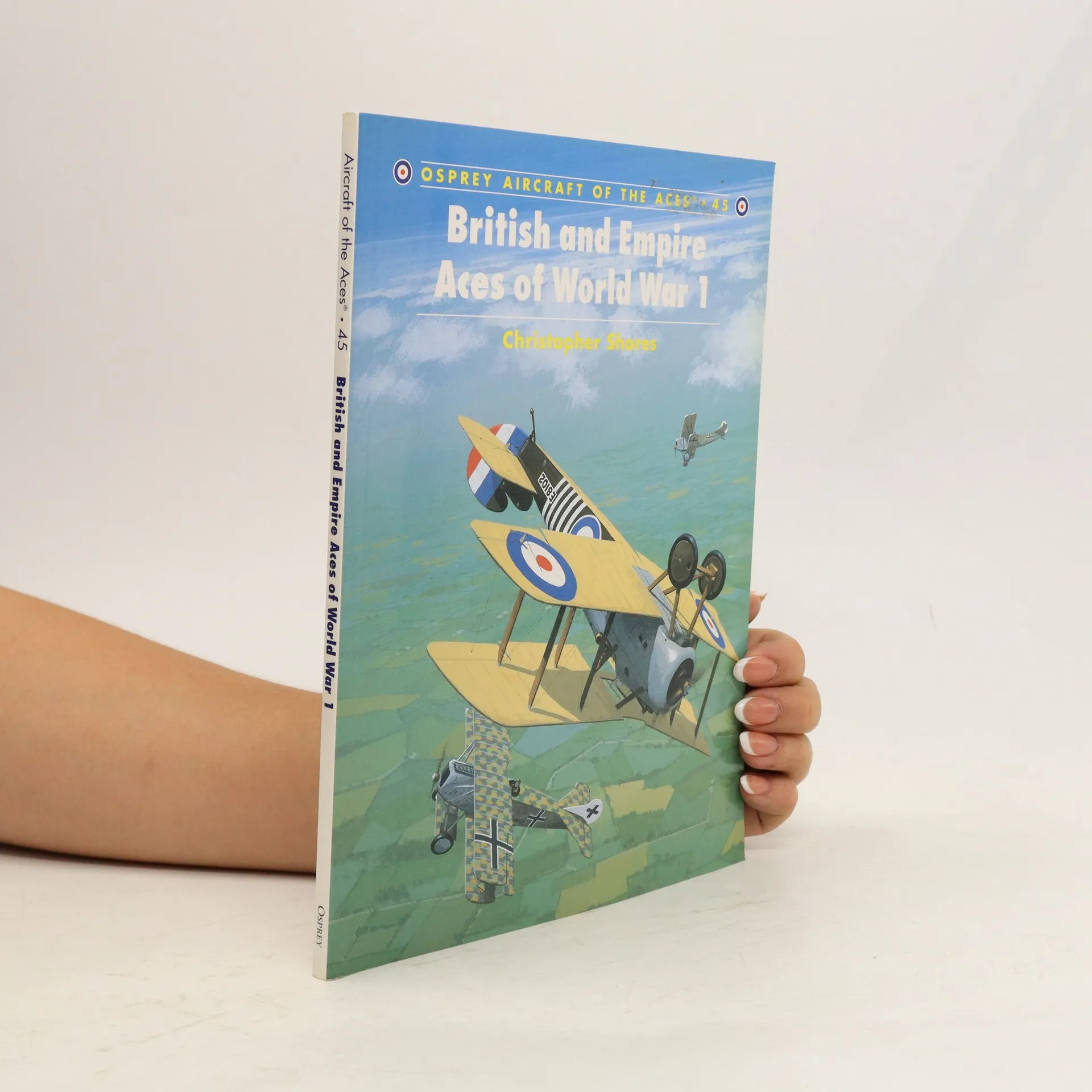
British and Empire Aces of World War I, Christopher F. Shores
- Language

- Released
- 2001
- Binding
- (Paperback)
Payment methods
We’re missing your review here.
- Title
- British and Empire Aces of World War I
- Language
- English
- Authors
- Christopher F. Shores
- Publisher
- Osprey Publishing
- Released
- 2001
- Format
- Paperback
- Pages
- 96
- ISBN10
- 1841763772
- ISBN13
- 9781841763774
- Series
- Tags
- Military Fiction
- Rating
- 4.1 out of 5
- Description
- At the outset of World War I the British had some 110 assorted aircraft, used mostly for the visual reconnaissance role. With the advent of faster and more agile single-seaters, the Allies and their adversaries raced to outdo each other in the creation of genuinely effective fighters with fixed forward-firing machine gun armament. It was not until 1917 that the British developed a truly effective interrupter gear, which paved the way for excellent single seaters such as the Sopwith Triplane Camel and the RAF S.E.5., later joined by the Bristol F.2B - the war's best two-seat fighter. This volume traces the rapid development of the fighter in World War I and the amazing exploits of the British and Empire aces who flew them.