

Parameters
- 118 pages
- 5 hours of reading
More about the book
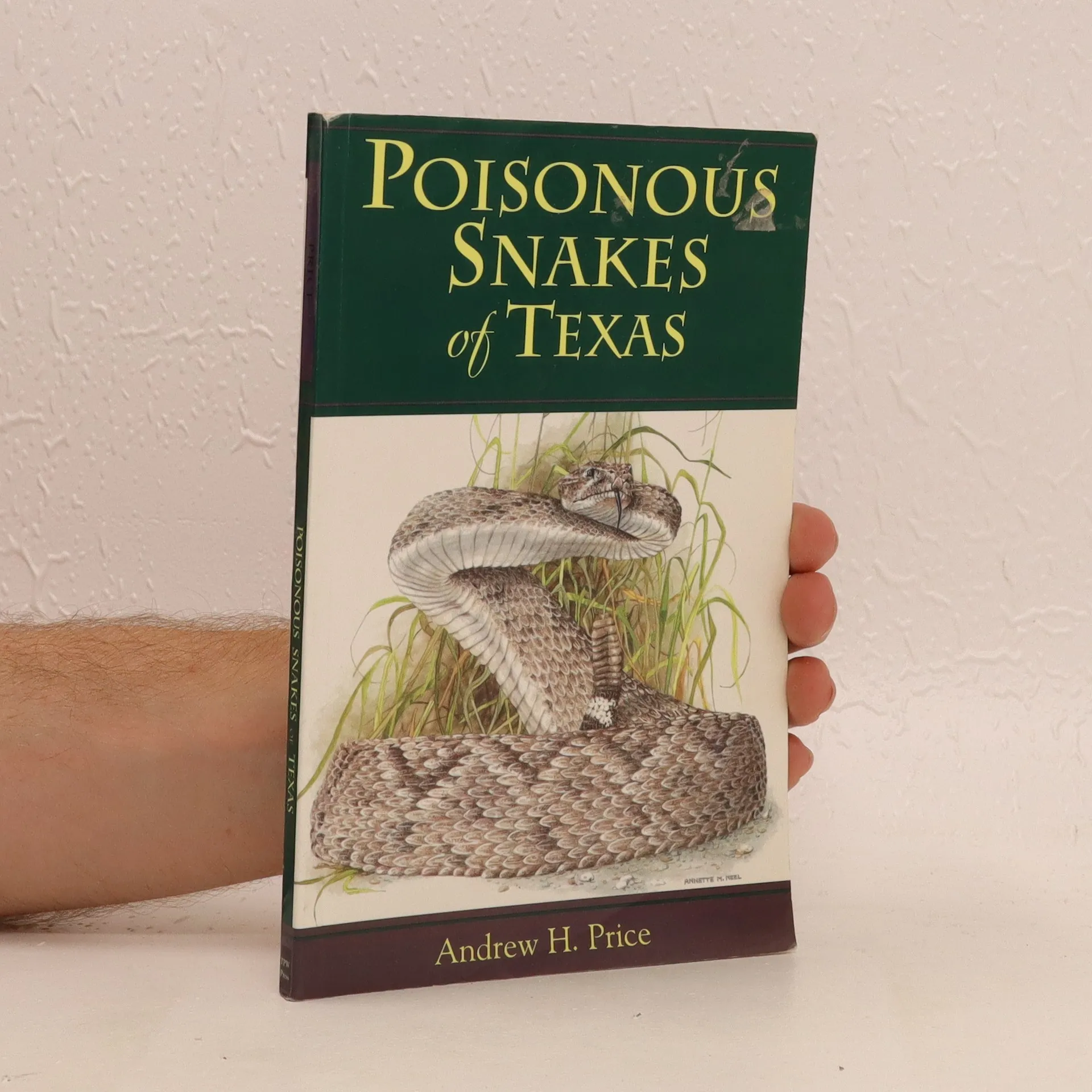
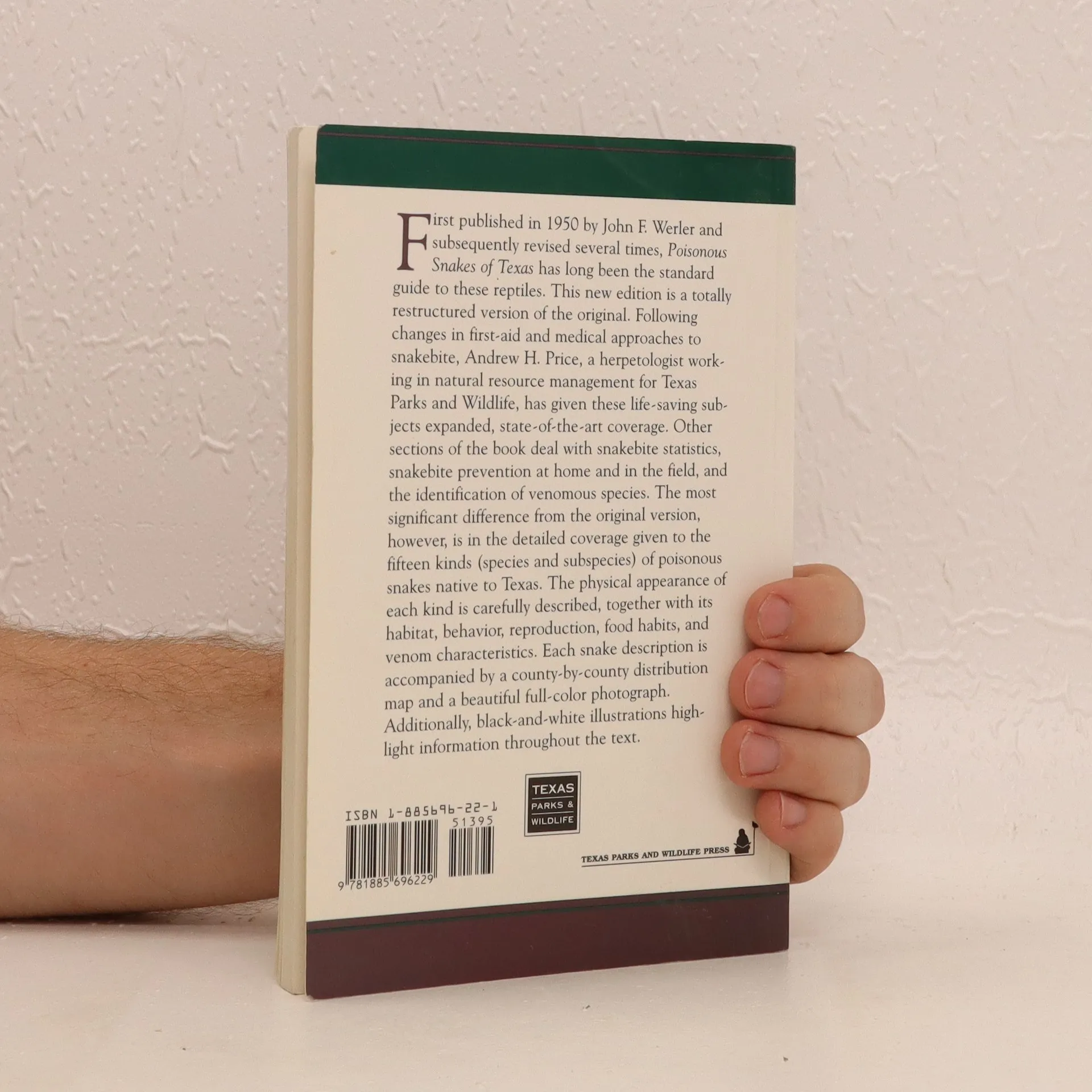
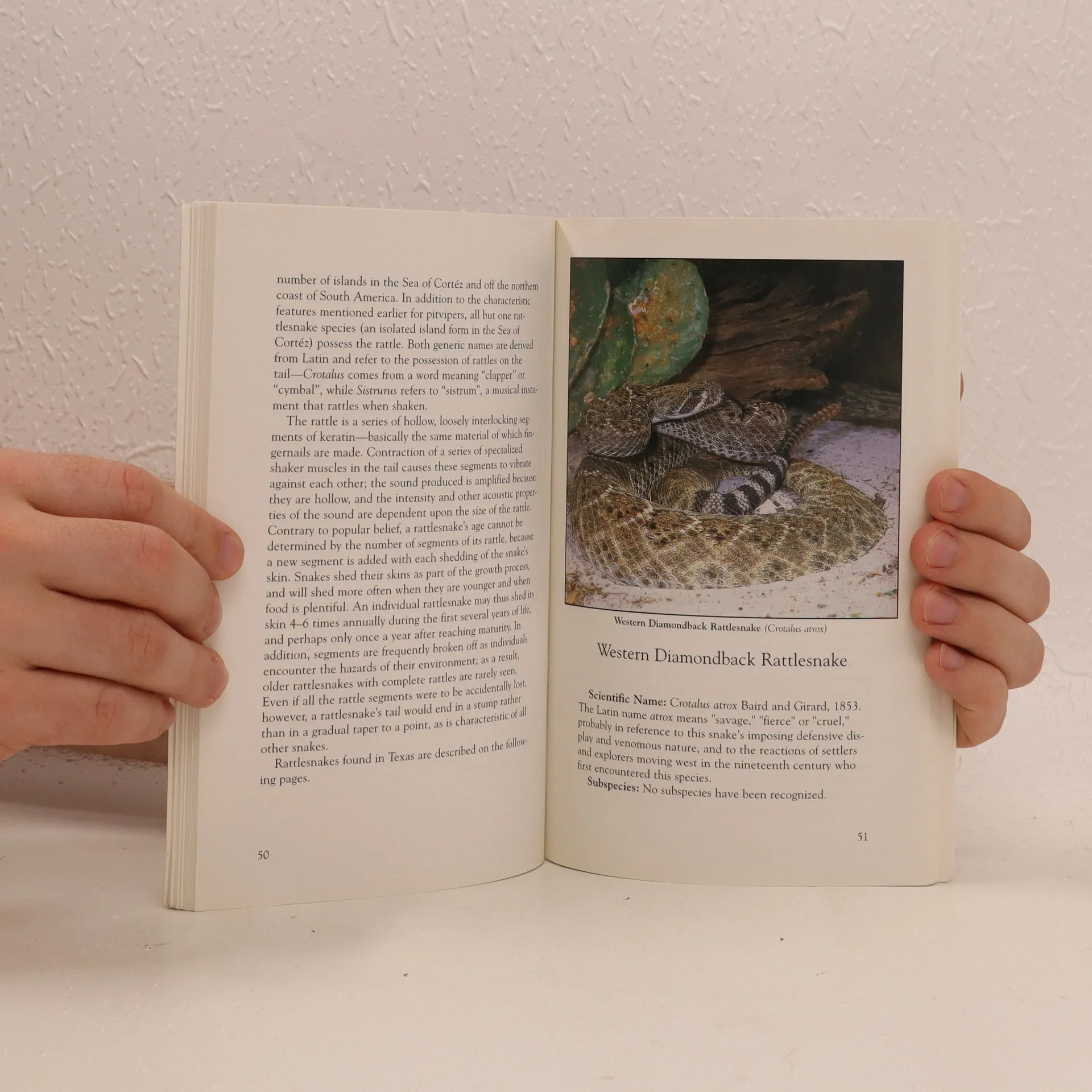
First published in 1950 by John F. Werler and subsequently revised several times, Poisonous Snakes of Texas has long been the standard guide to these reptiles. This new edition is a totally restructured version of the original. Following changes in first-aid and medical approaches to snakebite, Andrew H. Price, a herpetologist working in natural resource management for Texas Parks and Wildlife, has given these life-saving subjects expanded, "state-of-the-art" coverage. Other sections of the book deal with snakebite statistics, snakebite prevention at home and in the field, and the identification of venomous species. The most significant difference from the original version, however, is in the detailed coverage given to the fifteen kinds of poisonous snakes native to Texas. The physical appearance of each species is carefully described, together with its habitat, behavior, reproduction, food habits, and venom characteristics. Each snake description is accompanied by a county-by-county distribution map and a beautiful full-color photograph. Additionally, black-and-white illustrations highlight information throughout the text.


Book purchase
Poisonous Snakes of Texas, Andrew Hoyt Price, John E. Werler
- Language

- Released
- 1998
- Binding
- (Paperback)
Payment methods
We’re missing your review here.
- Language
- English
- Authors
- Andrew Hoyt Price, John E. Werler
- Publisher
- University of Texas Press
- Released
- 1998
- Format
- Paperback
- Pages
- 118
- ISBN10
- 1885696221
- ISBN13
- 9781885696229
- Tags
- Science
- Rating
- 4.6 out of 5
- Description
- First published in 1950 by John F. Werler and subsequently revised several times, Poisonous Snakes of Texas has long been the standard guide to these reptiles. This new edition is a totally restructured version of the original. Following changes in first-aid and medical approaches to snakebite, Andrew H. Price, a herpetologist working in natural resource management for Texas Parks and Wildlife, has given these life-saving subjects expanded, "state-of-the-art" coverage. Other sections of the book deal with snakebite statistics, snakebite prevention at home and in the field, and the identification of venomous species. The most significant difference from the original version, however, is in the detailed coverage given to the fifteen kinds of poisonous snakes native to Texas. The physical appearance of each species is carefully described, together with its habitat, behavior, reproduction, food habits, and venom characteristics. Each snake description is accompanied by a county-by-county distribution map and a beautiful full-color photograph. Additionally, black-and-white illustrations highlight information throughout the text.