




More about the book
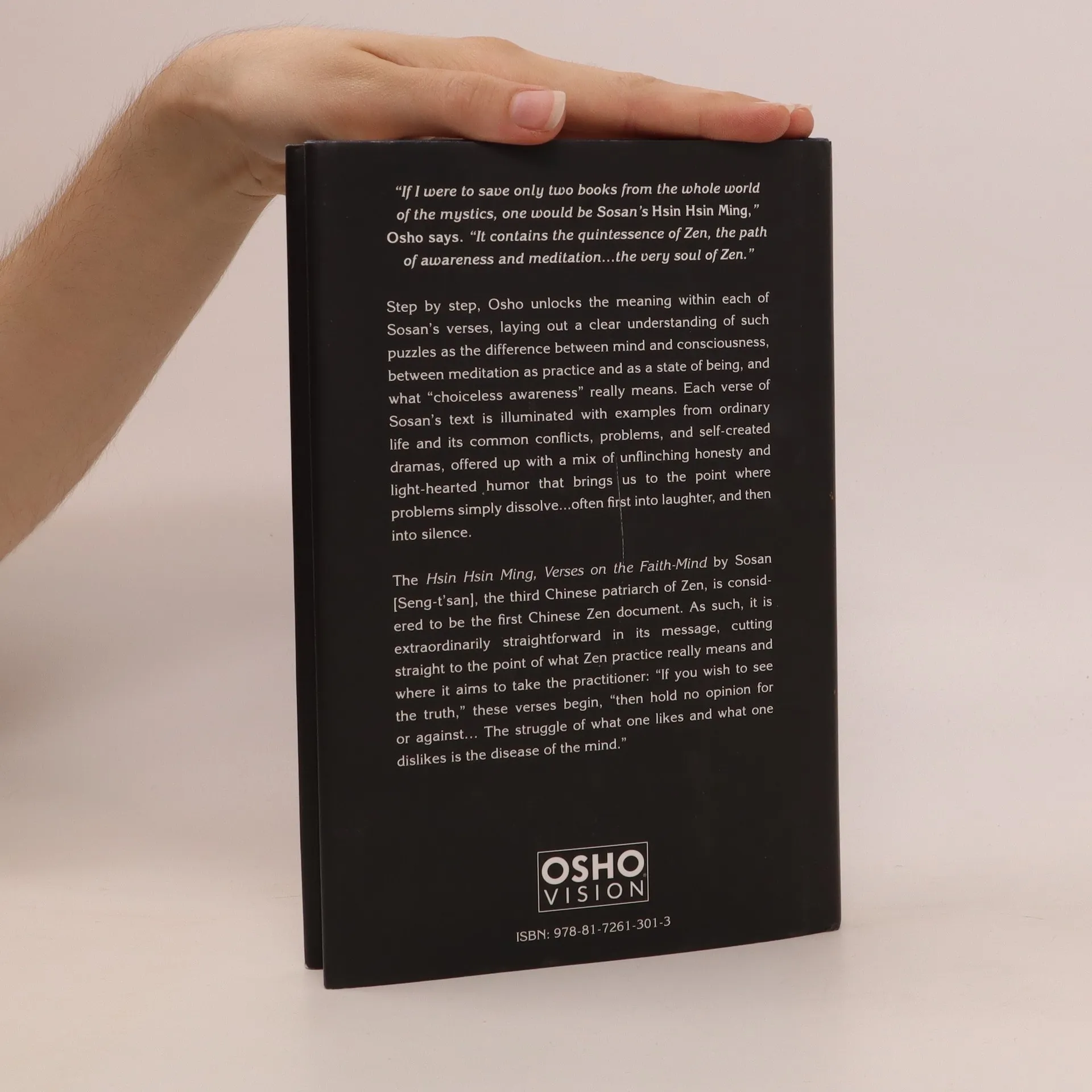
The Hsin Hsin Ming, Verses on the Faith-Mind by Sosan [Seng-t'san] the third Chinese patriarch of Zen, is considered to be the first Chinese Zen document. As such, it is extraordinarily straightforward in its message, cutting straight to the point of what Zen practice really means and where it aims to take the practitioner - to a state of thought-free awareness in the present moment, without judgment or attachment: "If you wish to see the truth," these verses begin, "then hold no opinion for or against?. The struggle of what one likes and what one dislikes is the disease of the mind." Step by step, Osho unlocks the meaning within each of Sosan's verses, showing their relevance and practical application to daily living. Along the way he lays out a clear understanding and approach to such puzzles as the difference between mind and consciousness, between meditation as practice and as a state of being, and what choiceless awareness really means in everyday life and relating. Each verse of Sosan's text is illuminated with examples from ordinary life and its common conflicts, problems, and self-created dramas, offered up with a mix of unflinching honesty and light-hearted humor that brings us to the point where problems simply dissolve ... often first into laughter, and then into silence.


Book purchase
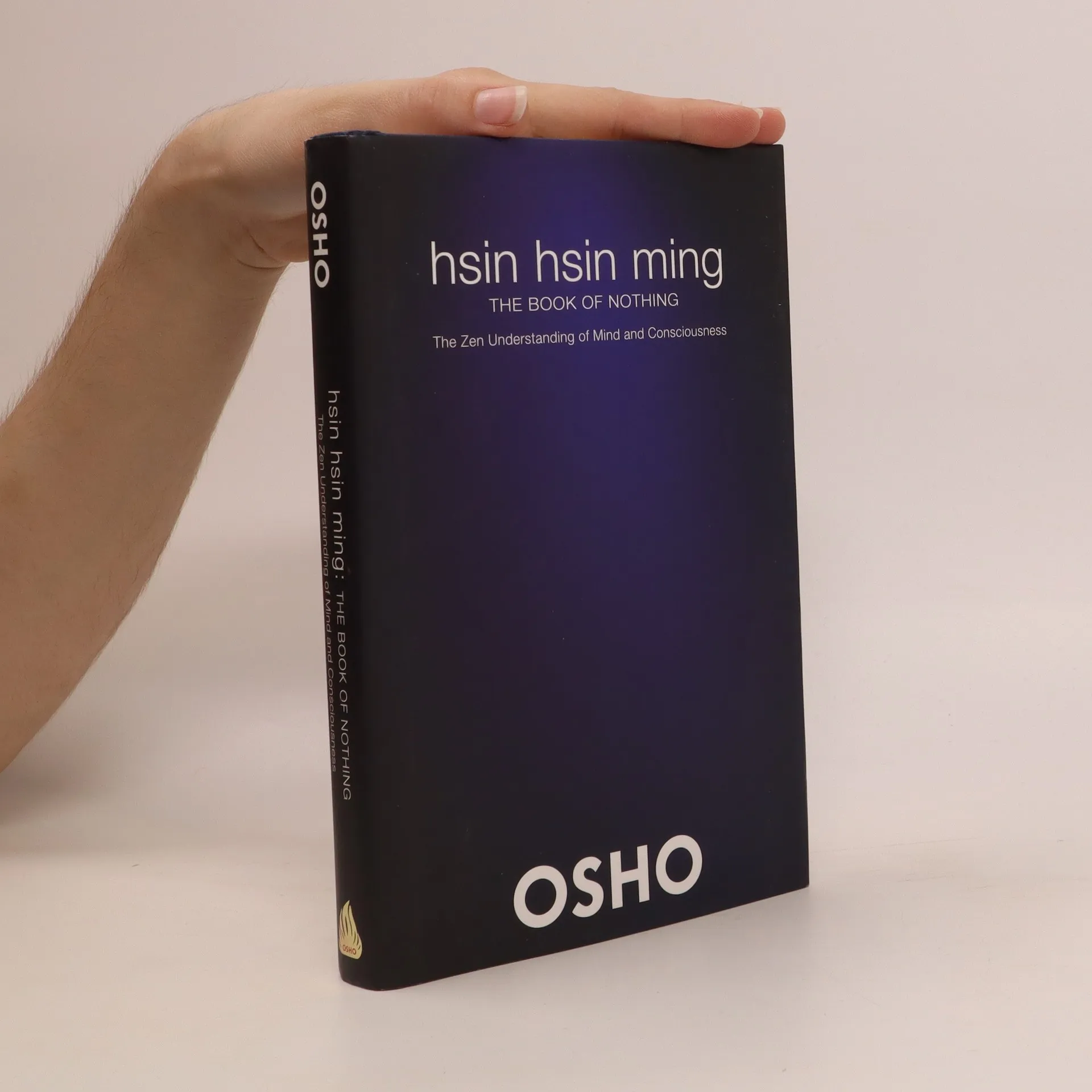
Hsin hsin ming: the book of nothing, Ošó
- Language

- Released
- 2016
- product-detail.submit-box.info.binding
- (Hardcover)
Payment methods
We’re missing your review here.
- Language
- English
- Authors
- Ošó
- Publisher
- Osho
- Released
- 2016
- Format
- Hardcover
- Pages
- 230
- ISBN10
- 8172613016
- ISBN13
- 9788172613013
- Series
- Rating
- 4.35 out of 5
- Description
- The Hsin Hsin Ming, Verses on the Faith-Mind by Sosan [Seng-t'san] the third Chinese patriarch of Zen, is considered to be the first Chinese Zen document. As such, it is extraordinarily straightforward in its message, cutting straight to the point of what Zen practice really means and where it aims to take the practitioner - to a state of thought-free awareness in the present moment, without judgment or attachment: "If you wish to see the truth," these verses begin, "then hold no opinion for or against?. The struggle of what one likes and what one dislikes is the disease of the mind." Step by step, Osho unlocks the meaning within each of Sosan's verses, showing their relevance and practical application to daily living. Along the way he lays out a clear understanding and approach to such puzzles as the difference between mind and consciousness, between meditation as practice and as a state of being, and what choiceless awareness really means in everyday life and relating. Each verse of Sosan's text is illuminated with examples from ordinary life and its common conflicts, problems, and self-created dramas, offered up with a mix of unflinching honesty and light-hearted humor that brings us to the point where problems simply dissolve ... often first into laughter, and then into silence.