

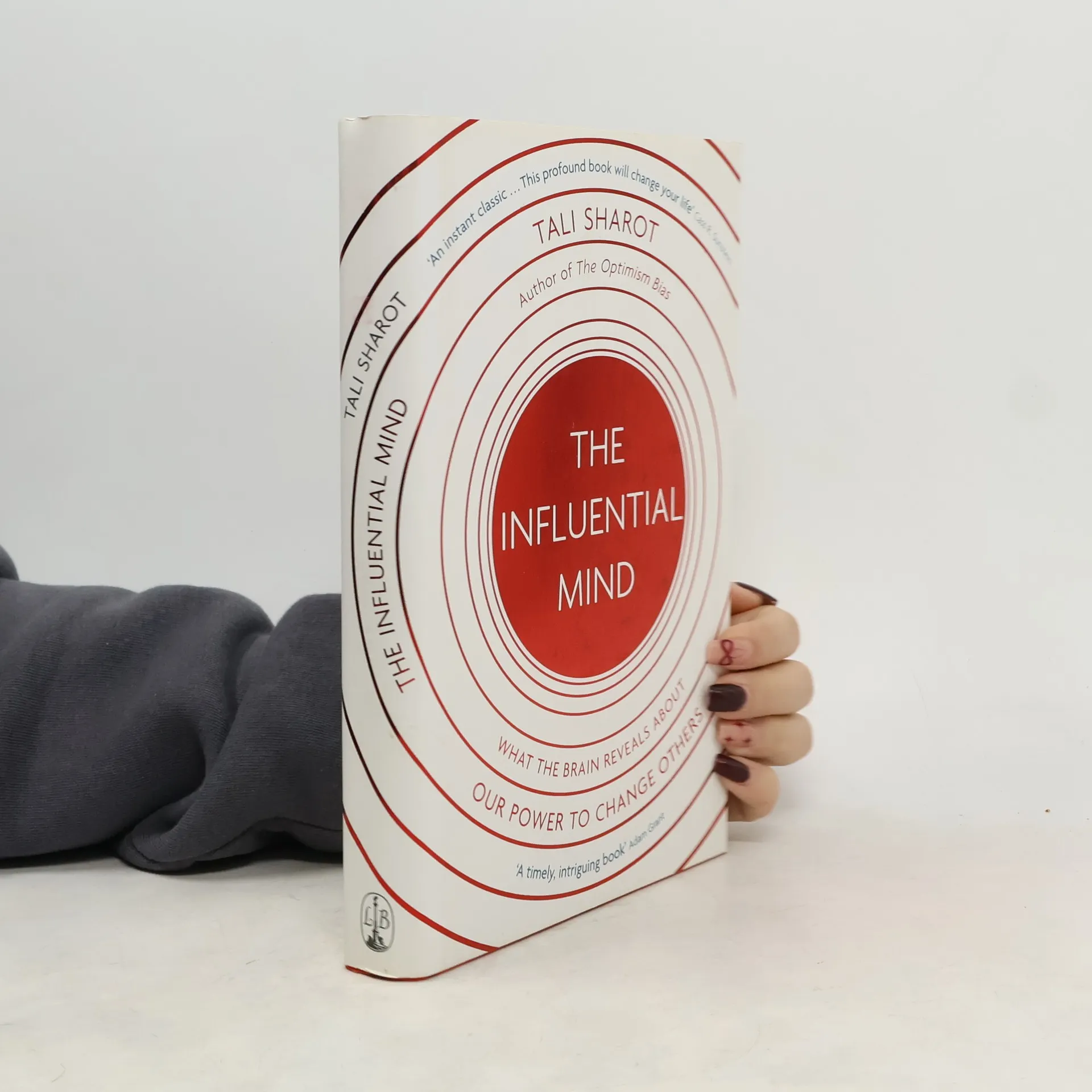


More about the book
In The Influential Mind , neuroscientist Tali Sharot takes us on a thrilling exploration of the nature of influence. We all have a duty to affect others―from the classroom to the boardroom to social media. But how skilled are we at this role, and can we become better? It turns out that many of our instincts―from relying on facts and figures to shape opinions, to insisting others are wrong or attempting to exert control―are ineffective, because they are incompatible with how people’s minds operate. Sharot shows us how to avoid these pitfalls, and how an attempt to change beliefs and actions is successful when it is well-matched with the core elements that govern the human brain. Sharot reveals the critical role of emotion in influence, the weakness of data and the power of curiosity. Relying on the latest research in neuroscience, behavioral economics and psychology, the book provides fascinating insight into the complex power of influence, good and bad.




Book purchase
The Influential Mind, Tali Sharot
- Language

- Released
- 2017
- product-detail.submit-box.info.binding
- (Hardcover)
Payment methods
We’re missing your review here.
- Title
- The Influential Mind
- Subtitle
- What the Brain Reveals About Our Power to Change Others
- Language
- English
- Authors
- Tali Sharot
- Publisher
- Little, Brown
- Released
- 2017
- Format
- Hardcover
- Pages
- 256
- ISBN10
- 1408706067
- ISBN13
- 9781408706060
- Series
- Tags
- Non-Fiction, Business, Self-Help, Psychological Topics, Personal Growth, Science, Leadership, Neuroscience
- Rating
- 4.05 out of 5
- Description
- In The Influential Mind , neuroscientist Tali Sharot takes us on a thrilling exploration of the nature of influence. We all have a duty to affect others―from the classroom to the boardroom to social media. But how skilled are we at this role, and can we become better? It turns out that many of our instincts―from relying on facts and figures to shape opinions, to insisting others are wrong or attempting to exert control―are ineffective, because they are incompatible with how people’s minds operate. Sharot shows us how to avoid these pitfalls, and how an attempt to change beliefs and actions is successful when it is well-matched with the core elements that govern the human brain. Sharot reveals the critical role of emotion in influence, the weakness of data and the power of curiosity. Relying on the latest research in neuroscience, behavioral economics and psychology, the book provides fascinating insight into the complex power of influence, good and bad.