

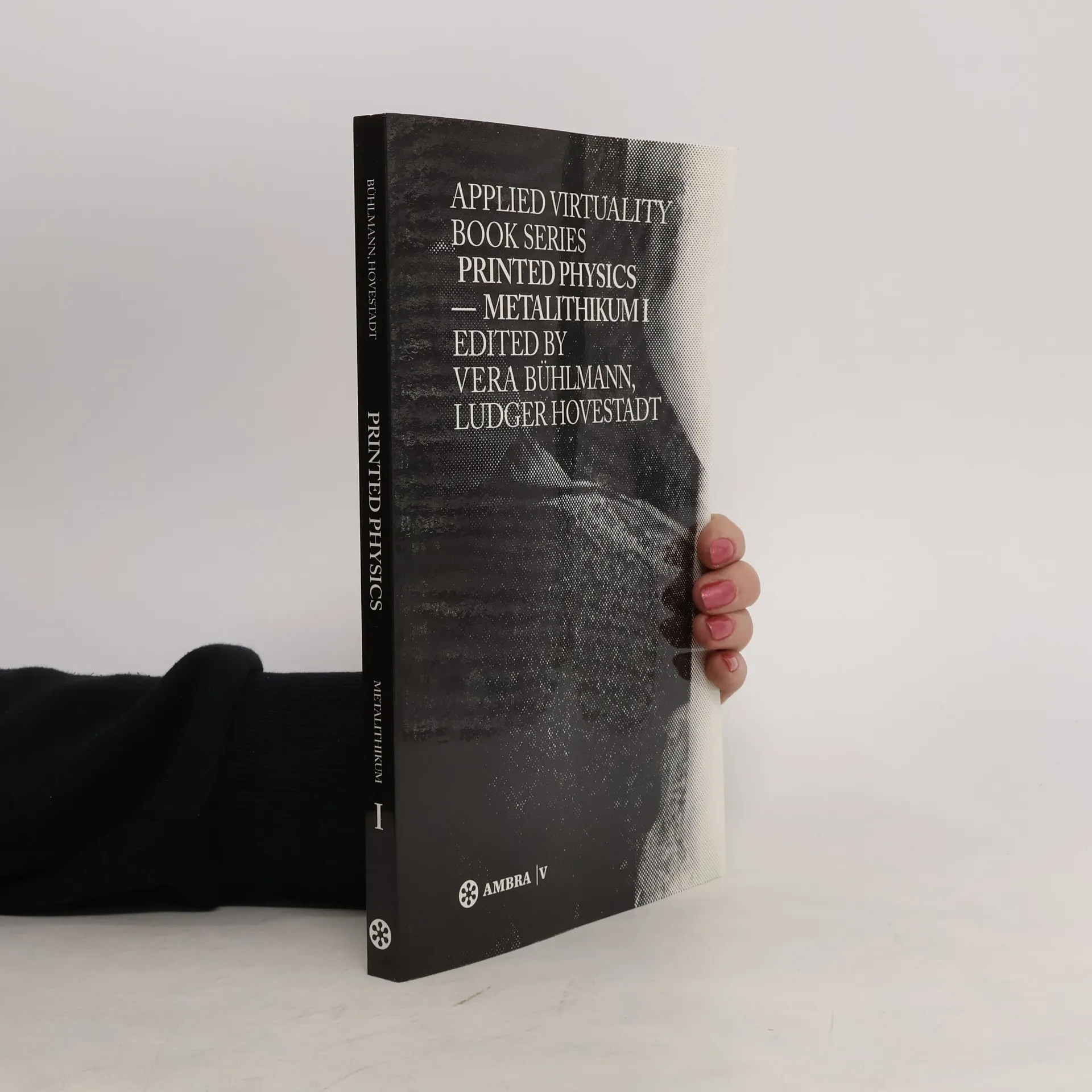
Applied Virtuality Book Series. Printed Physics - Metalithikum I
Authors
- Various authors
More about the book
The humanities, natural and technical sciences seemingly have little to say to each other - despite all the trans-disciplinary efforts. The "Applied Virtuality" series will comprise four volumes that create and examine a discourse on the correlations between the larger contexts of ther present. Printed Physics, the first volume, begins with the discussion of developments in information technology that make the physical behavior of matter technologically programmable, allow for its factual construction, industrial production and its determination with symbols. Is it possible that a revitalization of the field of physics looms in the future similar to that which took place with geometry in the 19th century?
Book purchase
Applied Virtuality Book Series. Printed Physics - Metalithikum I, Various authors
- Language

- Released
- 2012
- Binding
- (Paperback)
Payment methods
No one has rated yet.
- Title
- Applied Virtuality Book Series. Printed Physics - Metalithikum I
- Language
- English
- Authors
- Various authors
- Publisher
- Ambra Verlag
- Released
- 2012
- Format
- Paperback
- Pages
- 232
- ISBN10
- 3990435701
- ISBN13
- 9783990435700
- Series
- Categories
- Description
- The humanities, natural and technical sciences seemingly have little to say to each other - despite all the trans-disciplinary efforts. The "Applied Virtuality" series will comprise four volumes that create and examine a discourse on the correlations between the larger contexts of ther present. Printed Physics, the first volume, begins with the discussion of developments in information technology that make the physical behavior of matter technologically programmable, allow for its factual construction, industrial production and its determination with symbols. Is it possible that a revitalization of the field of physics looms in the future similar to that which took place with geometry in the 19th century?