

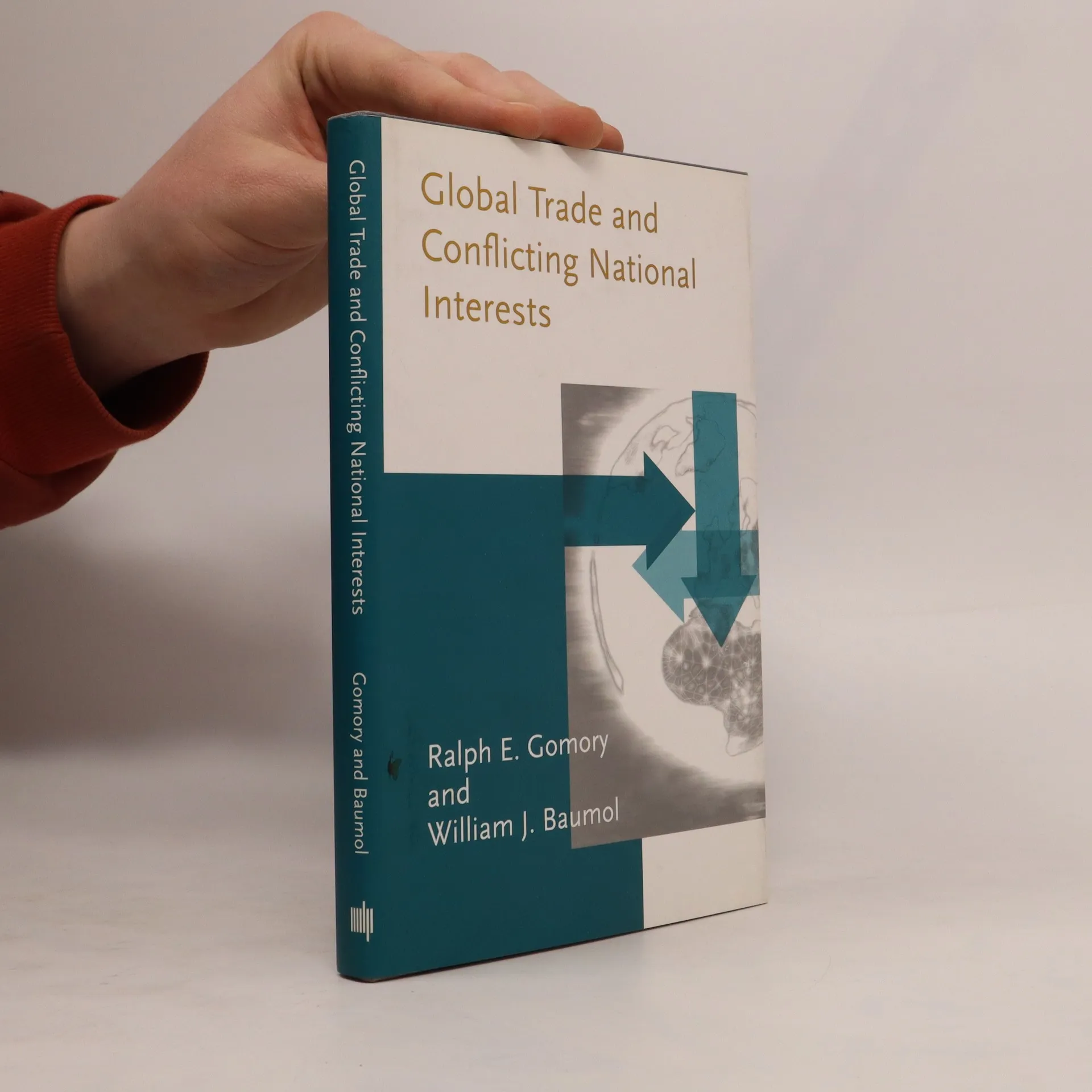


Global trade and conflicting national interests
Book rating
More about the book
In this book Ralph Gomory and William Baumol adapt classical trade models to the modern world economy. Trade today is dominated by manufactured goods, rapidly moving technology, and huge firms that benefit from economies of scale. This is very different from the largely agricultural world in which the classical theories originated. Gomory and Baumol show that the new and significant conflicts resulting from international trade are inherent in modern economies. Today improvement in one country's productive capabilities is often attainable only at the expense of another country's general welfare. The authors describe why and when this is so and why, in a modern free-trade environment, a country might have a vital stake in the competitive strength of its industries.
Book purchase
Global trade and conflicting national interests, William J. Baumol, Ralph E Gomory
- Language

- Released
- 2000
- Binding
- (Hardcover)
Payment methods
We’re missing your review here.
- Title
- Global trade and conflicting national interests
- Language
- English
- Authors
- William J. Baumol, Ralph E Gomory
- Publisher
- MIT Press
- Released
- 2000
- Format
- Hardcover
- Pages
- 215
- ISBN10
- 0262072092
- ISBN13
- 9780262072090
- Series
- Tags
- Business
- Rating
- 4 out of 5
- Description
- In this book Ralph Gomory and William Baumol adapt classical trade models to the modern world economy. Trade today is dominated by manufactured goods, rapidly moving technology, and huge firms that benefit from economies of scale. This is very different from the largely agricultural world in which the classical theories originated. Gomory and Baumol show that the new and significant conflicts resulting from international trade are inherent in modern economies. Today improvement in one country's productive capabilities is often attainable only at the expense of another country's general welfare. The authors describe why and when this is so and why, in a modern free-trade environment, a country might have a vital stake in the competitive strength of its industries.