



More about the book
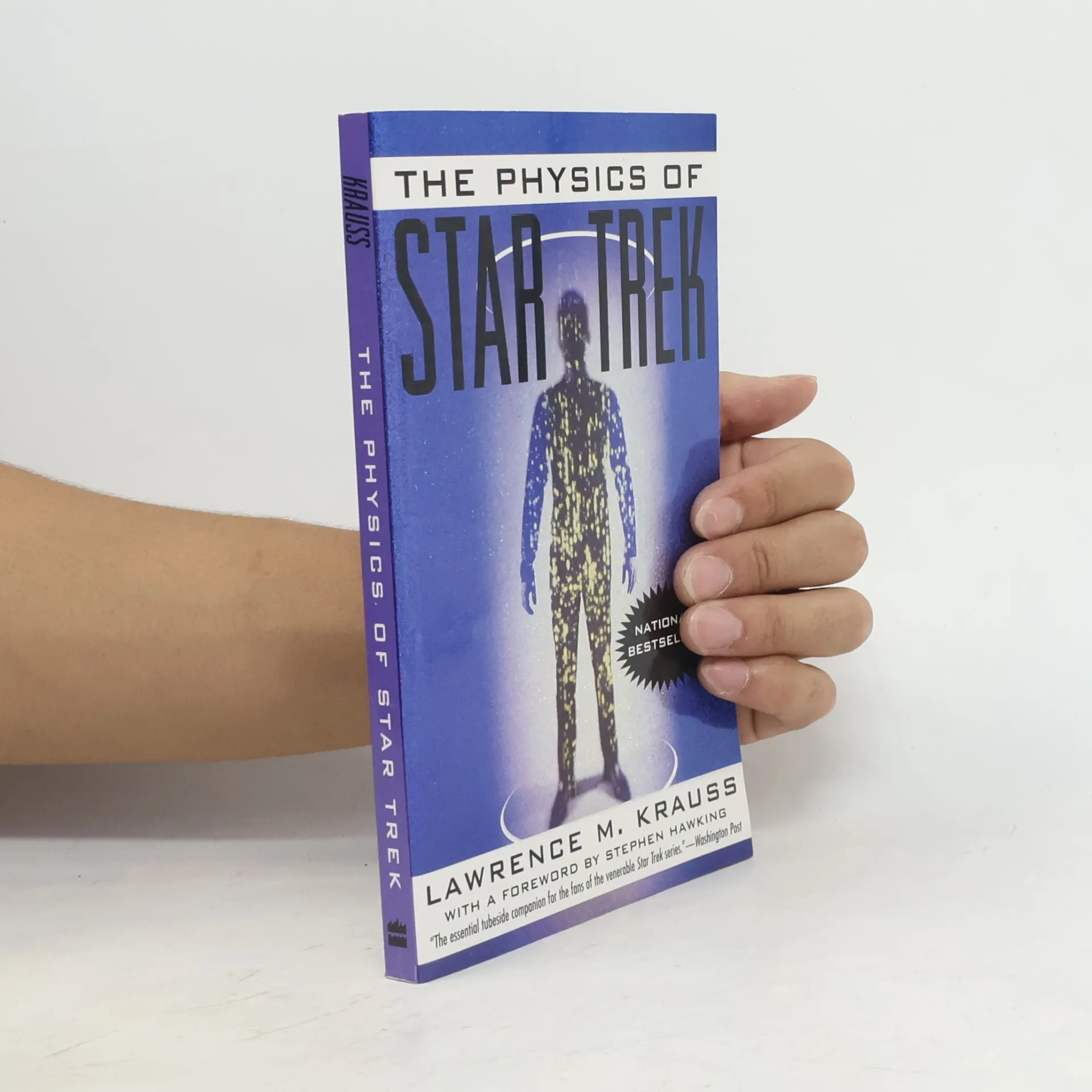
What exactly "warps" when traveling at warp speed? What distinguishes the holodeck from a hologram? What occurs during beaming? Are time loops feasible, and can one alter their past? Fans of "Star Trek" have long sought answers to these intriguing questions. Now, Lawrence M. Krauss, a renowned theoretical physicist, presents a comprehensive exploration of physics tailored for both Trekkers and non-Trekkers. This engaging volume offers insights into the "Star Trek" universe and the real universe, appealing to anyone curious about the plausibility of these concepts. Krauss embarks on a journey that connects the futuristic elements of "Star Trek" with cutting-edge physics, traversing from Newton to Hawking, and from Einstein to Feynman, while drawing parallels with iconic characters like Kirk and Janeway. The book also highlights the Top 10 biggest physics bloopers in "Star Trek," as chosen by Nobel Prize-winning physicists and devoted fans. Praised for its enjoyable approach to complex topics, it promises both entertainment and depth. Stephen Hawking emphasizes the importance of exploring the physics behind "Star Trek," suggesting that such inquiries expand the human spirit beyond earthly confines.




Book purchase
The Physics of Star Trek, Lawrence Krauss, Stephen Hawking
- Language

- Released
- 1996
- Binding
- (Paperback)
Payment methods
We’re missing your review here.
- Language
- English
- Authors
- Lawrence Krauss, Stephen Hawking
- Publisher
- ReganBooks
- Released
- 1996
- Format
- Paperback
- Pages
- 188
- ISBN10
- 0060977108
- ISBN13
- 9780060977108
- Tags
- Non-Fiction, Science & Math, Natural sciences, References & Manuals, Science, Physics, Space, Astronomy, Star Trek, Cinemas, Movie Theaters
- Original title
- The physics of Star trek
- Rating
- 3.9 out of 5
- Description
- What exactly "warps" when traveling at warp speed? What distinguishes the holodeck from a hologram? What occurs during beaming? Are time loops feasible, and can one alter their past? Fans of "Star Trek" have long sought answers to these intriguing questions. Now, Lawrence M. Krauss, a renowned theoretical physicist, presents a comprehensive exploration of physics tailored for both Trekkers and non-Trekkers. This engaging volume offers insights into the "Star Trek" universe and the real universe, appealing to anyone curious about the plausibility of these concepts. Krauss embarks on a journey that connects the futuristic elements of "Star Trek" with cutting-edge physics, traversing from Newton to Hawking, and from Einstein to Feynman, while drawing parallels with iconic characters like Kirk and Janeway. The book also highlights the Top 10 biggest physics bloopers in "Star Trek," as chosen by Nobel Prize-winning physicists and devoted fans. Praised for its enjoyable approach to complex topics, it promises both entertainment and depth. Stephen Hawking emphasizes the importance of exploring the physics behind "Star Trek," suggesting that such inquiries expand the human spirit beyond earthly confines.