



More about the book
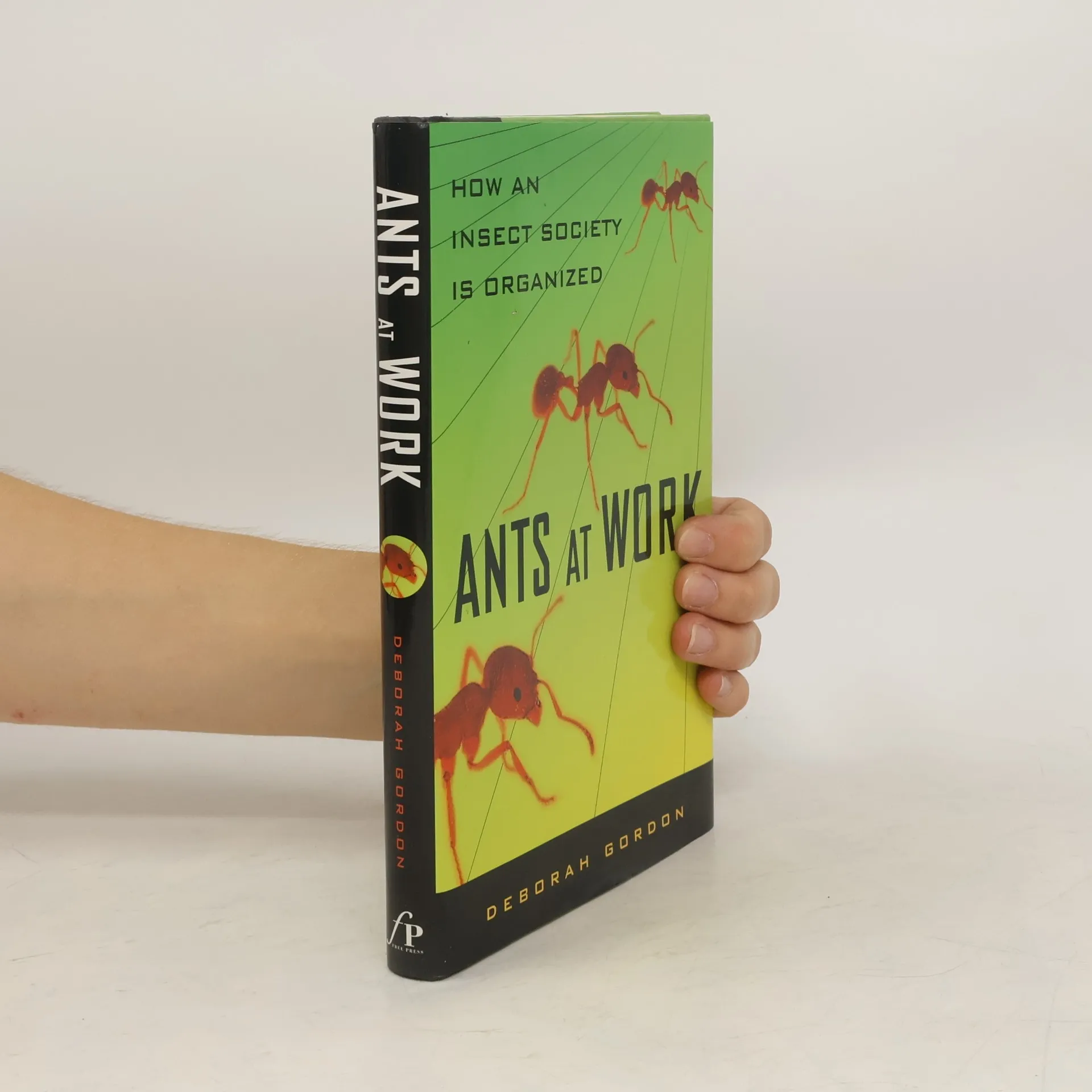
In "Ants at Work," Deborah Gordon presents a groundbreaking exploration of ant societies, challenging traditional views of hierarchy in insect communities. Through seventeen years of research on harvester ants in the Arizona desert, she reveals that the queen does not control the colony; rather, ants operate without central authority, each contributing to complex tasks like nest building, foraging, and even warfare. This decentralized organization defies the notion of a caste system, as ants fluidly switch tasks and adapt to their environment. Gordon's work illustrates how ants utilize simple, local information to make decisions that lead to intricate colony behaviors. The book features insightful maps and drawings from her field notes, showcasing ant interactions and daily activities. With a blend of humor and clarity, Gordon recounts her experiences in the harsh desert landscape while unraveling the behaviors of "Pogonomyrmex." By emphasizing chaotic patterns over fixed laws, she proposes that ant communication offers insights into broader biological systems, influencing fields from biology to business. "Ants at Work" marks a significant advancement in understanding natural organization, inviting readers to reconsider how complex systems function in nature and beyond.
Publication

Book purchase
Ants At Work, Gordon Deborah
- Language

- Released
- 1999
- Binding
- (Hardcover)
Payment methods
We’re missing your review here.
- Title
- Ants At Work
- Subtitle
- How An Insect Society Is Organized
- Language
- English
- Authors
- Gordon Deborah
- Publisher
- Free Press
- Released
- 1999
- Format
- Hardcover
- Pages
- 192
- ISBN10
- 0684857332
- ISBN13
- 9780684857336
- Series
- Categories
- Rating
- 3.8 out of 5
- Description
- In "Ants at Work," Deborah Gordon presents a groundbreaking exploration of ant societies, challenging traditional views of hierarchy in insect communities. Through seventeen years of research on harvester ants in the Arizona desert, she reveals that the queen does not control the colony; rather, ants operate without central authority, each contributing to complex tasks like nest building, foraging, and even warfare. This decentralized organization defies the notion of a caste system, as ants fluidly switch tasks and adapt to their environment. Gordon's work illustrates how ants utilize simple, local information to make decisions that lead to intricate colony behaviors. The book features insightful maps and drawings from her field notes, showcasing ant interactions and daily activities. With a blend of humor and clarity, Gordon recounts her experiences in the harsh desert landscape while unraveling the behaviors of "Pogonomyrmex." By emphasizing chaotic patterns over fixed laws, she proposes that ant communication offers insights into broader biological systems, influencing fields from biology to business. "Ants at Work" marks a significant advancement in understanding natural organization, inviting readers to reconsider how complex systems function in nature and beyond.