

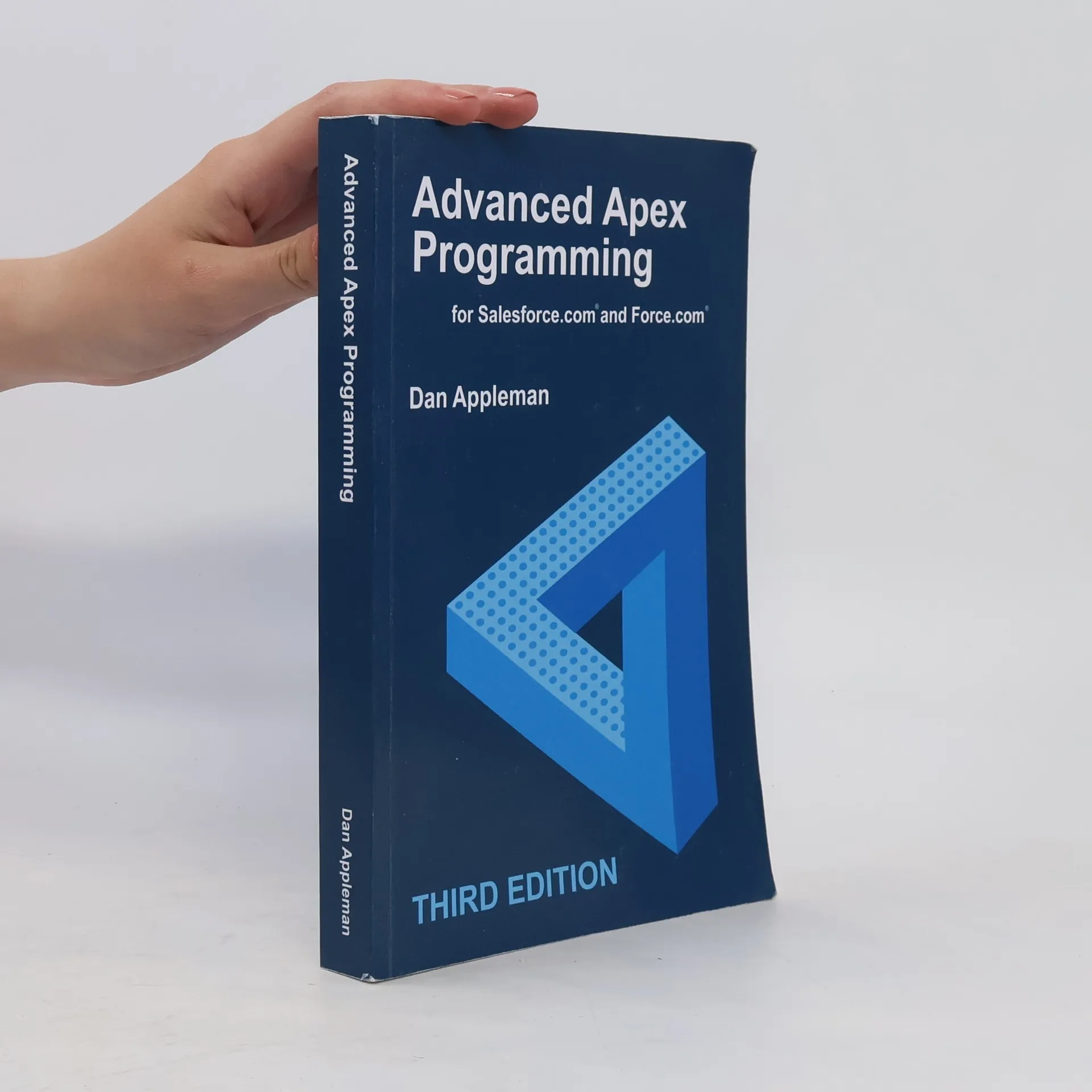


More about the book
Advanced Apex Programming for Salesforce.com and Force.com is intended for developers who are already familiar with the Apex language, as well as experienced Java and C# developers transitioning to Apex. This book focuses entirely on the Apex language and core design patterns. You’ll learn to think in Apex, embracing limits and bulk patterns. It covers developing architectures for efficient and reliable trigger handling and asynchronous operations. Best practices are explored, highlighting differences between building software for a specific organization and for a managed package. The book also discusses incorporating testing and diagnostic code to improve the reliability and deployment of Apex software while reducing lifecycle and support costs. Based on real-world experience, it addresses the common and obscure challenges faced by Apex developers.
Book purchase
Advanced Apex Programming for Salesforce.com and Force.com, Dan Appleman
- Language

- Released
- 2015
- Binding
- (Paperback)
Payment methods
We’re missing your review here.
- Title
- Advanced Apex Programming for Salesforce.com and Force.com
- Language
- English
- Authors
- Dan Appleman
- Publisher
- Desaware Publishing
- Released
- 2015
- Format
- Paperback
- Pages
- 332
- ISBN10
- 193675410X
- ISBN13
- 9781936754106
- Series
- Rating
- 4.35 out of 5
- Description
- Advanced Apex Programming for Salesforce.com and Force.com is intended for developers who are already familiar with the Apex language, as well as experienced Java and C# developers transitioning to Apex. This book focuses entirely on the Apex language and core design patterns. You’ll learn to think in Apex, embracing limits and bulk patterns. It covers developing architectures for efficient and reliable trigger handling and asynchronous operations. Best practices are explored, highlighting differences between building software for a specific organization and for a managed package. The book also discusses incorporating testing and diagnostic code to improve the reliability and deployment of Apex software while reducing lifecycle and support costs. Based on real-world experience, it addresses the common and obscure challenges faced by Apex developers.