

More about the book
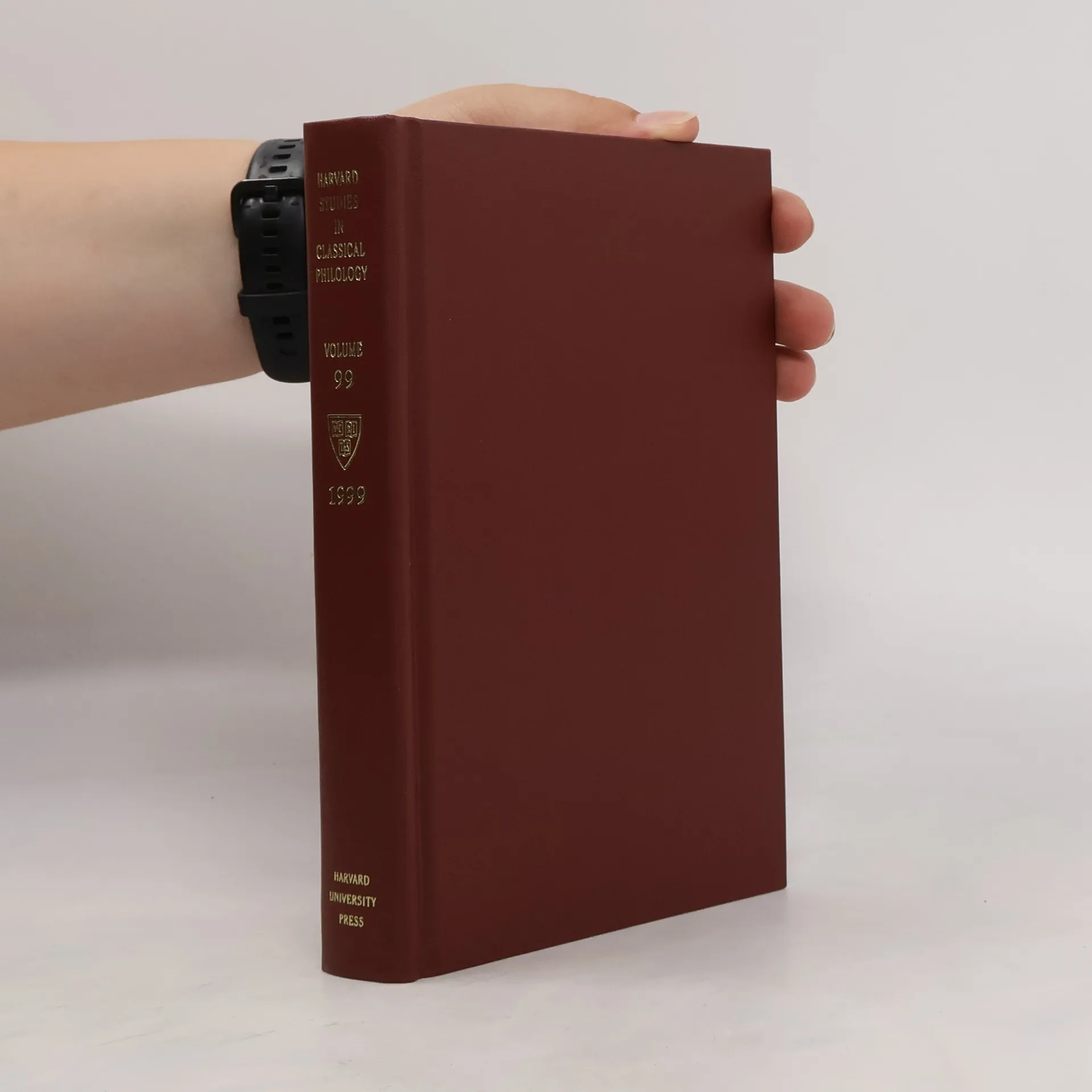
Volume 99 of Harvard Studies in Classical Philology includes the following Nancy Felson, “Vicarious Fictive Deixis in Pindar’s Pythian Four”; Douglas E. Gerber, “Pindar, Nemean A Commentary”; Jennifer Clarke Kosak, “Therapeutic Touch and Sophokles’ Philoktetes ”; F. S. Naiden, “The Prospective Imperfect in Herodotus”; Thomas A. Schmitz, “‘I Hate All Common Things’: The Reader’s Role in Callimachus’ Aetia Prologue”; Dimitrios Yatromanolakis, “Alexandrian Sappho Revisited”; John T. Ramsey, “Mithridates, the Banner of Ch’ih-yu, and the Comet Coin”; Alexander Jones, “Geminus and the Isia”; Benjamin Victor, “Further Remarks on the Andria of Terence”; Peter E. Knox, “Lucretius on the Narrow Road”; Francis Cairns, “Virgil Eclogue 1.1–2: A Literary Programme?”; Michael Hendry, “ Epidaurus, Epirus,…Epidamnus? Vergil Georgics 3.44”; Charles Segal, “Ovid’s Meleager and the Trials of Gender and Genre”; John Hunt, “Readings in Apollonius of Tyre ”; Bernard Frischer et al., “Word-Order Transference between Latin and The Relative Position of the Accusative Direct Object and the Governing Verb in Cassius Dio and Other Greek and Roman Prose Authors”; and Craig Kallendorf, “Historicizing the ‘Harvard School’: Pessimistic Readings of the Aeneid in Italian Renaissance Scholarship.”
Book purchase
Harvard Studies in Classical Philology. Volume 99, Various authors
- Language

- Released
- 1999
- Binding
- (Hardcover)
Payment methods
We’re missing your review here.
- Title
- Harvard Studies in Classical Philology. Volume 99
- Language
- English
- Authors
- Various authors
- Publisher
- Harvard University Press
- Released
- 1999
- Format
- Hardcover
- Pages
- 425
- ISBN10
- 0674379470
- ISBN13
- 9780674379473
- Series
- Categories
- Rating
- 5 out of 5
- Description
- Volume 99 of Harvard Studies in Classical Philology includes the following Nancy Felson, “Vicarious Fictive Deixis in Pindar’s Pythian Four”; Douglas E. Gerber, “Pindar, Nemean A Commentary”; Jennifer Clarke Kosak, “Therapeutic Touch and Sophokles’ Philoktetes ”; F. S. Naiden, “The Prospective Imperfect in Herodotus”; Thomas A. Schmitz, “‘I Hate All Common Things’: The Reader’s Role in Callimachus’ Aetia Prologue”; Dimitrios Yatromanolakis, “Alexandrian Sappho Revisited”; John T. Ramsey, “Mithridates, the Banner of Ch’ih-yu, and the Comet Coin”; Alexander Jones, “Geminus and the Isia”; Benjamin Victor, “Further Remarks on the Andria of Terence”; Peter E. Knox, “Lucretius on the Narrow Road”; Francis Cairns, “Virgil Eclogue 1.1–2: A Literary Programme?”; Michael Hendry, “ Epidaurus, Epirus,…Epidamnus? Vergil Georgics 3.44”; Charles Segal, “Ovid’s Meleager and the Trials of Gender and Genre”; John Hunt, “Readings in Apollonius of Tyre ”; Bernard Frischer et al., “Word-Order Transference between Latin and The Relative Position of the Accusative Direct Object and the Governing Verb in Cassius Dio and Other Greek and Roman Prose Authors”; and Craig Kallendorf, “Historicizing the ‘Harvard School’: Pessimistic Readings of the Aeneid in Italian Renaissance Scholarship.”