

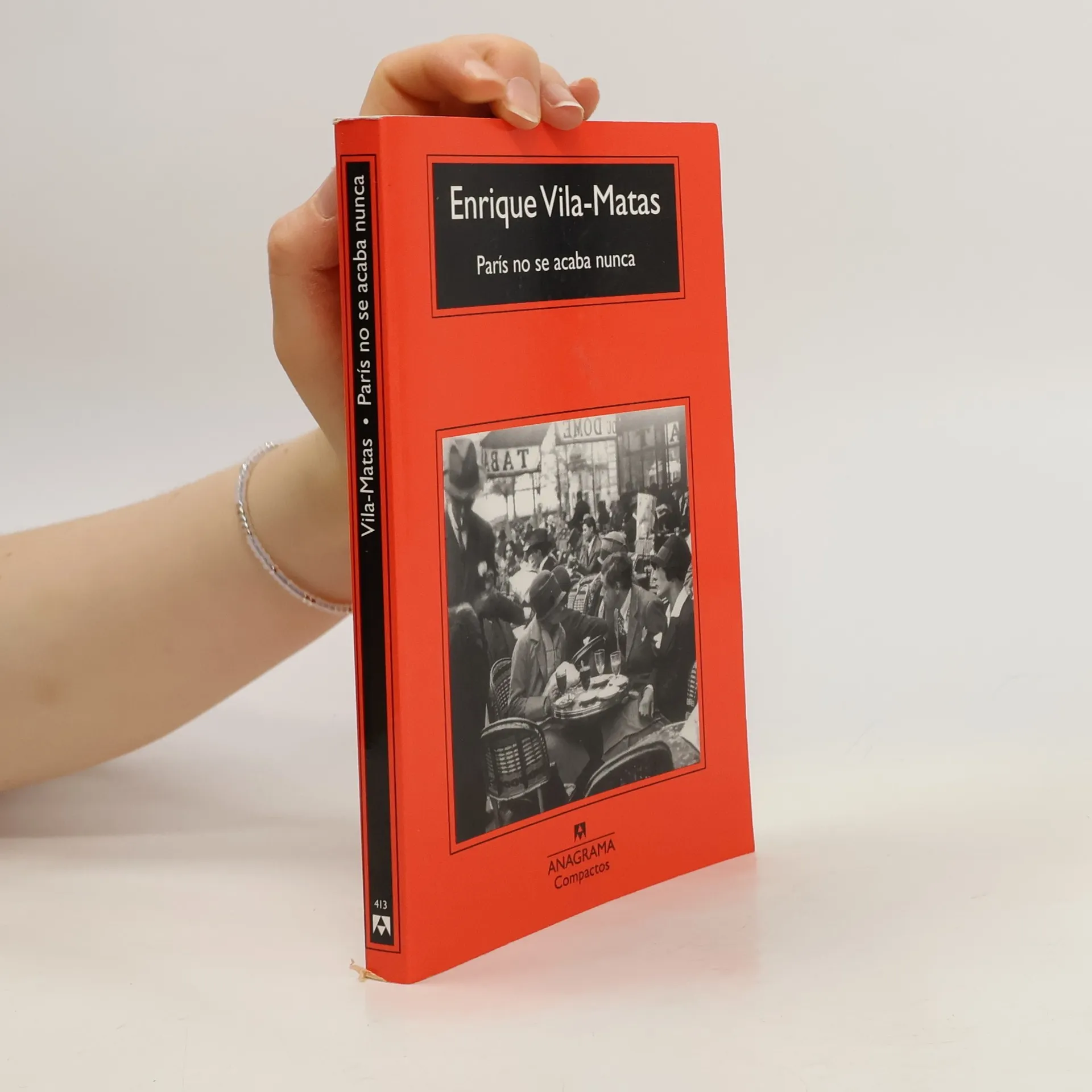
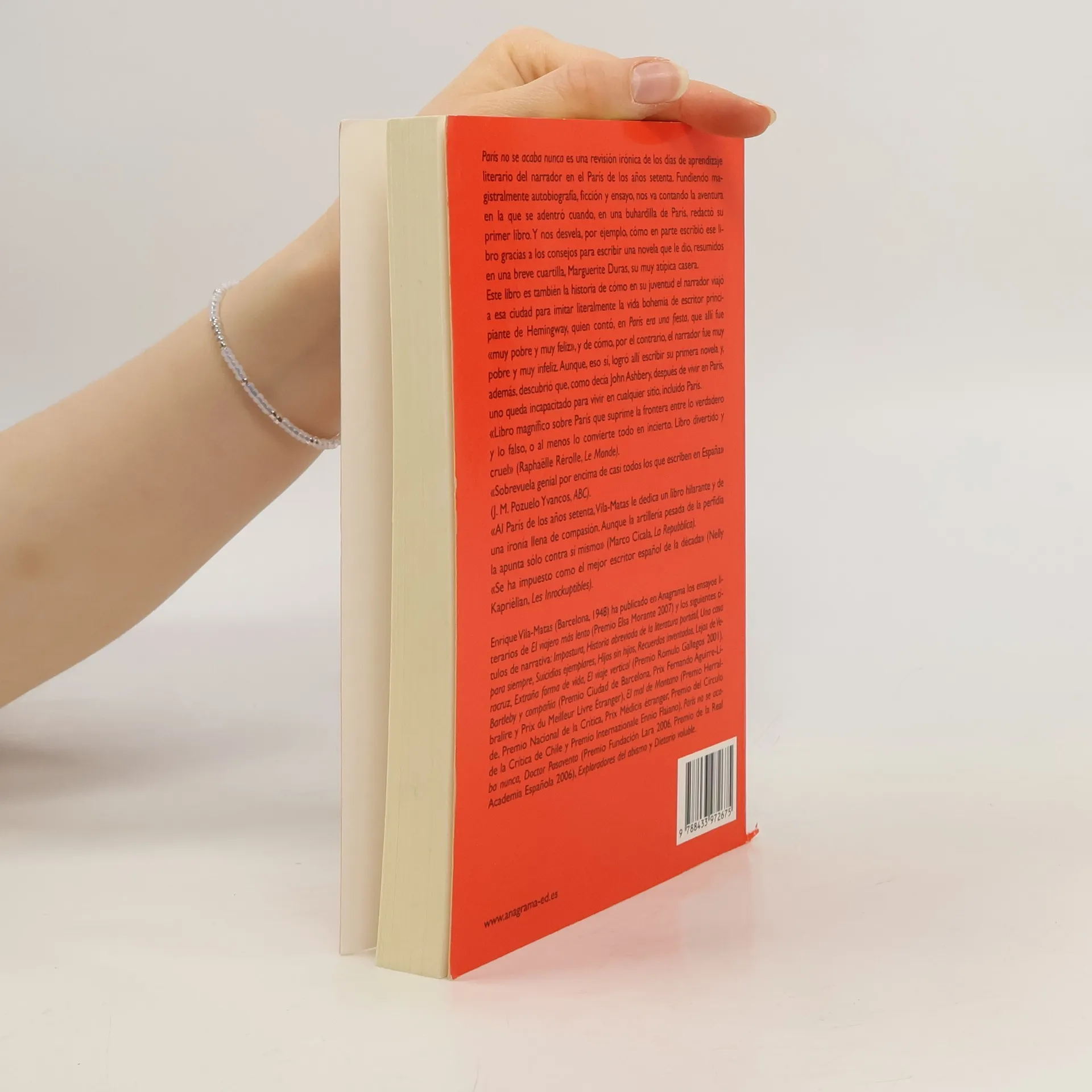
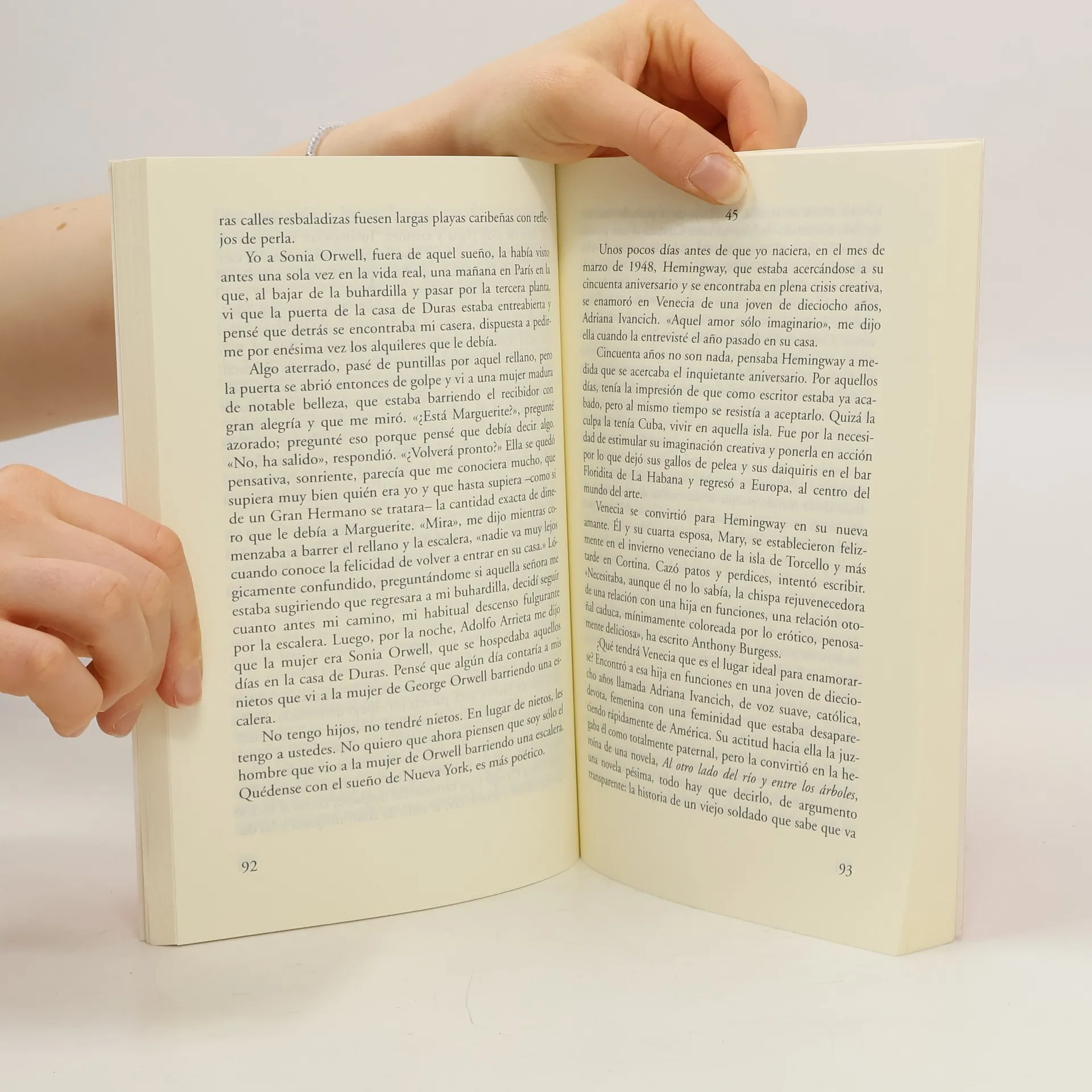
More about the book
A splendid ironic portrayal of literary Paris and of a young writer’s struggles by one of Spain’s most eminent authors. This brilliantly ironic novel about literature and writing, in Vila-Matas’s trademark witty and erudite style, is told in the form of a lecture delivered by a novelist clearly a version of the author himself. The “lecturer” tells of his two-year stint living in Marguerite Duras’s garret during the seventies, spending time with writers, intellectuals, and eccentrics, and trying to make it as a creator of literature: “I went to Paris and was very poor and very unhappy.” Encountering such luminaries as Duras, Roland Barthes, Georges Perec, Sergio Pitol, Samuel Beckett, and Juan Marsé, our narrator embarks on a novel whose text will “kill” its readers and put him on a footing with his beloved Hemingway. (Never Any End to Paris takes its title from a refrain in A Moveable Feast.) What emerges is a fabulous portrait of intellectual life in Paris that, with humor and penetrating insight, investigates the role of literature in our lives.


Publication

Book purchase
París no se acaba nunca, Enrique Vila-Matas
- Language

- Released
- 2006
- Binding
- (Paperback)
Payment methods
We’re missing your review here.
- Title
- París no se acaba nunca
- Language
- Spanish
- Authors
- Enrique Vila-Matas
- Publisher
- Anagrama
- Released
- 2006
- Format
- Paperback
- Pages
- 240
- ISBN10
- 8433972677
- ISBN13
- 9788433972675
- Series
- Categories
- Original title
- París non se acaba nunca
- Rating
- 3.75 out of 5
- Description
- A splendid ironic portrayal of literary Paris and of a young writer’s struggles by one of Spain’s most eminent authors. This brilliantly ironic novel about literature and writing, in Vila-Matas’s trademark witty and erudite style, is told in the form of a lecture delivered by a novelist clearly a version of the author himself. The “lecturer” tells of his two-year stint living in Marguerite Duras’s garret during the seventies, spending time with writers, intellectuals, and eccentrics, and trying to make it as a creator of literature: “I went to Paris and was very poor and very unhappy.” Encountering such luminaries as Duras, Roland Barthes, Georges Perec, Sergio Pitol, Samuel Beckett, and Juan Marsé, our narrator embarks on a novel whose text will “kill” its readers and put him on a footing with his beloved Hemingway. (Never Any End to Paris takes its title from a refrain in A Moveable Feast.) What emerges is a fabulous portrait of intellectual life in Paris that, with humor and penetrating insight, investigates the role of literature in our lives.