

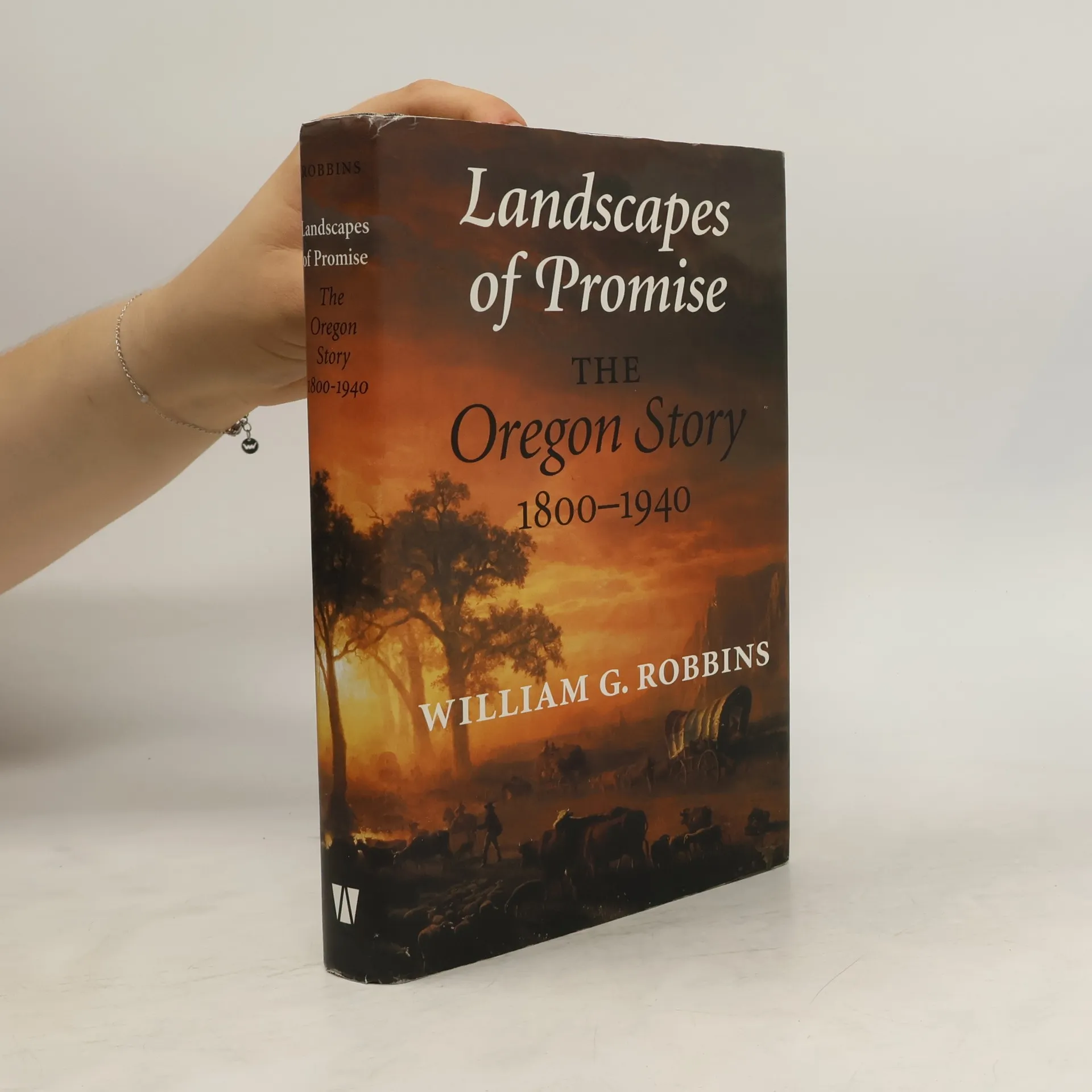


More about the book
"Landscapes of Promise" is the first comprehensive environmental history of the early years of a state that has long been associated with environmental protection. Covering the period from early human habitation to the end of World War II, William Robbins shows that the reality of Oregon's environmental history involves far more than a discussion of timber-cutting and land-use planning. Robbins demonstrates that ecological change is not only a creation of modern industrial society. Native Americans altered their environment in a number of ways, including the planned annual burning of grasslands and light-burning of understory forest debris. Early Euro-American settlers who thought they were taming a virgin wilderness were merely imposing a new set of alterations on an already modified landscape. Beginning with the first eighteenth-century traders on the Pacific Coast, alterations to Oregon's landscape were closely linked to the interests of global market forces. Robbins uses period speeches and publications to document the increasing commodification of the landscape and its products.
Book purchase
Landscapes of Promise, William G. Robbins
- Language

- Released
- 1997
- Binding
- (Hardcover)
Payment methods
We’re missing your review here.
- Title
- Landscapes of Promise
- Subtitle
- The Oregon Story 1800-1940
- Language
- English
- Authors
- William G. Robbins
- Publisher
- University of Washington Press
- Released
- 1997
- Format
- Hardcover
- Pages
- 392
- ISBN10
- 0295976322
- ISBN13
- 9780295976327
- Categories
- Rating
- 3.5 out of 5
- Description
- "Landscapes of Promise" is the first comprehensive environmental history of the early years of a state that has long been associated with environmental protection. Covering the period from early human habitation to the end of World War II, William Robbins shows that the reality of Oregon's environmental history involves far more than a discussion of timber-cutting and land-use planning. Robbins demonstrates that ecological change is not only a creation of modern industrial society. Native Americans altered their environment in a number of ways, including the planned annual burning of grasslands and light-burning of understory forest debris. Early Euro-American settlers who thought they were taming a virgin wilderness were merely imposing a new set of alterations on an already modified landscape. Beginning with the first eighteenth-century traders on the Pacific Coast, alterations to Oregon's landscape were closely linked to the interests of global market forces. Robbins uses period speeches and publications to document the increasing commodification of the landscape and its products.