

Parameters
- 270 pages
- 10 hours of reading
More about the book
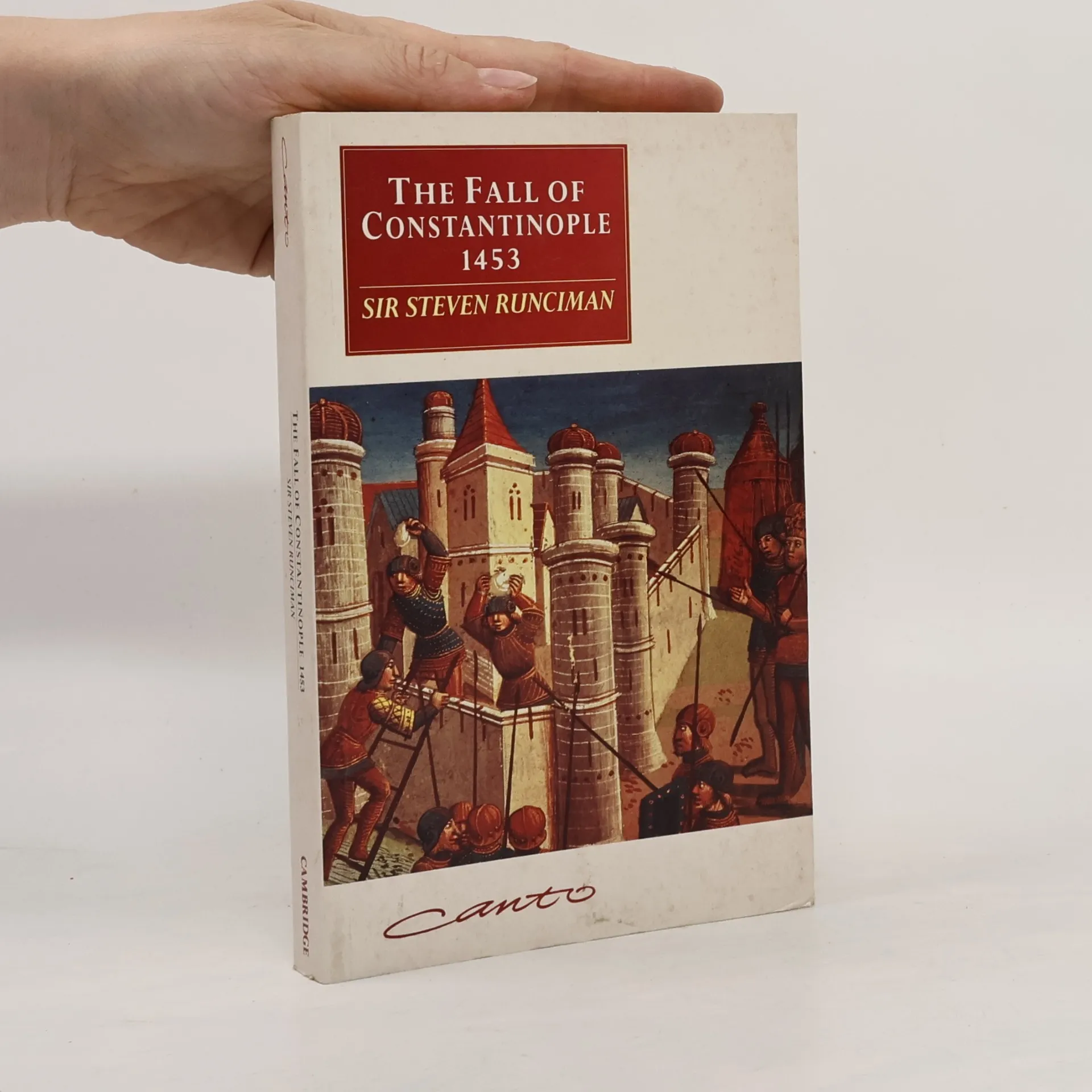
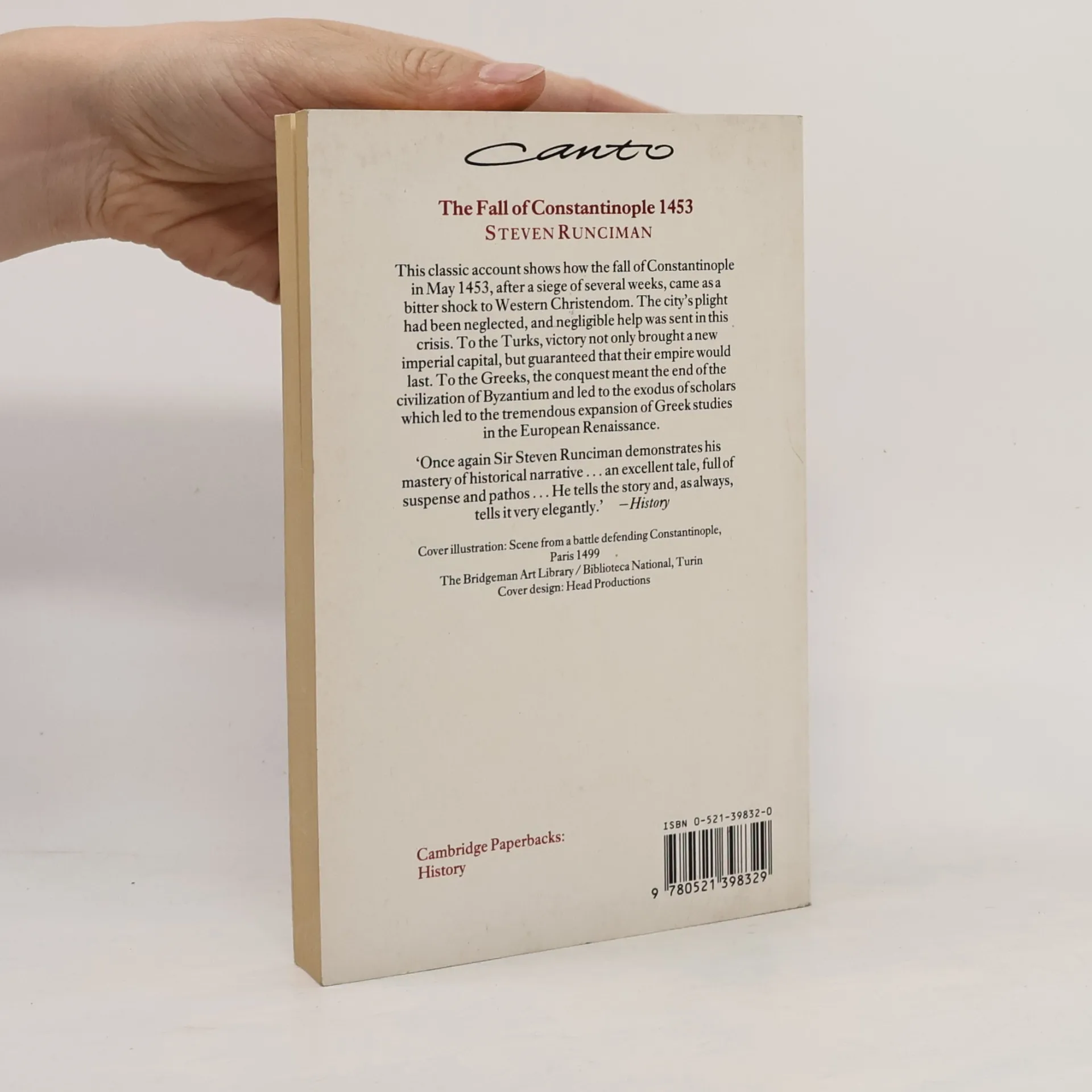
This classic account shows how the fall of Constantinople in May 1453, after a siege of several weeks, came as a bitter shock to Western Christendom. The city's plight had been neglected, and negligible help was sent in this crisis. To the Turks, victory not only brought a new imperial capital, but guaranteed that their empire would last. To the Greeks, the conquest meant the end of the civilisation of Byzantium, and led to the exodus of scholars stimulating the tremendous expansion of Greek studies in the European Renaissance."... an excellent tale, full of suspense and pathos... He [Sir Steven Runciman] tells the story and, as always, tells it very elegantly."- History"This is a marvel of learning lightly worn..."- The Guardian




Book purchase
The Fall of Constantinople 1453, Steven Runciman
- Language

- Released
- 1990
- Binding
- (Paperback)
Payment methods
We’re missing your review here.
- Title
- The Fall of Constantinople 1453
- Language
- English
- Authors
- Steven Runciman
- Publisher
- Cambridge University Press
- Released
- 1990
- Format
- Paperback
- Pages
- 270
- ISBN10
- 0521398320
- ISBN13
- 9780521398329
- Series
- Categories
- Tags
- Historical Themes, Religious Topics, Military Fiction, Middle Ages, Ottoman Empire, Byzantine Empire, Istanbul, Constantinople, Siege, Conquest, Conquerors, Wars with the Turks
- First published
- 1965
- Original title
- The Fall of Constantinople
- Rating
- 4.4 out of 5
- Description
- This classic account shows how the fall of Constantinople in May 1453, after a siege of several weeks, came as a bitter shock to Western Christendom. The city's plight had been neglected, and negligible help was sent in this crisis. To the Turks, victory not only brought a new imperial capital, but guaranteed that their empire would last. To the Greeks, the conquest meant the end of the civilisation of Byzantium, and led to the exodus of scholars stimulating the tremendous expansion of Greek studies in the European Renaissance."... an excellent tale, full of suspense and pathos... He [Sir Steven Runciman] tells the story and, as always, tells it very elegantly."- History"This is a marvel of learning lightly worn..."- The Guardian