

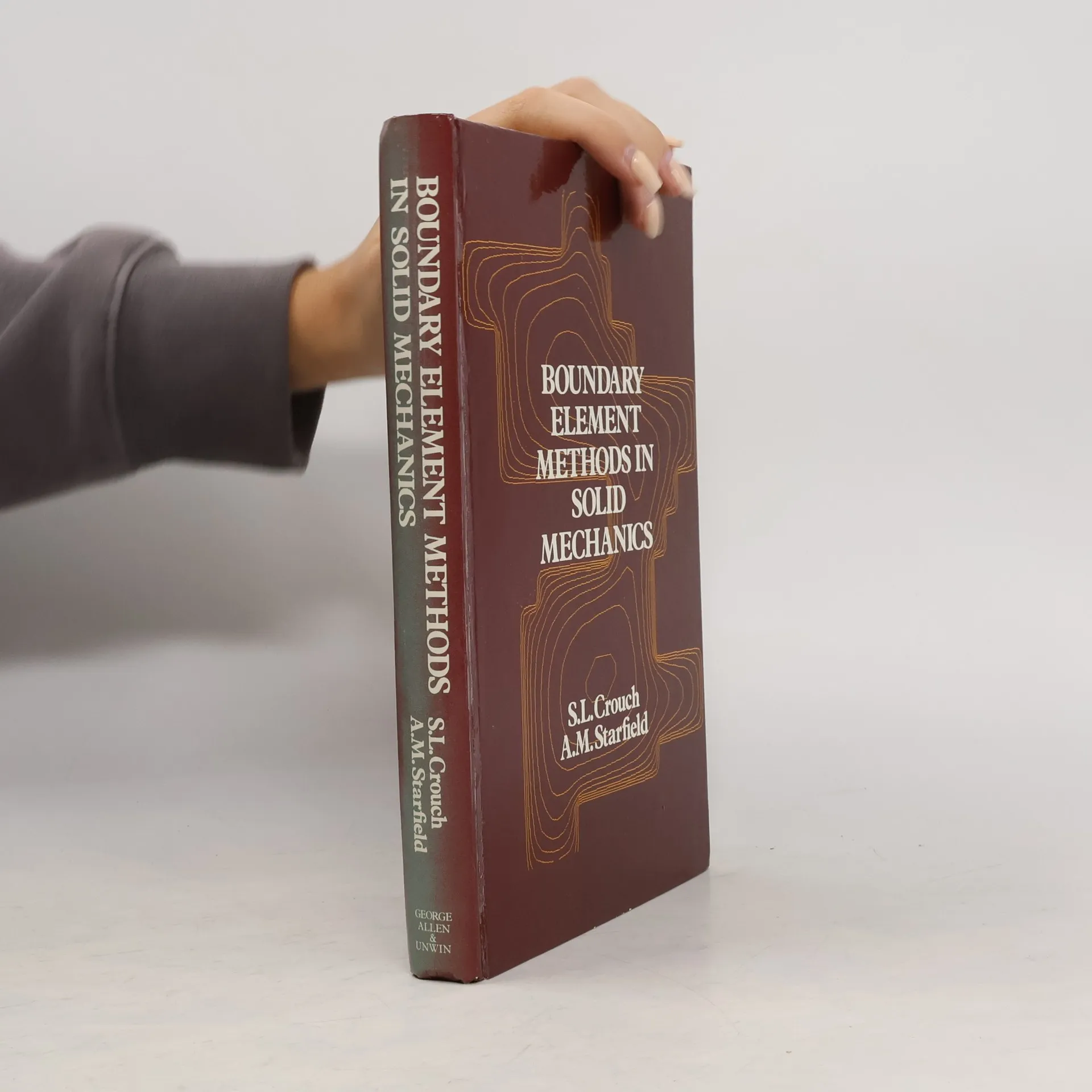
Boundary Element Methods in Solid Mechanics
With Applications in Rock Mechanics and Geological Engineering
Book rating
Parameters
- 322 pages
- 12 hours of reading
More about the book
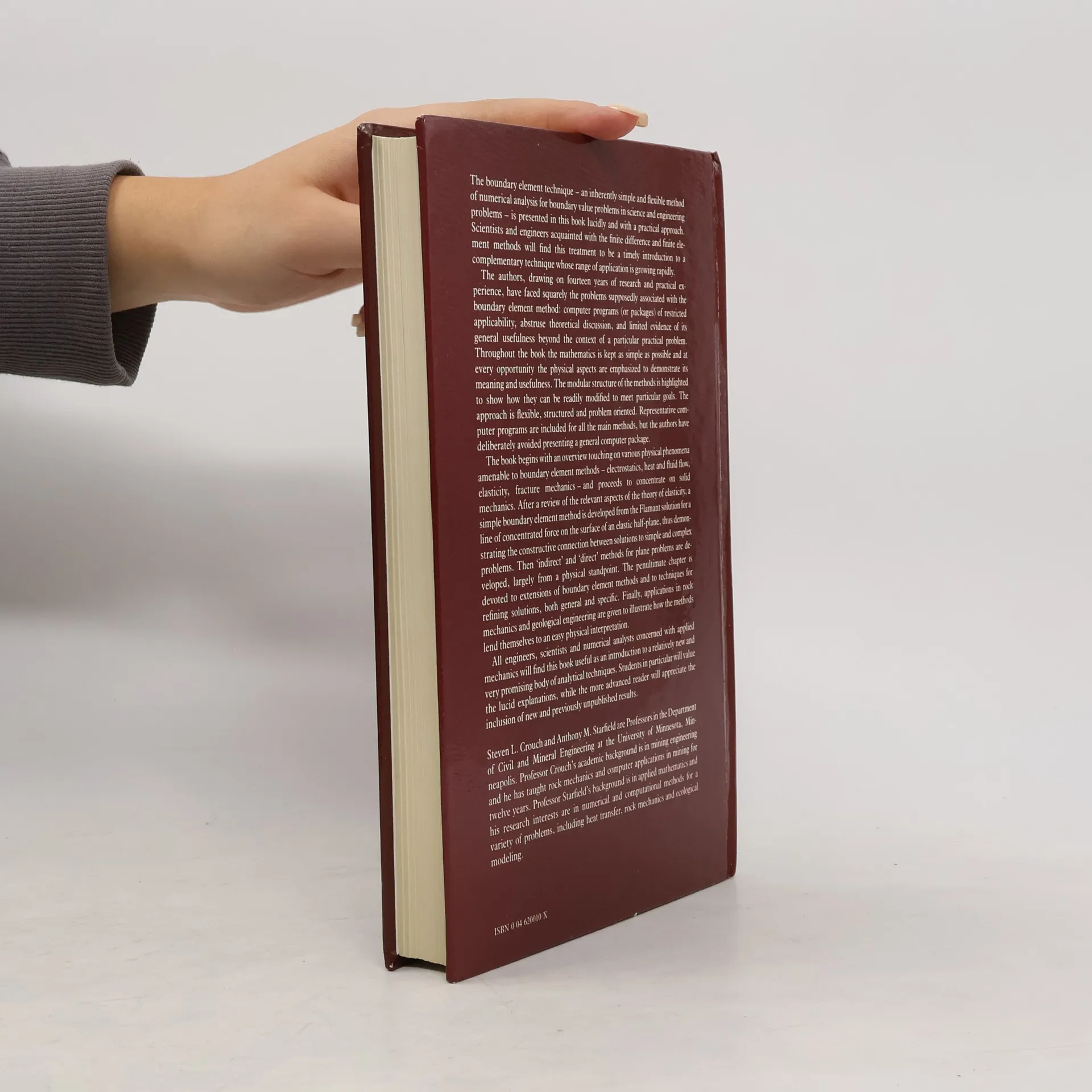
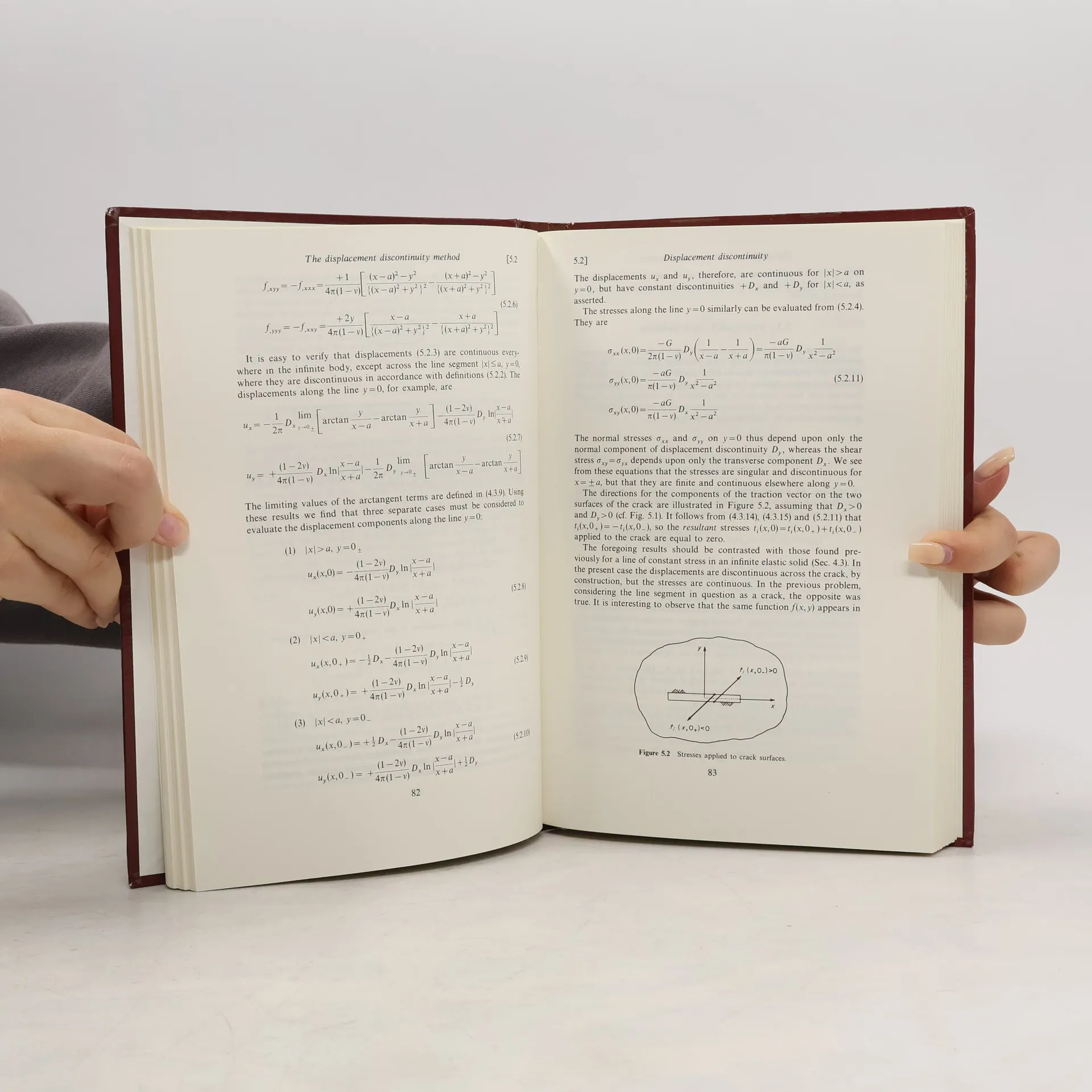
This work explains the boundary element technique with diagrams and with listings of computer programs for three methods. The authors use a system of highlighting key words and the book is designed for anyone in rock mechanics and mining sciences who has some grounding in the theory of elasticity. After a review of relevant aspects of elasticity theory, a simple boundary element method is developed from the Flamant solution for a line of concentrated force on the surface of an elastic half-plane - demonstrating the constructive connection between solutions to simple and complex problems. The direct and indirect methods for plane problems are also developed, largely from a physical standpoint.
Book purchase
Boundary Element Methods in Solid Mechanics, Steven L. Crouch, A. M. Starfield
- Language

- Released
- 1983
- Binding
- (Hardcover)
Payment methods
We’re missing your review here.
- Title
- Boundary Element Methods in Solid Mechanics
- Subtitle
- With Applications in Rock Mechanics and Geological Engineering
- Language
- English
- Authors
- Steven L. Crouch, A. M. Starfield
- Publisher
- George Allen & Unwin
- Released
- 1983
- Format
- Hardcover
- Pages
- 322
- ISBN10
- 004620010X
- ISBN13
- 9780046200107
- Series
- Categories
- Rating
- 5 out of 5
- Description
- This work explains the boundary element technique with diagrams and with listings of computer programs for three methods. The authors use a system of highlighting key words and the book is designed for anyone in rock mechanics and mining sciences who has some grounding in the theory of elasticity. After a review of relevant aspects of elasticity theory, a simple boundary element method is developed from the Flamant solution for a line of concentrated force on the surface of an elastic half-plane - demonstrating the constructive connection between solutions to simple and complex problems. The direct and indirect methods for plane problems are also developed, largely from a physical standpoint.