



Parameters
- 255 pages
- 9 hours of reading
More about the book
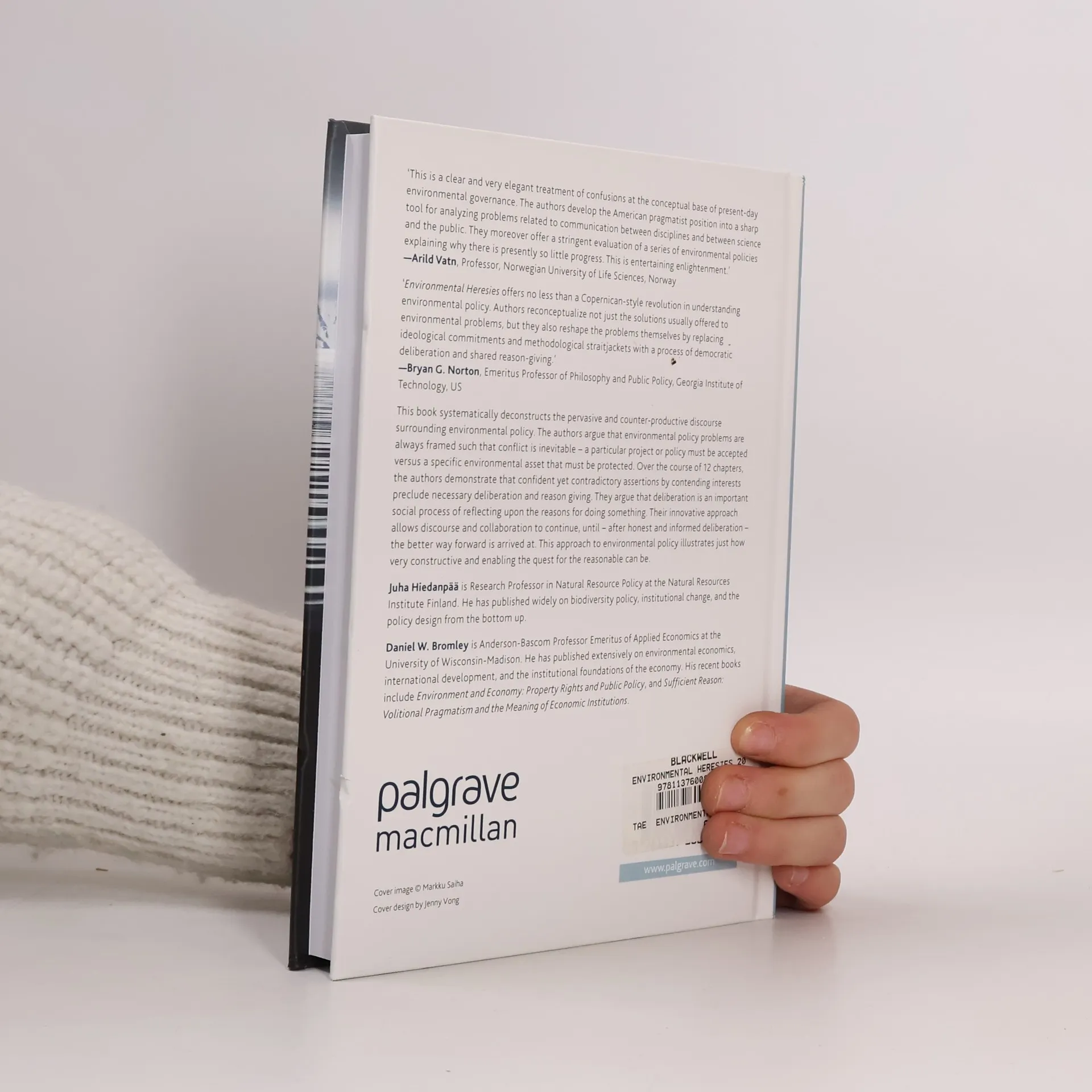
This book systematically deconstructs the pervasive and counter-productive discourse surrounding environmental policy. The authors argue that environmental policy problems are always framed such that conflict is inevitable—a particular project or policy must be accepted versus a specific environmental asset that must be protected. Over the course of 12 chapters, the authors demonstrate that confident yet contradictory assertions by contending interests preclude necessary deliberation and reason giving. They argue that deliberation is an important social process of reflecting upon the reasons for doing something. Their innovative approach allows discourse and collaboration to continue, until—after honest and informed deliberation—the better way forward is arrived at. This approach to environmental policy illustrates just how very constructive and enabling the quest for the reasonable can be.
Book purchase
Environmental Heresies, Juha Hiedanpää, Daniel W. Bromley
- Language

- Released
- 2016
- Binding
- (Hardcover)
Payment methods
We’re missing your review here.
- Title
- Environmental Heresies
- Subtitle
- The Quest for Reasonable
- Language
- English
- Authors
- Juha Hiedanpää, Daniel W. Bromley
- Publisher
- Palgrave Macmillan
- Released
- 2016
- Format
- Hardcover
- Pages
- 255
- ISBN10
- 1137600829
- ISBN13
- 9781137600820
- Series
- Categories
- Tags
- Business, Nature, Philosophical Topics, Legal Topics, Politics, Science, Environmental Themes, Professional Literature, Society, Political Theories, 21st Century, Sustainability, Climate Change, Civil Law, Biodiversity, Environmental Economics, Pragmatism
- Rating
- 1 out of 5
- Description
- This book systematically deconstructs the pervasive and counter-productive discourse surrounding environmental policy. The authors argue that environmental policy problems are always framed such that conflict is inevitable—a particular project or policy must be accepted versus a specific environmental asset that must be protected. Over the course of 12 chapters, the authors demonstrate that confident yet contradictory assertions by contending interests preclude necessary deliberation and reason giving. They argue that deliberation is an important social process of reflecting upon the reasons for doing something. Their innovative approach allows discourse and collaboration to continue, until—after honest and informed deliberation—the better way forward is arrived at. This approach to environmental policy illustrates just how very constructive and enabling the quest for the reasonable can be.