

More about the book
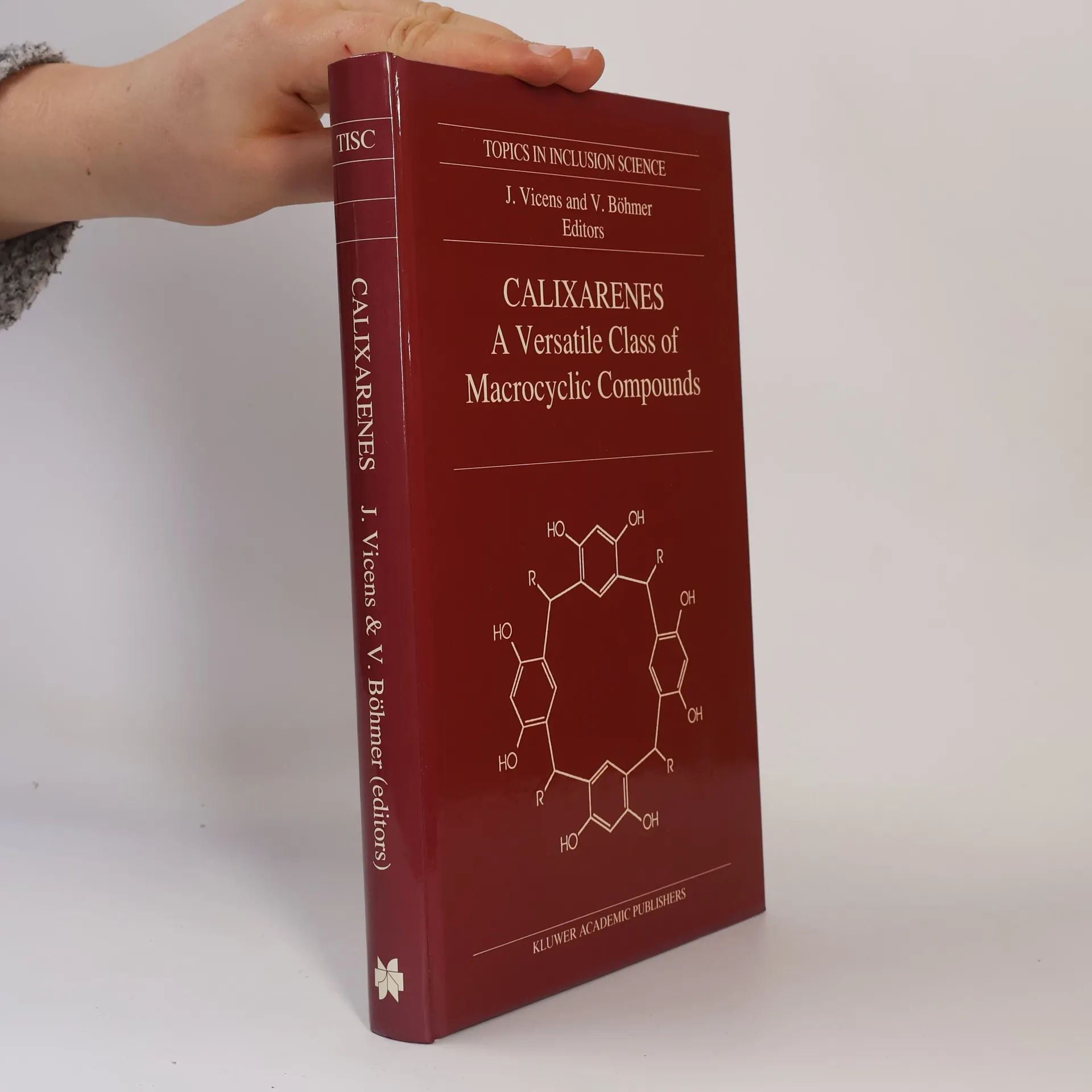
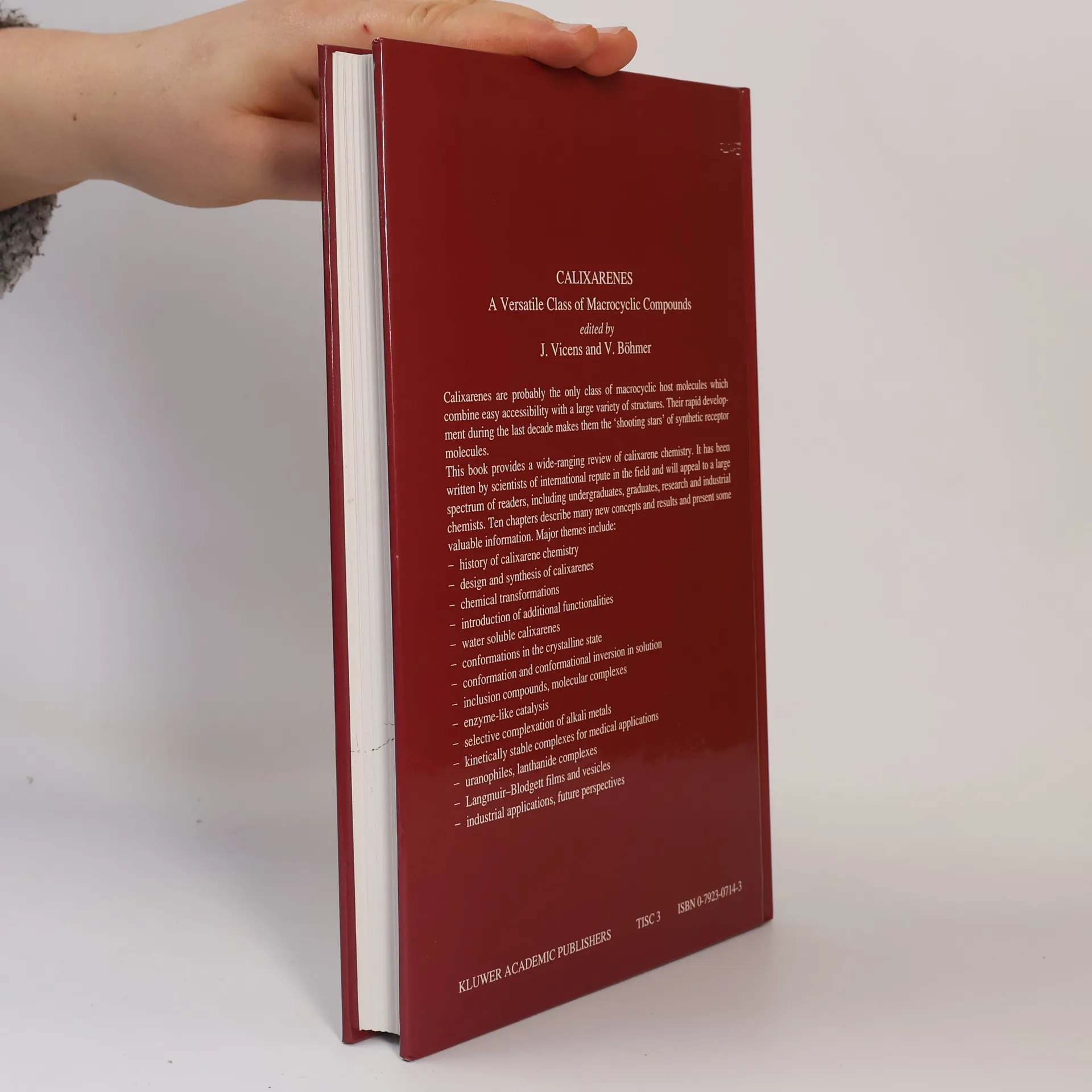
The term "calixarenes," introduced in 1978 by D. Gutsche, refers to cyclic oligomers formed by the condensation of p-substituted phenols with formaldehyde. This reaction was initially studied by A. von Baeyer, while L. Baekeland produced the first synthetic polymers from these condensates in the early 20th century. A. Zinke noted the potential for cyclic products from t-butylphenol and formaldehyde as early as the 1940s. Despite their historical background, the significant applications of calixarenes in supramolecular chemistry have only recently been recognized. Although calixarene chemistry began slowly in the 1970s, it gained rapid momentum in the 1980s, particularly after C. Pedersen's discovery of crown ethers and the groundbreaking work of J.-M. Lehn and D. Cram with cryptands and spherands, all of whom received the 1987 Nobel Prize in Chemistry. This surge in interest led to a focus on host-guest chemistry, receptor chemistry, and supramolecular chemistry, drawing important parallels with biological processes and the creation of advanced materials. Consequently, calixarene molecules, once viewed as mere by-products of phenoplast manufacturing, began to be recognized as valuable macrocyclic receptor molecules.
Book purchase
Topics in Inclusion Science: Calixarenes, Jacques Vicens, Volker Böhmer
- Language

- Released
- 1990
- Binding
- (Hardcover),
- Book condition
- Very Good
- Price
- €8.59
Payment methods
No one has rated yet.
- Title
- Topics in Inclusion Science: Calixarenes
- Subtitle
- A Versatile Class of Macrocyclic Compounds
- Language
- English
- Authors
- Jacques Vicens, Volker Böhmer
- Publisher
- Springer
- Released
- 1990
- Format
- Hardcover
- Pages
- 276
- ISBN10
- 0792307143
- ISBN13
- 9780792307143
- Series
- Description
- The term "calixarenes," introduced in 1978 by D. Gutsche, refers to cyclic oligomers formed by the condensation of p-substituted phenols with formaldehyde. This reaction was initially studied by A. von Baeyer, while L. Baekeland produced the first synthetic polymers from these condensates in the early 20th century. A. Zinke noted the potential for cyclic products from t-butylphenol and formaldehyde as early as the 1940s. Despite their historical background, the significant applications of calixarenes in supramolecular chemistry have only recently been recognized. Although calixarene chemistry began slowly in the 1970s, it gained rapid momentum in the 1980s, particularly after C. Pedersen's discovery of crown ethers and the groundbreaking work of J.-M. Lehn and D. Cram with cryptands and spherands, all of whom received the 1987 Nobel Prize in Chemistry. This surge in interest led to a focus on host-guest chemistry, receptor chemistry, and supramolecular chemistry, drawing important parallels with biological processes and the creation of advanced materials. Consequently, calixarene molecules, once viewed as mere by-products of phenoplast manufacturing, began to be recognized as valuable macrocyclic receptor molecules.