

More about the book
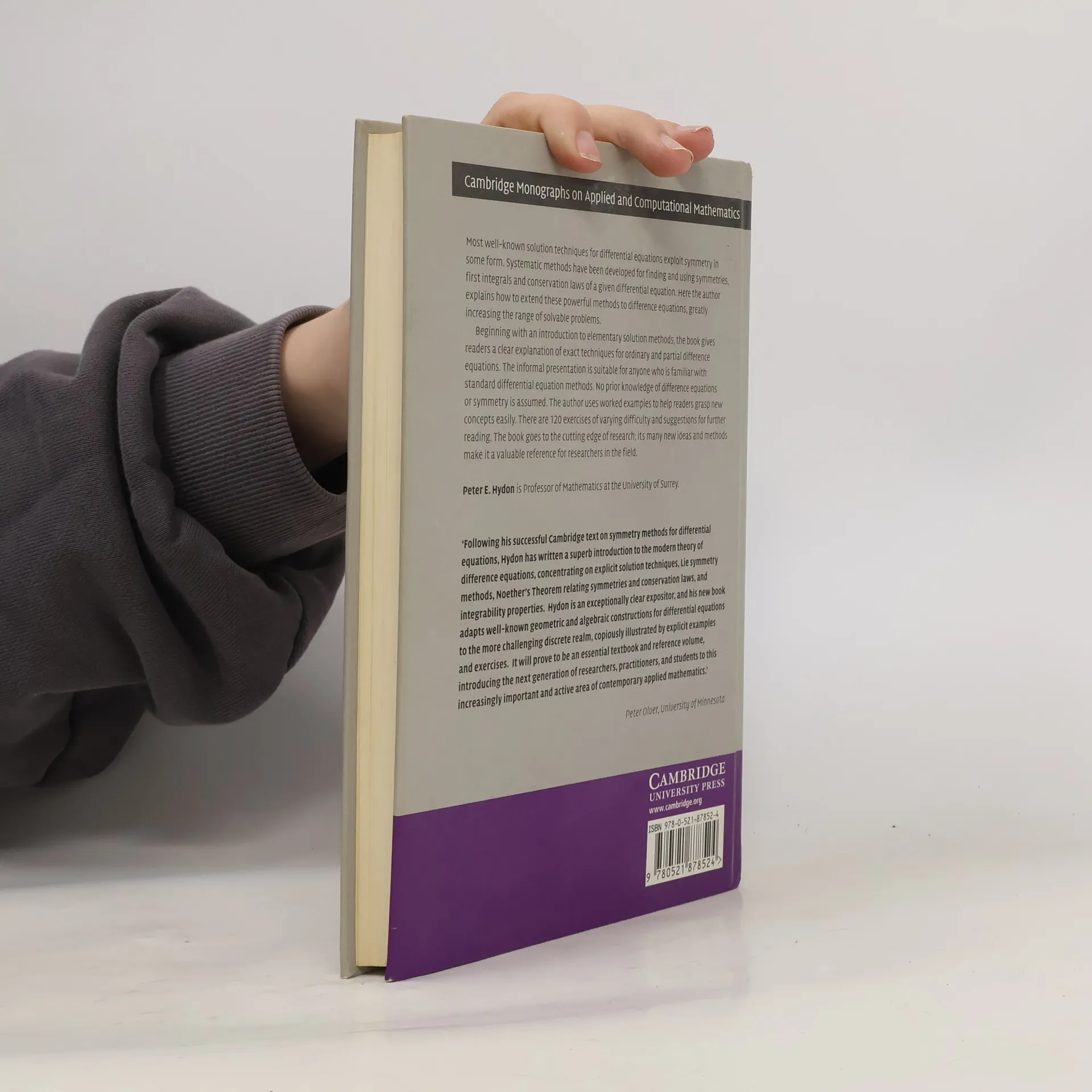
Most well-known solution techniques for differential equations exploit symmetry in some form. Systematic methods have been developed for finding and using symmetries, first integrals and conservation laws of a given differential equation. Here the author explains how to extend these powerful methods to difference equations, greatly increasing the range of solvable problems. Beginning with an introduction to elementary solution methods, the book gives readers a clear explanation of exact techniques for ordinary and partial difference equations. The informal presentation is suitable for anyone who is familiar with standard differential equation methods. No prior knowledge of difference equations or symmetry is assumed. The author uses worked examples to help readers grasp new concepts easily. There are 120 exercises of varying difficulty and suggestions for further reading. The book goes to the cutting edge of research; its many new ideas and methods make it a valuable reference for researchers in the field.
Book purchase
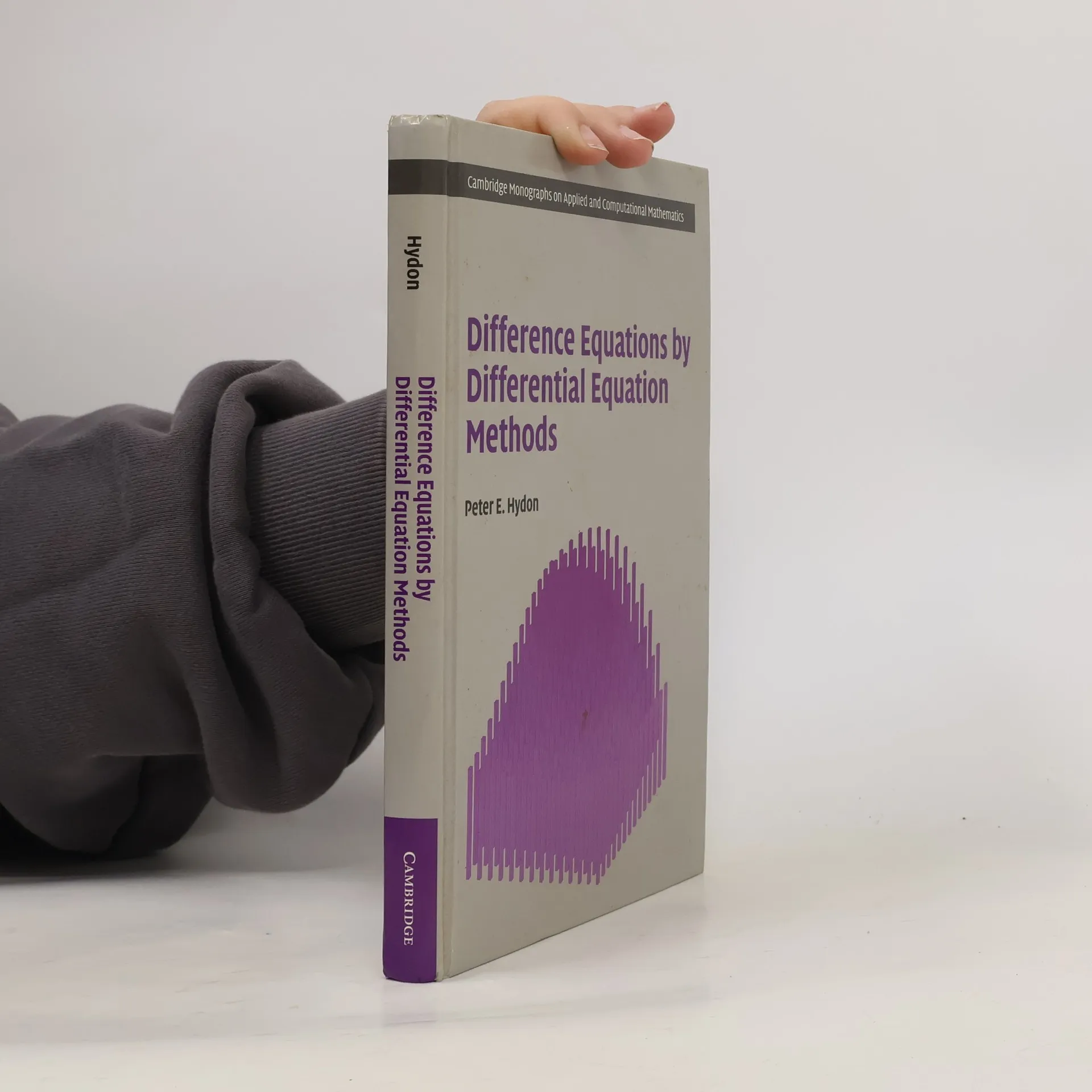
Cambridge Monographs on Applied and Computational Mathematics - 27: Difference Equations by Differential Equation Methods, Peter E. Hydon
- Language

- Released
- 2014
- Binding
- (Hardcover)
Payment methods
No one has rated yet.
- Title
- Cambridge Monographs on Applied and Computational Mathematics - 27: Difference Equations by Differential Equation Methods
- Language
- English
- Authors
- Peter E. Hydon
- Publisher
- Cambridge University Press
- Released
- 2014
- Format
- Hardcover
- Pages
- 222
- ISBN10
- 0521878527
- ISBN13
- 9780521878524
- Series
- Categories
- Description
- Most well-known solution techniques for differential equations exploit symmetry in some form. Systematic methods have been developed for finding and using symmetries, first integrals and conservation laws of a given differential equation. Here the author explains how to extend these powerful methods to difference equations, greatly increasing the range of solvable problems. Beginning with an introduction to elementary solution methods, the book gives readers a clear explanation of exact techniques for ordinary and partial difference equations. The informal presentation is suitable for anyone who is familiar with standard differential equation methods. No prior knowledge of difference equations or symmetry is assumed. The author uses worked examples to help readers grasp new concepts easily. There are 120 exercises of varying difficulty and suggestions for further reading. The book goes to the cutting edge of research; its many new ideas and methods make it a valuable reference for researchers in the field.