

More about the book
"The heart has reasons which the mind does not understand." This quote, often misused, highlights that Pascal's notion of the heart is not a dismissal of reason but an acknowledgment of a deeper rationality. For Pascal, the heart is integral to understanding theological matters, which he regarded as more significant than scientific inquiries, involving the whole personality. Blaise Pascal (1623-1662) left his Pensees unfinished at his death, yet the insights within continue to resonate. He presents a defense of Christian faith that intertwines skepticism and stoicism, addressing profound issues such as infinity, nothingness, intuition, analysis, existence, death, boredom, and despair. Central to his thoughts is the famous wager: the choice to believe in God or not. WISEBLOOD BOOKS champions works of fiction, poetry, and philosophy that reveal truths with an unyielding "realism of distances," as Flannery O'Connor described. These narratives seek redemption in unexpected places, challenge the monotony of life, critique societal pretensions, explore the complexities of faith and doubt, and confront humanity's trials while maintaining hope.
Book purchase
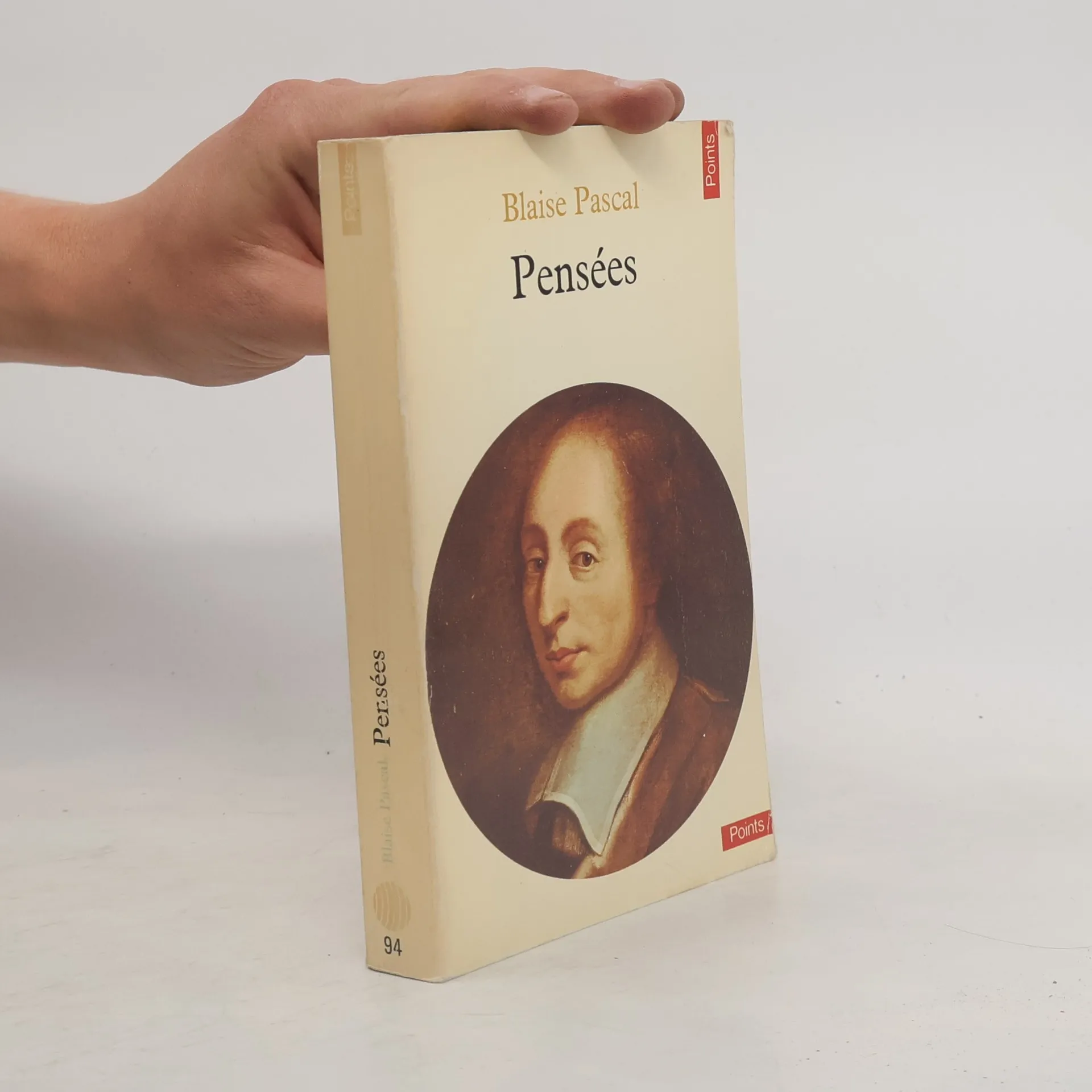
Points - 94: Pensées, Blaise Pascal
- Language

- Released
- 1978
- Binding
- (Paperback)
Payment methods
No one has rated yet.
- Title
- Points - 94: Pensées
- Language
- French
- Authors
- Blaise Pascal
- Publisher
- Seuil
- Released
- 1978
- Format
- Paperback
- Pages
- 434
- ISBN10
- 2020049791
- ISBN13
- 9782020049795
- Series
- Description
- "The heart has reasons which the mind does not understand." This quote, often misused, highlights that Pascal's notion of the heart is not a dismissal of reason but an acknowledgment of a deeper rationality. For Pascal, the heart is integral to understanding theological matters, which he regarded as more significant than scientific inquiries, involving the whole personality. Blaise Pascal (1623-1662) left his Pensees unfinished at his death, yet the insights within continue to resonate. He presents a defense of Christian faith that intertwines skepticism and stoicism, addressing profound issues such as infinity, nothingness, intuition, analysis, existence, death, boredom, and despair. Central to his thoughts is the famous wager: the choice to believe in God or not. WISEBLOOD BOOKS champions works of fiction, poetry, and philosophy that reveal truths with an unyielding "realism of distances," as Flannery O'Connor described. These narratives seek redemption in unexpected places, challenge the monotony of life, critique societal pretensions, explore the complexities of faith and doubt, and confront humanity's trials while maintaining hope.