

More about the book
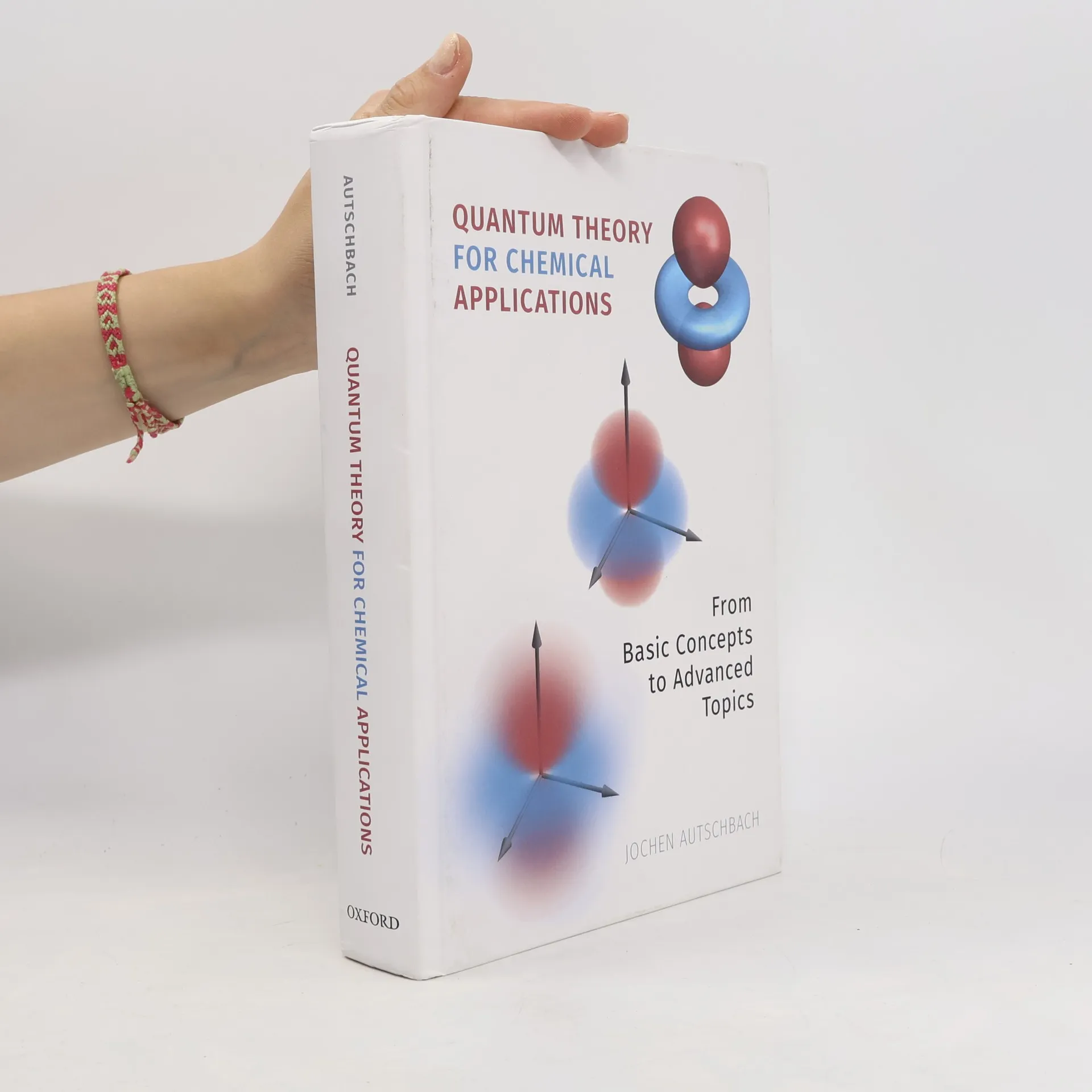
Quantum theory and computational chemistry are essential in chemistry, chemical engineering, and materials chemistry. Concepts such as chemical bonding, band structure, and molecular interactions are often framed within orbital theory, despite numerical calculations extending beyond simple models. The link between these theories and experimental results can be ambiguous, making it crucial for students to master quantum theory for practical application. In this book, Jochen Autschbach elegantly bridges the abstract and the concrete, serving as a guiding text for scholars and students. It addresses the quantum theory of atoms, molecules, and extended periodic systems, surpassing standard textbooks by integrating molecular and band structure perspectives and exploring response theory. The content is organized into four sections: Basic Theoretical Concepts; Atomic, Molecular, and Crystal Orbitals; Further Basic Concepts of Quantum Theory; and Advanced Topics, including relativistic quantum chemistry and molecule-light interactions. Autschbach's foresight is significant, providing a robust theoretical foundation for nearly all contemporary quantum chemistry methods. As quantum theory elucidates electron behavior in various systems, this book offers answers to both longstanding and novel questions in the field.
Book purchase
Quantum Theory for Chemical Applications, Jochen Autschbach
- Language

- Released
- 2020
- Binding
- (Hardcover)
Payment methods
No one has rated yet.
- Title
- Quantum Theory for Chemical Applications
- Subtitle
- From Basic Concepts to Advanced Topics
- Language
- English
- Authors
- Jochen Autschbach
- Publisher
- Oxford University Press
- Released
- 2020
- Format
- Hardcover
- Pages
- 756
- ISBN10
- 0190920807
- ISBN13
- 9780190920807
- Series
- Categories
- Description
- Quantum theory and computational chemistry are essential in chemistry, chemical engineering, and materials chemistry. Concepts such as chemical bonding, band structure, and molecular interactions are often framed within orbital theory, despite numerical calculations extending beyond simple models. The link between these theories and experimental results can be ambiguous, making it crucial for students to master quantum theory for practical application. In this book, Jochen Autschbach elegantly bridges the abstract and the concrete, serving as a guiding text for scholars and students. It addresses the quantum theory of atoms, molecules, and extended periodic systems, surpassing standard textbooks by integrating molecular and band structure perspectives and exploring response theory. The content is organized into four sections: Basic Theoretical Concepts; Atomic, Molecular, and Crystal Orbitals; Further Basic Concepts of Quantum Theory; and Advanced Topics, including relativistic quantum chemistry and molecule-light interactions. Autschbach's foresight is significant, providing a robust theoretical foundation for nearly all contemporary quantum chemistry methods. As quantum theory elucidates electron behavior in various systems, this book offers answers to both longstanding and novel questions in the field.