

Parameters
- 624 pages
- 22 hours of reading
More about the book
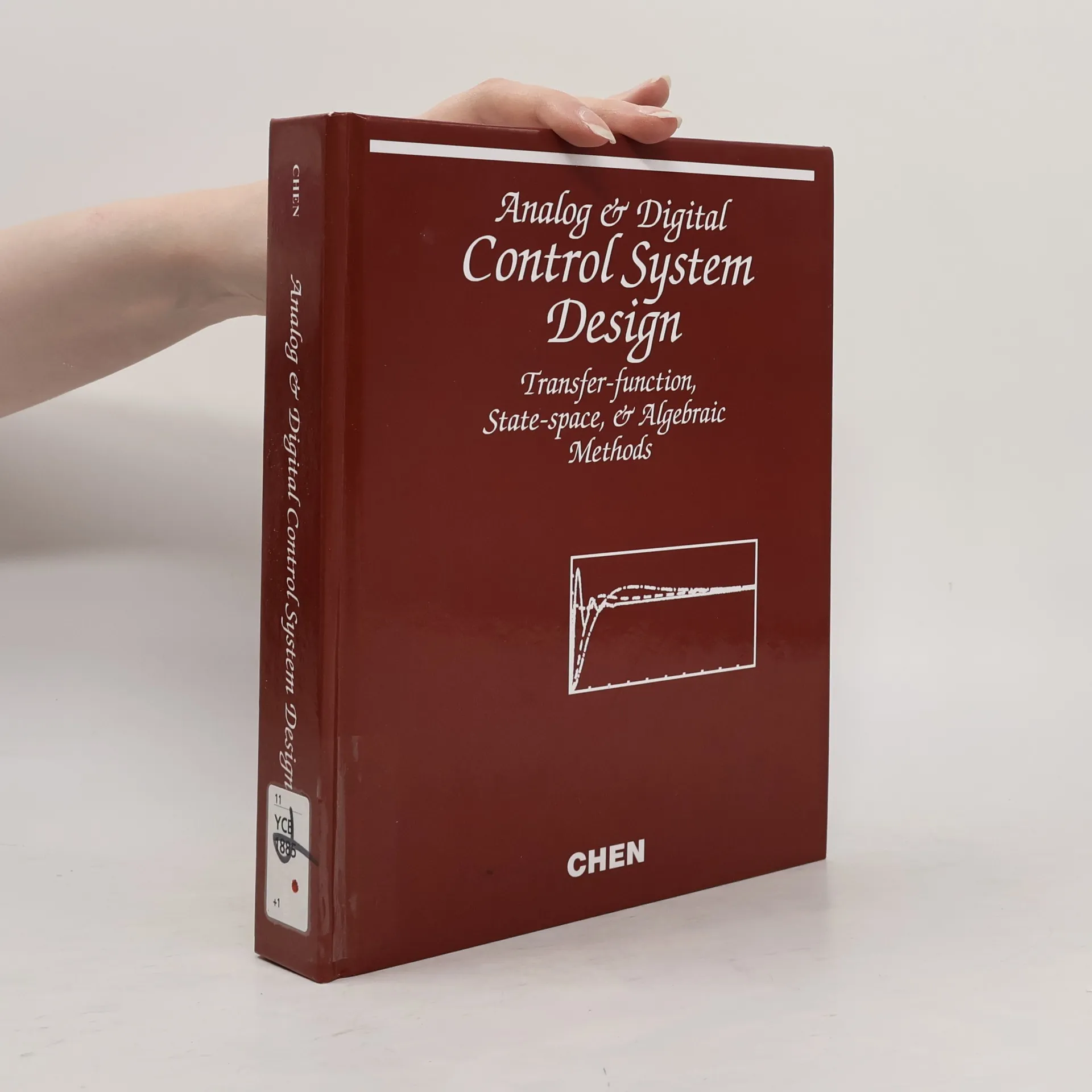
This text's contemporary approach focuses on the concepts of linear control systems, rather than computational mechanics. Straightforward coverage includes an integrated treatment of both classical and modern control system methods. The text emphasizes design with discussions of problem formulation, design criteria, physical constraints, several design methods, and implementation of compensators. Discussions of topics not found in other texts--such as pole placement, model matching and robust tracking--add to the text's cutting-edge presentation. Students will appreciate the applications and discussions of practical aspects, including the leading problem in developing block diagrams, noise, disturbances, and plant perturbations. State feedback and state estimators are designed using state variable equations and transfer functions, offering a comparison of the two approaches. The incorporation of MATLAB throughout the text helps students to avoid time-consuming computationand concentrate on control system design and analysis.
Book purchase
Analog and Digital Control System Design, Chi-Tsong Chen
- Language

- Released
- 2006
- Binding
- (Hardcover)
Payment methods
No one has rated yet.
- Title
- Analog and Digital Control System Design
- Subtitle
- Transfer-Function, State-Space, and Algebraic Methods
- Language
- English
- Authors
- Chi-Tsong Chen
- Publisher
- Oxford University Press
- Released
- 2006
- Format
- Hardcover
- Pages
- 624
- ISBN10
- 0195310462
- ISBN13
- 9780195310467
- Series
- Categories
- Description
- This text's contemporary approach focuses on the concepts of linear control systems, rather than computational mechanics. Straightforward coverage includes an integrated treatment of both classical and modern control system methods. The text emphasizes design with discussions of problem formulation, design criteria, physical constraints, several design methods, and implementation of compensators. Discussions of topics not found in other texts--such as pole placement, model matching and robust tracking--add to the text's cutting-edge presentation. Students will appreciate the applications and discussions of practical aspects, including the leading problem in developing block diagrams, noise, disturbances, and plant perturbations. State feedback and state estimators are designed using state variable equations and transfer functions, offering a comparison of the two approaches. The incorporation of MATLAB throughout the text helps students to avoid time-consuming computationand concentrate on control system design and analysis.