


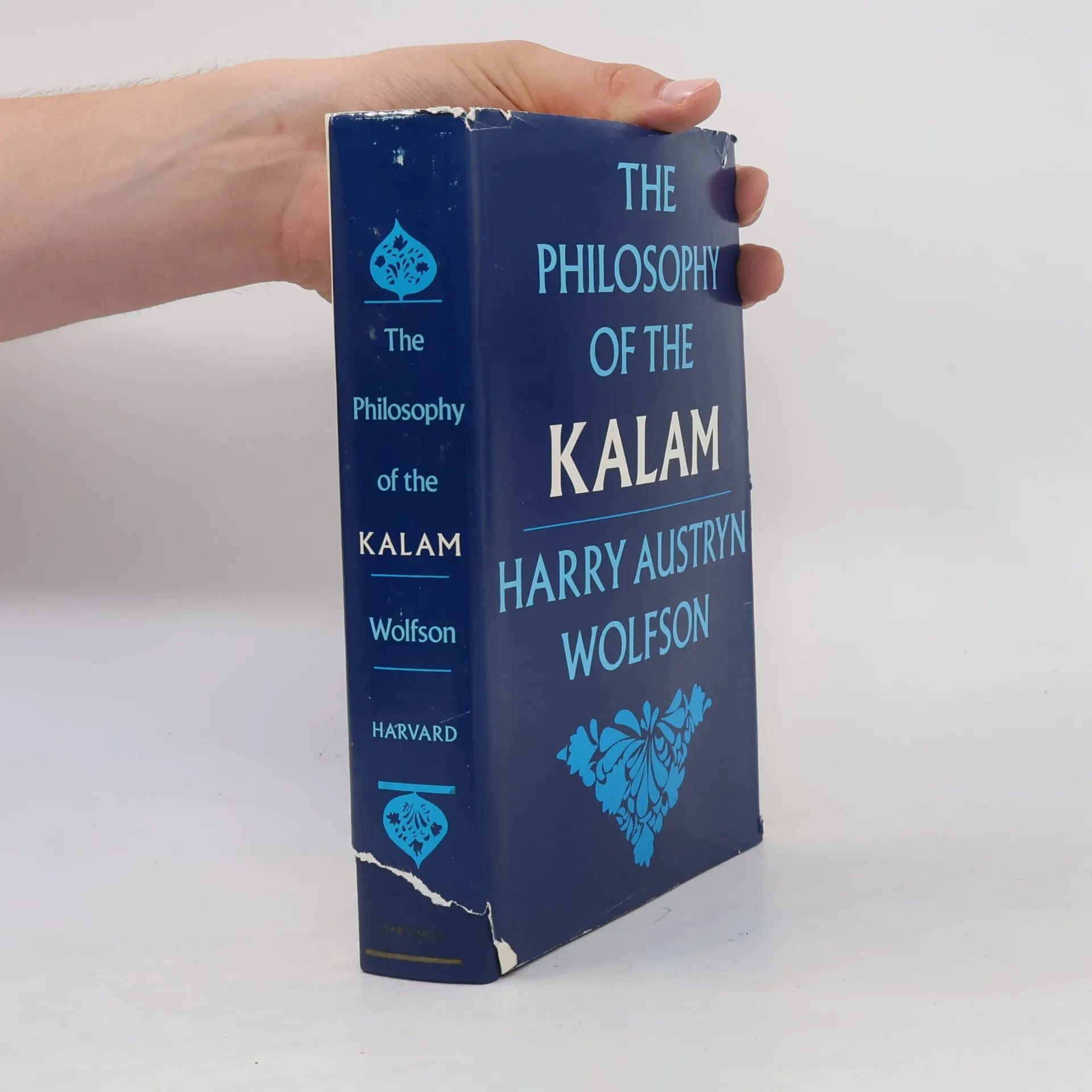


More about the book
In this long-awaited volume, Mr. Wolfson explores the doctrine known as Kalam, an Arabic term meaning "speech" or "discussion," which refers to early Islamic efforts to provide philosophical proofs for religious beliefs. This system of religious philosophy reached its zenith in the eleventh century, with its masters, the Mutakallimun, paralleling the Christian Church Fathers. Wolfson systematically examines the Kalam, tracing its philosophical origins and implications while noting its influence on other religions. He analyzes texts from Muslim writers addressing fundamental issues such as God's attributes, Creation, causality, predestination, and free will. Throughout, he reveals how Koranic teachings intertwined with Greek and Oriental philosophies, as well as Judaism and Christianity, shaping Islamic thought. Written with clarity and intellectual rigor, this volume serves as a fitting culmination of Wolfson's distinguished career. Having spent sixty-six years at Harvard University, Wolfson was a prominent figure in Hebrew Literature and Philosophy, known for his profound scholarship on the evolution of philosophical systems from Plato to Spinoza. His mastery of primary sources and insightful interpretations earned him worldwide respect, marking him as one of the great scholars of his time.
Book purchase
The Philosophy of the Kalam, Harry Austryn Wolfson
- Language

- Released
- 1976
- Binding
- (Hardcover),
- Book condition
- Damaged
- Price
- €70.71
Payment methods
No one has rated yet.
- Language
- English
- Authors
- Harry Austryn Wolfson
- Publisher
- Harvard University Press
- Released
- 1976
- Format
- Hardcover
- Pages
- 779
- ISBN10
- 0674665805
- ISBN13
- 9780674665804
- Series
- Description
- In this long-awaited volume, Mr. Wolfson explores the doctrine known as Kalam, an Arabic term meaning "speech" or "discussion," which refers to early Islamic efforts to provide philosophical proofs for religious beliefs. This system of religious philosophy reached its zenith in the eleventh century, with its masters, the Mutakallimun, paralleling the Christian Church Fathers. Wolfson systematically examines the Kalam, tracing its philosophical origins and implications while noting its influence on other religions. He analyzes texts from Muslim writers addressing fundamental issues such as God's attributes, Creation, causality, predestination, and free will. Throughout, he reveals how Koranic teachings intertwined with Greek and Oriental philosophies, as well as Judaism and Christianity, shaping Islamic thought. Written with clarity and intellectual rigor, this volume serves as a fitting culmination of Wolfson's distinguished career. Having spent sixty-six years at Harvard University, Wolfson was a prominent figure in Hebrew Literature and Philosophy, known for his profound scholarship on the evolution of philosophical systems from Plato to Spinoza. His mastery of primary sources and insightful interpretations earned him worldwide respect, marking him as one of the great scholars of his time.