



More about the book
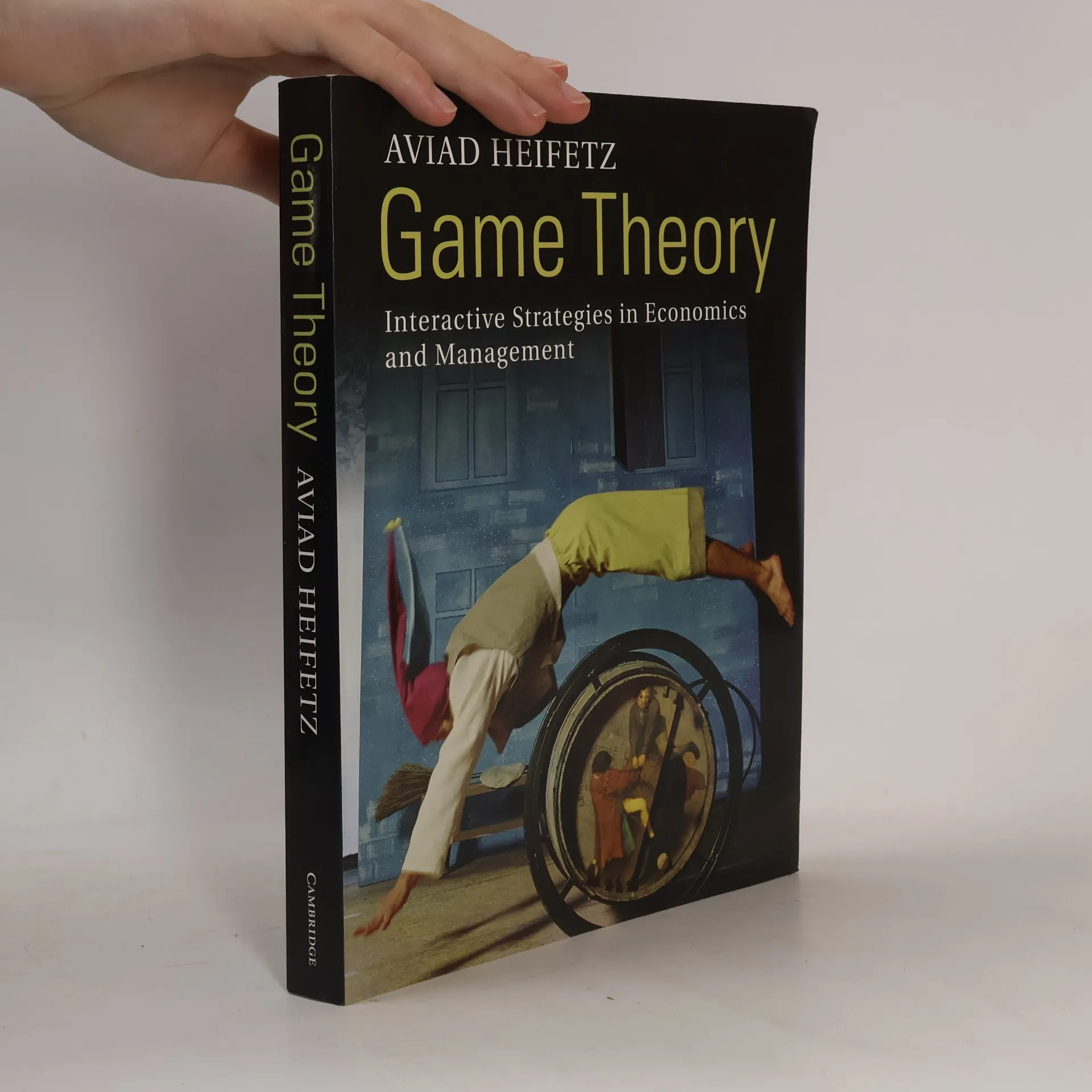
Game theory is concerned with strategic interaction among several decision-makers. In such strategic encounters, all players are aware of the fact that their actions affect the other players. Game theory analyzes how these strategic, interactive considerations may affect the players' decisions and influence the final outcome. This textbook focuses on applications of complete-information games in economics and management, as well as in other fields such as political science, law and biology. It guides students through the fundamentals of game theory by letting examples lead the way to the concepts needed to solve them. It provides opportunities for self-study and self-testing through an extensive pedagogical apparatus of examples, questions and answers. The book also includes more advanced material suitable as a basis for seminar papers or elective topics, including rationalizability, stability of equilibria (with discrete-time dynamics), games and evolution, equilibrium selection and global games.
Book purchase
Game Theory, Aviad Heifetz, Judith Yalon-Fortus
- Language

- Released
- 2012
- Binding
- (Paperback)
Payment methods
No one has rated yet.
- Title
- Game Theory
- Subtitle
- Interactive Strategies in Economics and Management
- Language
- English
- Authors
- Aviad Heifetz, Judith Yalon-Fortus
- Publisher
- Cambridge University Press
- Released
- 2012
- Format
- Paperback
- Pages
- 460
- ISBN10
- 0521176042
- ISBN13
- 9780521176040
- Series
- Categories
- Description
- Game theory is concerned with strategic interaction among several decision-makers. In such strategic encounters, all players are aware of the fact that their actions affect the other players. Game theory analyzes how these strategic, interactive considerations may affect the players' decisions and influence the final outcome. This textbook focuses on applications of complete-information games in economics and management, as well as in other fields such as political science, law and biology. It guides students through the fundamentals of game theory by letting examples lead the way to the concepts needed to solve them. It provides opportunities for self-study and self-testing through an extensive pedagogical apparatus of examples, questions and answers. The book also includes more advanced material suitable as a basis for seminar papers or elective topics, including rationalizability, stability of equilibria (with discrete-time dynamics), games and evolution, equilibrium selection and global games.