

You'll get the exact copy in the photo
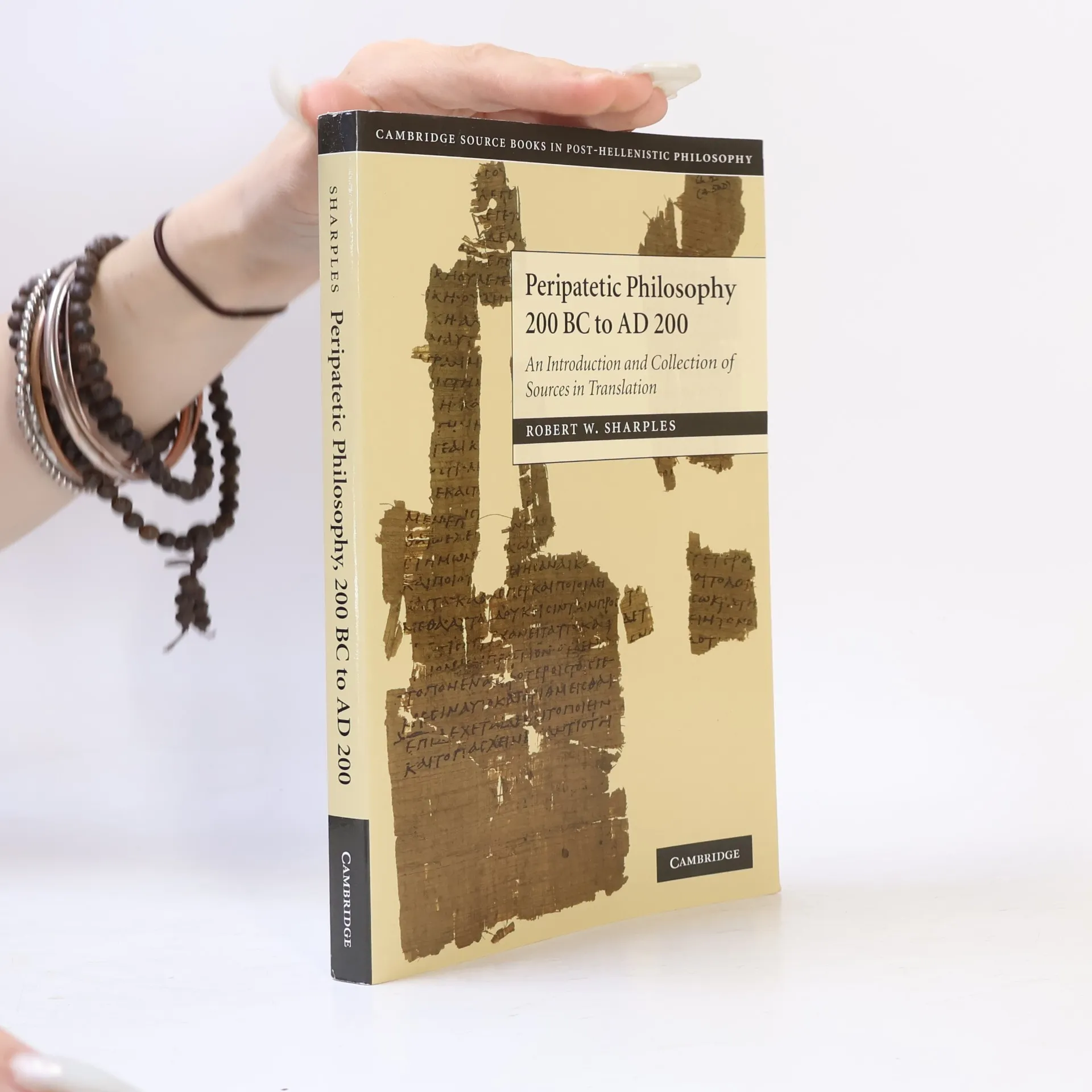
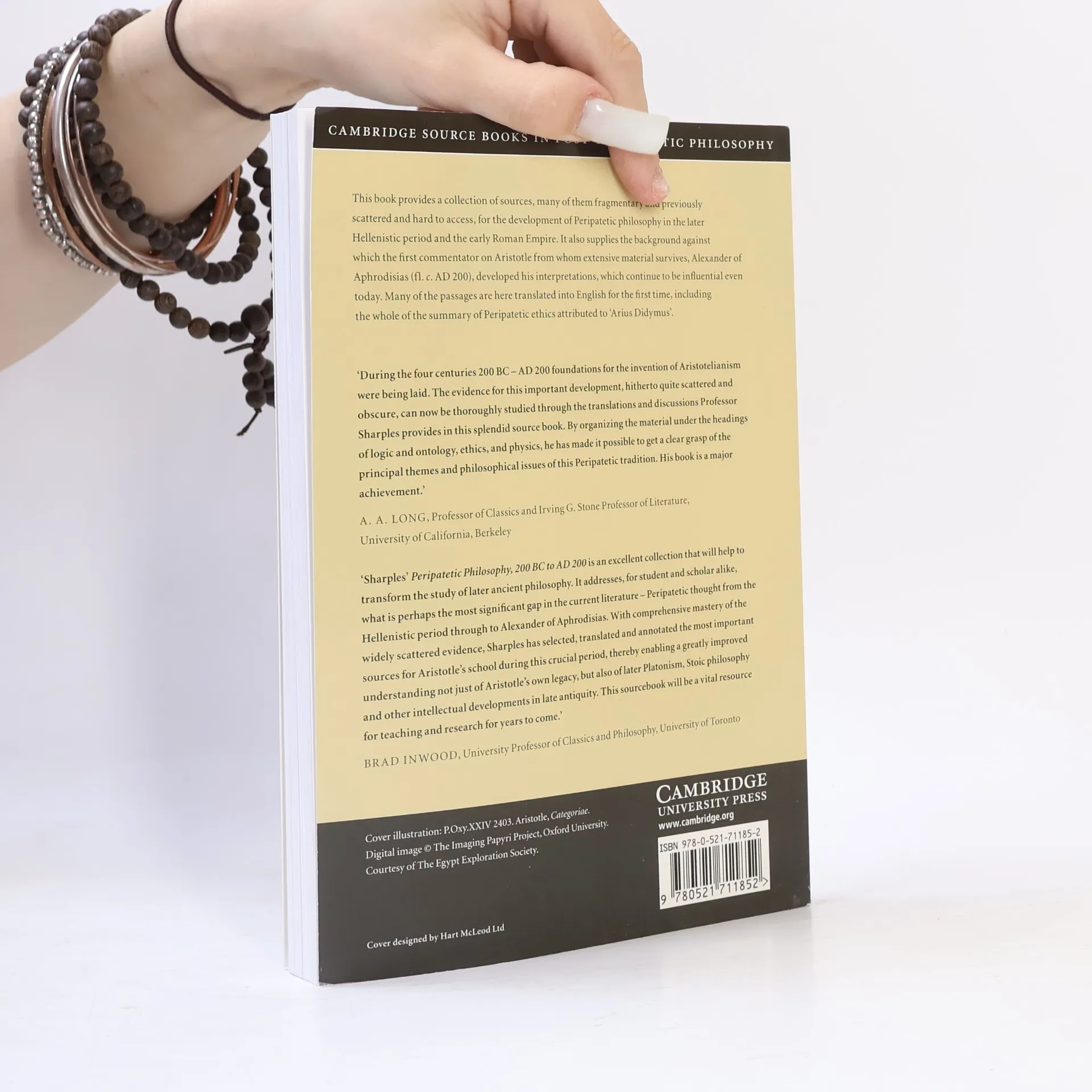

More about the book
A collection of sources, many of them fragmentary and previously scattered and hard to access, for the development of Peripatetic philosophy in the later Hellenistic period and the early Roman empire. This book provides the background against which the first commentator on Aristotle from whom extensive material survives, Alexander of Aphrodisias (fl. c. AD 200) developed his interpretations which continue to be influential even today. Many of the passages are here translated into English for the first time, including the whole of the summary of Peripatetic ethics attributed to 'Arius Didymus'.
Book purchase
Cambridge Source Books in Post-Hellenistic Philosophy: Peripatetic Philosophy, 200 BC to AD 200, Robert W. Sharples
- Language

- Released
- 2010
- Binding
- (Paperback),
- Book condition
- Good
- Price
- €12.99
Payment methods
No one has rated yet.
- Title
- Cambridge Source Books in Post-Hellenistic Philosophy: Peripatetic Philosophy, 200 BC to AD 200
- Subtitle
- An Introduction and Collection of Sources in Translation
- Language
- English
- Authors
- Robert W. Sharples
- Publisher
- Cambridge University Press
- Released
- 2010
- Format
- Paperback
- Pages
- 330
- ISBN10
- 0521711851
- ISBN13
- 9780521711852
- Series
- Categories
- Description
- A collection of sources, many of them fragmentary and previously scattered and hard to access, for the development of Peripatetic philosophy in the later Hellenistic period and the early Roman empire. This book provides the background against which the first commentator on Aristotle from whom extensive material survives, Alexander of Aphrodisias (fl. c. AD 200) developed his interpretations which continue to be influential even today. Many of the passages are here translated into English for the first time, including the whole of the summary of Peripatetic ethics attributed to 'Arius Didymus'.