



More about the book
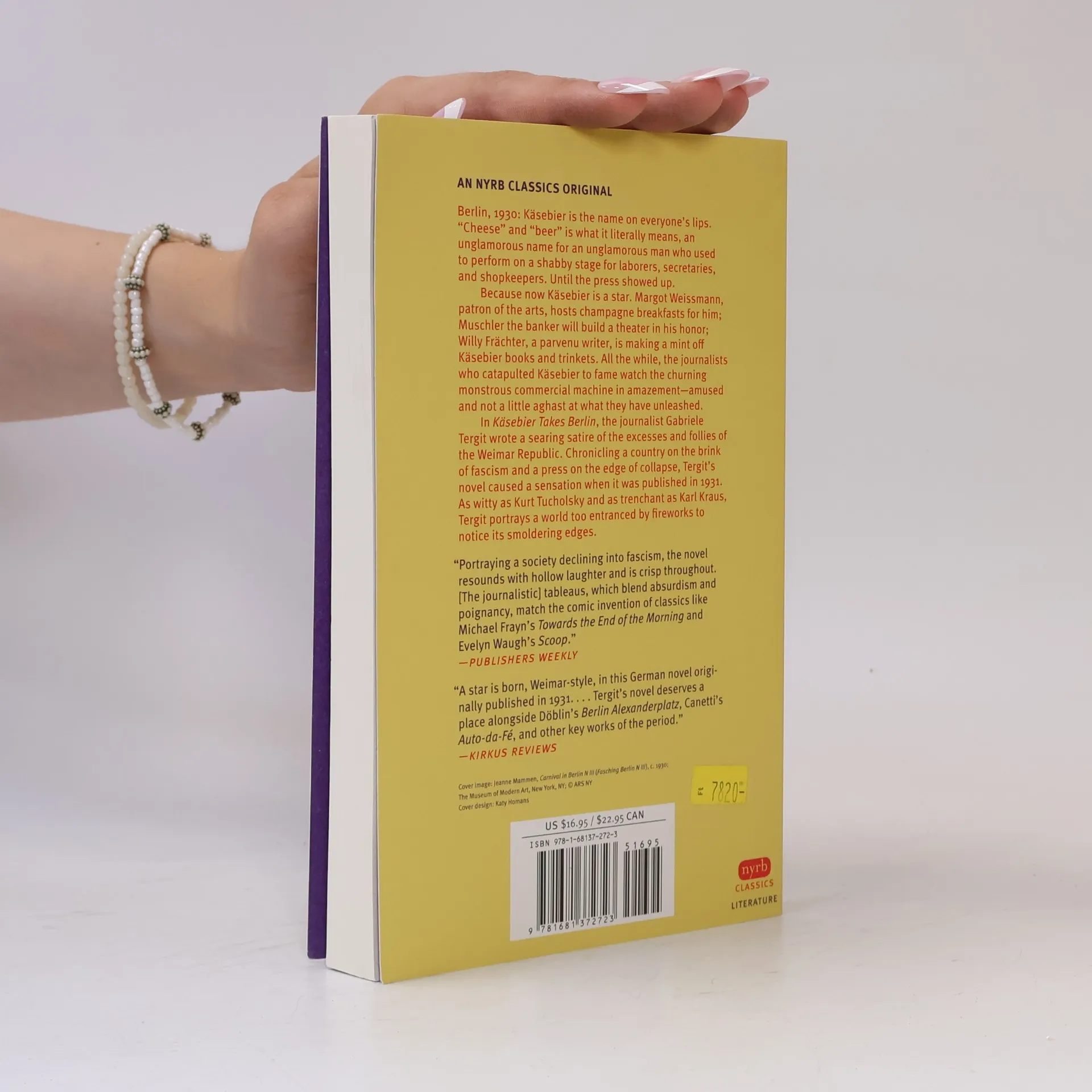
In English for the first time, a panoramic satire about the star-making machine, set in celebrity-obsessed Weimar Berlin. In Berlin, 1930, the name Käsebier is on everyone’s lips. A literal combination of the German words for “cheese” and “beer,” it’s an unglamorous name for an unglamorous man—a small-time crooner who performs nightly on a shabby stage for laborers, secretaries, and shopkeepers. Until the press shows up. In the blink of an eye, this everyman is made a star: a star who can sing songs for a troubled time. Margot Weissmann, the arts patron, hosts champagne breakfasts for Käsebier; Muschler the banker builds a theater in his honor; Willi Frächter, a parvenu writer, makes a mint off Käsebier-themed business ventures and books. All the while, the journalists who catapulted Käsebier to fame watch the monstrous media machine churn in amazement—and are aghast at the demons they have unleashed. In Käsebier Takes Berlin, the journalist Gabriele Tergit wrote a searing satire of the excesses and follies of the Weimar Republic. Chronicling a country on the brink of fascism and a press on the edge of collapse, Tergit’s novel caused a sensation when it was published in 1931. As witty as Kurt Tucholsky and as trenchant as Karl Kraus, Tergit portrays a world too entranced by fireworks to notice its smoldering edges.
Book purchase
New York Review Books Classics: Käsebier Takes Berlin, Gabriele Tergit, Sophie Duvernoy
- Language

- Released
- 2019
- product-detail.submit-box.info.binding
- (Paperback),
- Book condition
- Good
- Price
- €10.99
Payment methods
No one has rated yet.
- Title
- New York Review Books Classics: Käsebier Takes Berlin
- Language
- English
- Authors
- Gabriele Tergit, Sophie Duvernoy
- Publisher
- Random House LCC US
- Released
- 2019
- Format
- Paperback
- Pages
- 304
- ISBN10
- 168137272X
- ISBN13
- 9781681372723
- Series
- Tags
- Fiction, Historical Fiction, Poetry, Mystery Novels, Humor, Art, Music Theme, Thriller, German Literature, Contemporary Fiction, Classics, Short Stories, Germany, Wars, World War II, 20th century, Opinion Journalism & Essays, Filmthema, England, Linguistics, Berlin, Journalism, Comedies, History of Europe, Novellas, Espionage, Russian Literature, 21st Century, Satire, Identity, Noir, Socialism, Cold War, Fascism, Eastern Europe
- Description
- In English for the first time, a panoramic satire about the star-making machine, set in celebrity-obsessed Weimar Berlin. In Berlin, 1930, the name Käsebier is on everyone’s lips. A literal combination of the German words for “cheese” and “beer,” it’s an unglamorous name for an unglamorous man—a small-time crooner who performs nightly on a shabby stage for laborers, secretaries, and shopkeepers. Until the press shows up. In the blink of an eye, this everyman is made a star: a star who can sing songs for a troubled time. Margot Weissmann, the arts patron, hosts champagne breakfasts for Käsebier; Muschler the banker builds a theater in his honor; Willi Frächter, a parvenu writer, makes a mint off Käsebier-themed business ventures and books. All the while, the journalists who catapulted Käsebier to fame watch the monstrous media machine churn in amazement—and are aghast at the demons they have unleashed. In Käsebier Takes Berlin, the journalist Gabriele Tergit wrote a searing satire of the excesses and follies of the Weimar Republic. Chronicling a country on the brink of fascism and a press on the edge of collapse, Tergit’s novel caused a sensation when it was published in 1931. As witty as Kurt Tucholsky and as trenchant as Karl Kraus, Tergit portrays a world too entranced by fireworks to notice its smoldering edges.