


Parameters
- 80 pages
- 3 hours of reading
More about the book
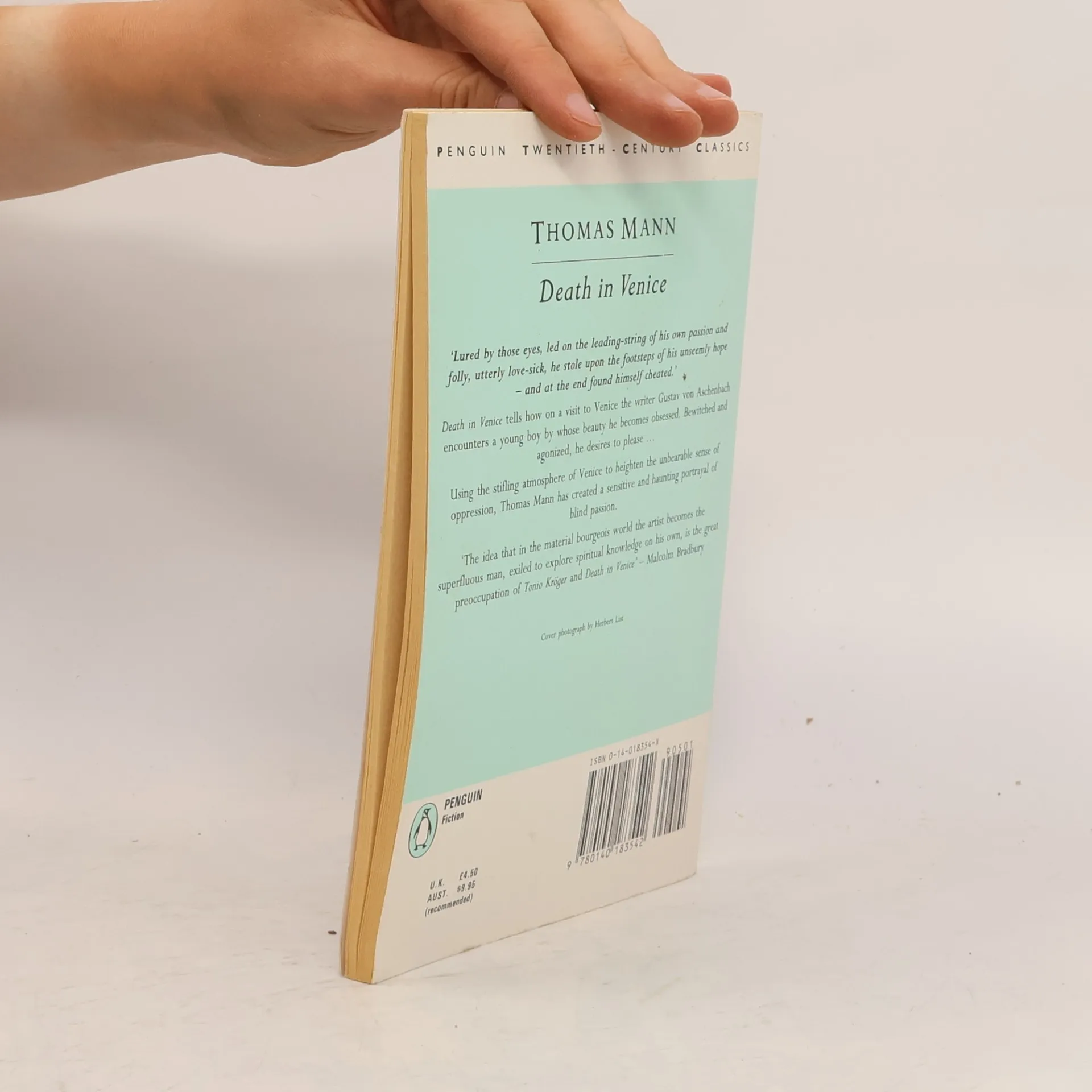
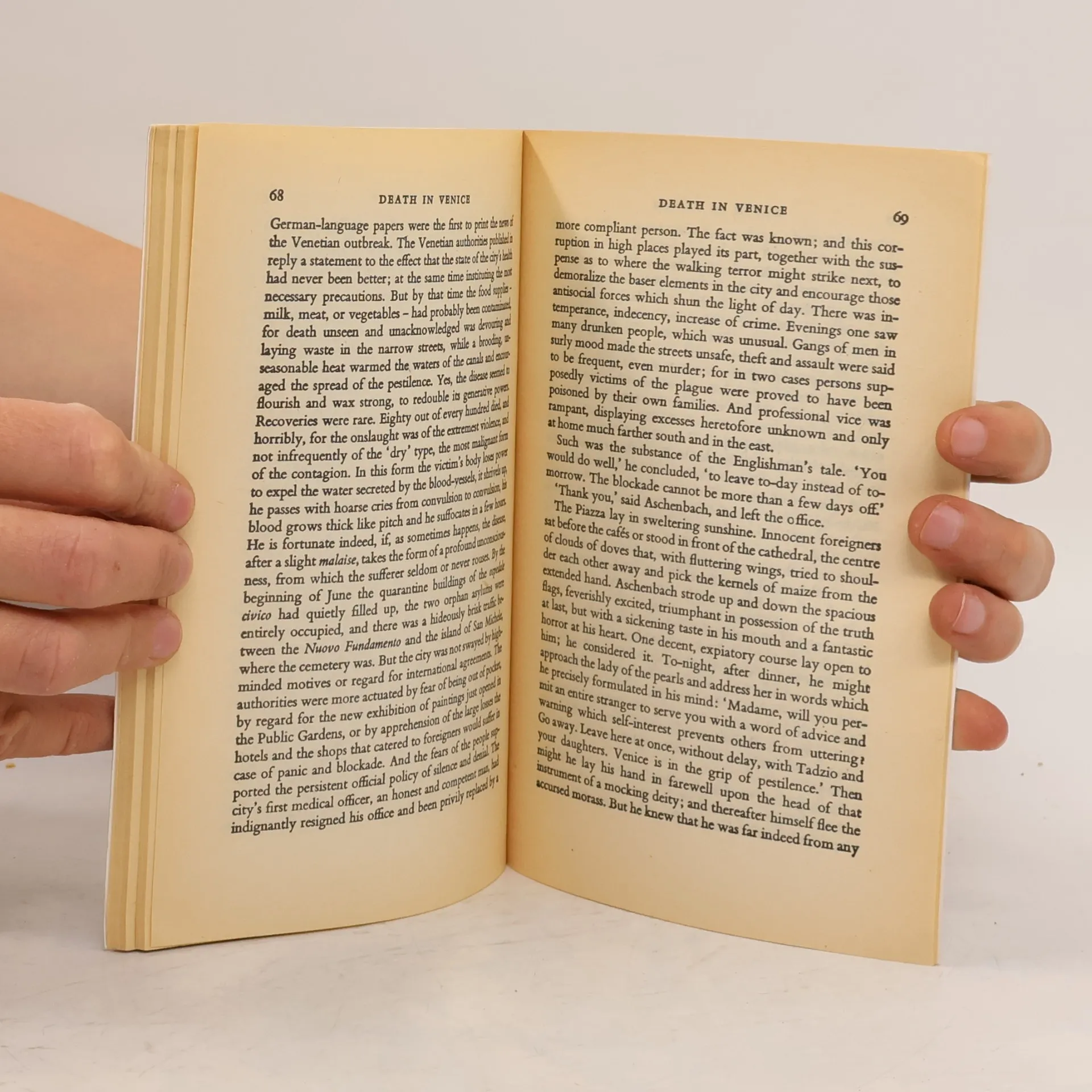
The novella <i>Death in Venice</i> was written by the German author Thomas Mann, and was first published in 1912 as <i>Der Tod in Venedig</i>. The plot of the work presents a great writer suffering writer's block who visits Venice and is liberated and uplifted, then increasingly obsessed, by the sight of a stunningly beautiful youth. Though he never speaks to the boy, much less touches him, the writer finds himself drawn deep into ruinous inward passion; meanwhile Venice, and finally the writer himself, succumb to a cholera plague. The novella is powerfully intertextual, with the chief sources being first the connection of erotic love to philosophical wisdom traced in Plato's <i>Symposium</i> and <i>Phaedrus</i>, and second the Nietzschean contrast between the god of restraint and shaping form, Apollo, and the god of excess and passion, Dionysus.
Book purchase
Death in Venice, Thomas Mann, H. T. Lowe Porter
- Language

- Released
- 1990
- product-detail.submit-box.info.binding
- (Paperback),
- Book condition
- Good
- Price
- €6.99
Payment methods
No one has rated yet.
- Title
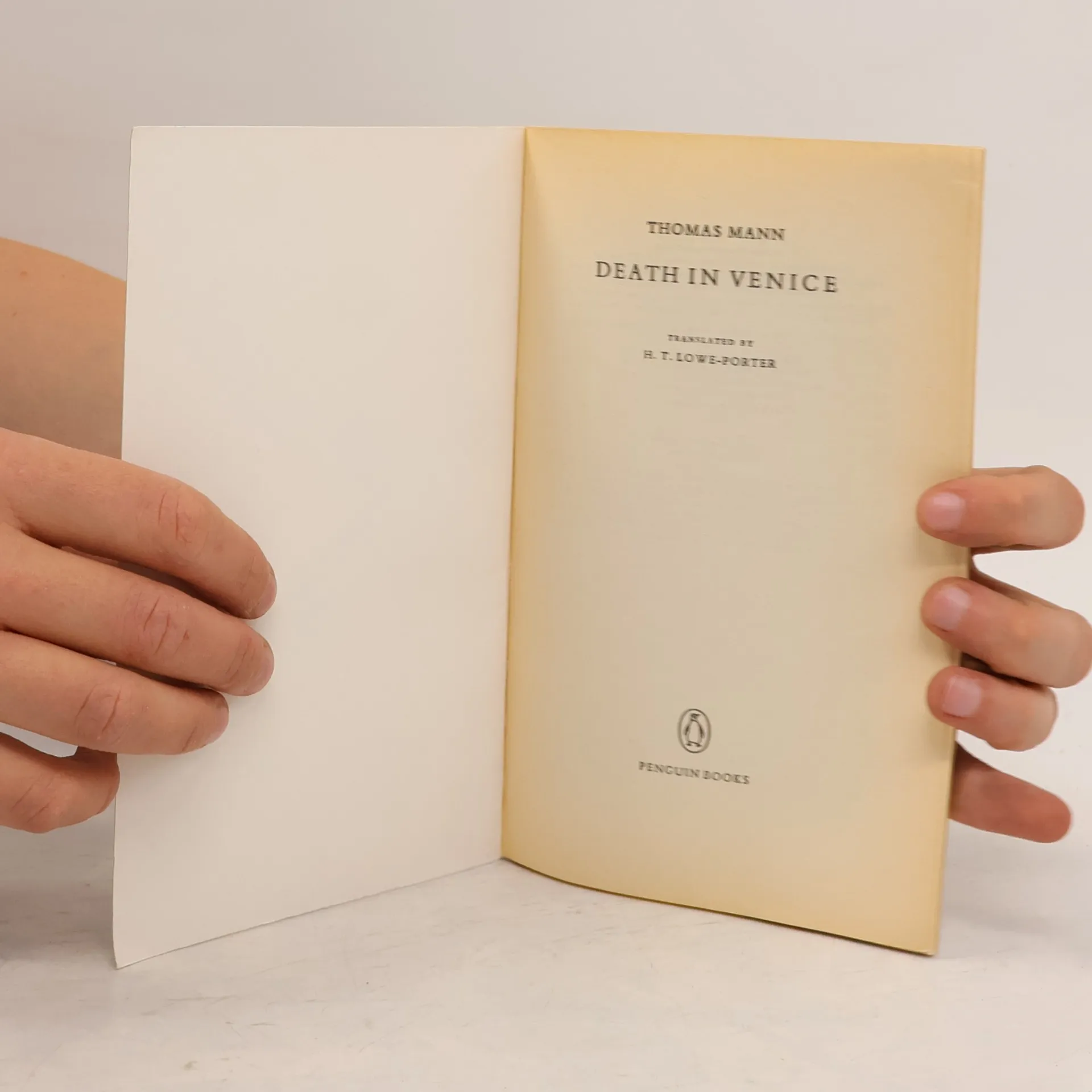
- Death in Venice
- Language
- English
- Authors
- Thomas Mann, H. T. Lowe Porter
- Publisher
- Penguin Books
- Released
- 1990
- Format
- Paperback
- Pages
- 80
- ISBN10
- 014018354X
- ISBN13
- 9780140183542
- Series
- Tags
- Fiction, Historical Themes, German Literature, Classics, Short Stories, 20th century, LGBTQ+, Culture and Society, Novellas, Nobel prize, Modernism
- Description
- The novella <i>Death in Venice</i> was written by the German author Thomas Mann, and was first published in 1912 as <i>Der Tod in Venedig</i>. The plot of the work presents a great writer suffering writer's block who visits Venice and is liberated and uplifted, then increasingly obsessed, by the sight of a stunningly beautiful youth. Though he never speaks to the boy, much less touches him, the writer finds himself drawn deep into ruinous inward passion; meanwhile Venice, and finally the writer himself, succumb to a cholera plague. The novella is powerfully intertextual, with the chief sources being first the connection of erotic love to philosophical wisdom traced in Plato's <i>Symposium</i> and <i>Phaedrus</i>, and second the Nietzschean contrast between the god of restraint and shaping form, Apollo, and the god of excess and passion, Dionysus.