


This series offers accessible introductions to pivotal areas of philosophical thought, specifically crafted for undergraduate students encountering these subjects for the first time. Each volume provides a clear and lucid exploration of a particular philosophical domain. The primary goal is to equip readers with a solid foundational understanding, making it an ideal starting point for anyone seeking to grasp core philosophical concepts. It serves as an excellent resource for building a strong grounding in fundamental philosophical disciplines.
The first comprehensive textbook covering the interrelations between topics in
the philosophy of logic in an accessible, non-technical, and up-to-date way.
Avoiding complex jargon, this book engages with metaphysics of logic, logical
pluralism, and the meaning of logical constants, and will be a highly
important resource for students of philosophy.
An extensively rewritten second edition of this best-selling standard text for
graduates and upper-level undergraduate students of logic, philosophy of
mathematics, and pure mathematics. A clear and accessible treatment of Gödel's
famous, intriguing, but much misunderstood incompleteness theorems.
This book examines the central questions of ethics through a study of theories
found in the great ethical works of Western philosophy. The core chapters
cover egoism, the eudaimonism of Plato and Aristotle, act and rule
utilitarianism, modern natural law theory, Kant's moral theory, and
existentialist ethics.
Preface; 1. Introduction; 2. The decision matrix; 3. Decisions under
ignorance; 4. Decisions under risk; 5. Utility; 6. The mathematics of
probability; 7. The philosophy of probability; 8. Bayesianism and pragmatic
arguments; 9. Causal vs evidential decision theory; 10. Risk aversion; 11.
Game theory I: basic concepts and zero-sum games; 12. Game theory II: nonzero-
sum and cooperative games; 13. Social choice theory; 14. Overview of
descriptive decision theory; Appendix A. Glossary; Further reading; Index.
Introduces readers to central concepts and debates in political philosophy
using real-life examples. Clearly written, thematically structured, and
containing several new chapters, this fully updated second edition explores
topics including economic inequality, justice, immigration, climate change,
freedom, democracy and racial oppression.
This introduction provides a comprehensive and accessible overview of the
central topics in Latin American philosophy. It explores not only the unique
insights offered by Latin American thinkers into pre-established fields of
Western philosophy, but also the many 'isms' developed as a direct result of
Latin American thought.
This work offers a comprehensive exploration of the philosophy underlying social science, presented by a respected author in the field. It delves into fundamental questions about the nature of social phenomena, the methods used to study them, and the implications of various philosophical perspectives. Readers can expect to engage with critical concepts that shape the understanding of social research and its significance in interpreting human behavior and societal structures.
This introduction to philosophy explores its fundamental nature, methods, and importance. It offers insights into philosophical inquiry and encourages readers to engage with critical thinking and reflective practices. The book serves as a guide for understanding philosophical concepts and applying them to everyday life, highlighting the relevance of philosophy in fostering a deeper understanding of ourselves and the world around us.
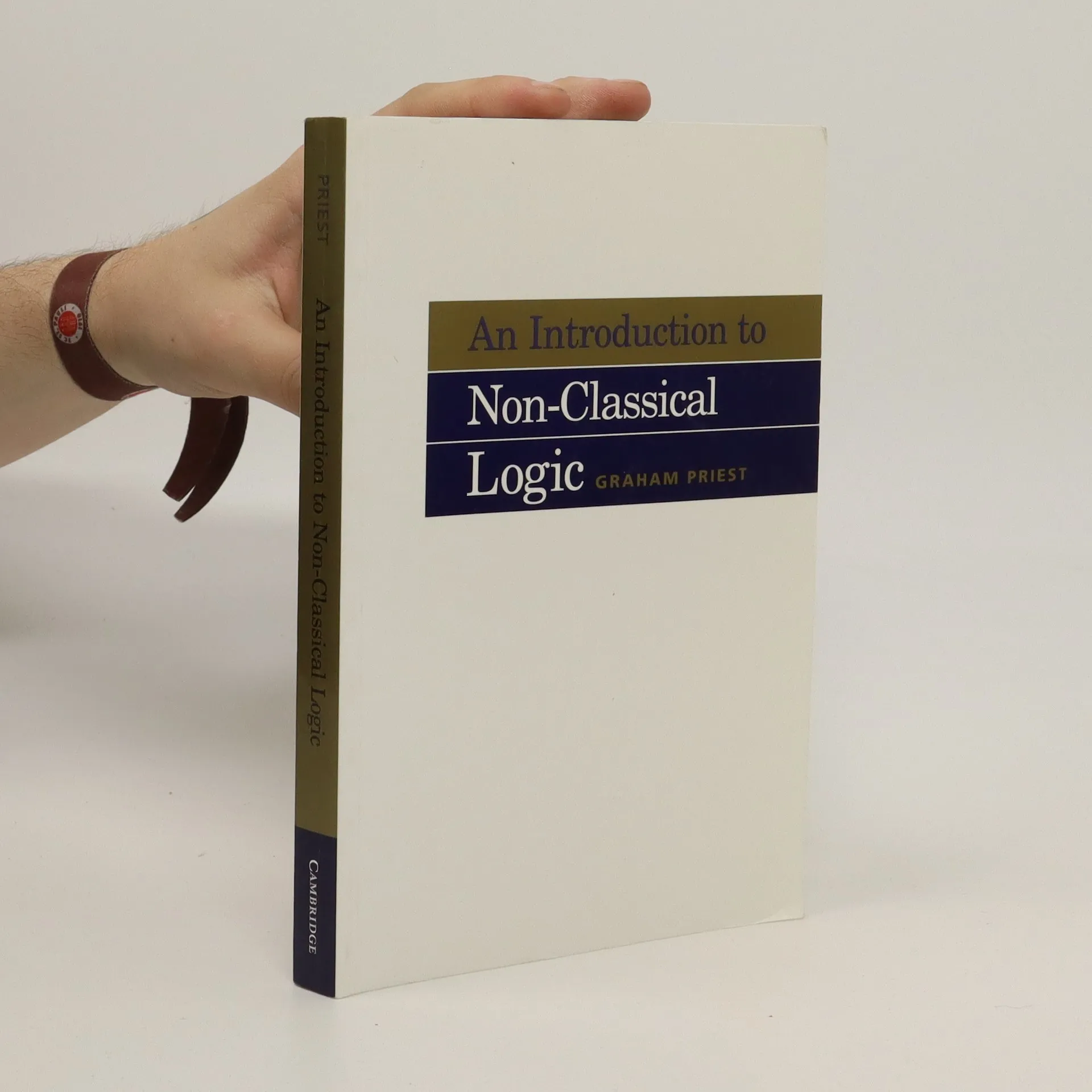
This book is an introduction to non-classical propositional logics. It brings together for the first time in a textbook a range of topics in logic, many of them of relatively recent origin, including modal, conditional, intuitionist, many-valued, paraconsistent, relevant and fuzzy logics. The material is unified by the underlying theme of world-semantics. All of the topics are explained clearly and accessibly, using devices such as tableaux proofs, and their relation to current philosophical issues and debates is discussed. Students with a basic understanding of classical logic will find this an invaluable introduction to an area that has become of central importance in both logic and philosophy, but which, until now, could be studied only through the research literature. It will interest those studying logic, those who need to know about non-classical logics because of their philosophical importance, and, more widely, readers working in mathematics and computer science.
This book explores key concepts and debates within the philosophy of language, examining fundamental questions about meaning, reference, and the nature of linguistic communication. It addresses significant philosophical challenges and theories, providing a comprehensive overview that is accessible to both newcomers and those familiar with the field. Through critical analysis, it encourages readers to engage with the complexities of language and its implications for understanding thought and reality.
This undergraduate textbook offers the first comprehensive treatment of
Africana philosophy. Covering Africa, Europe, North and South America, the
Caribbean, it explores the challenges posed to our understanding of knowledge
and freedom today, and the response to them which can be found within Africana
philosophy.
This book explores the philosophical questions surrounding the science of the mind, making complex concepts accessible to readers without a psychology background. It covers topics like perception, attention, consciousness, and the mind-body relationship, providing a comprehensive overview valuable for students and specialists in related fields.
"An Introduction to the Philosophy of Religion" offers a comprehensive overview of key topics in contemporary philosophy of religion. It analyzes historical and modern arguments on divine attributes, faith and reason, ethics, miracles, and more, while also addressing often-overlooked issues like atheism and the interplay of religion and politics.
What makes it the case that one event causes another event? What are material
objects? What makes it the case that a person may exist at two different
times? This engaging and well-written introduction makes these questions
tractable by presenting the features and flaws of current attempts to answer
them.
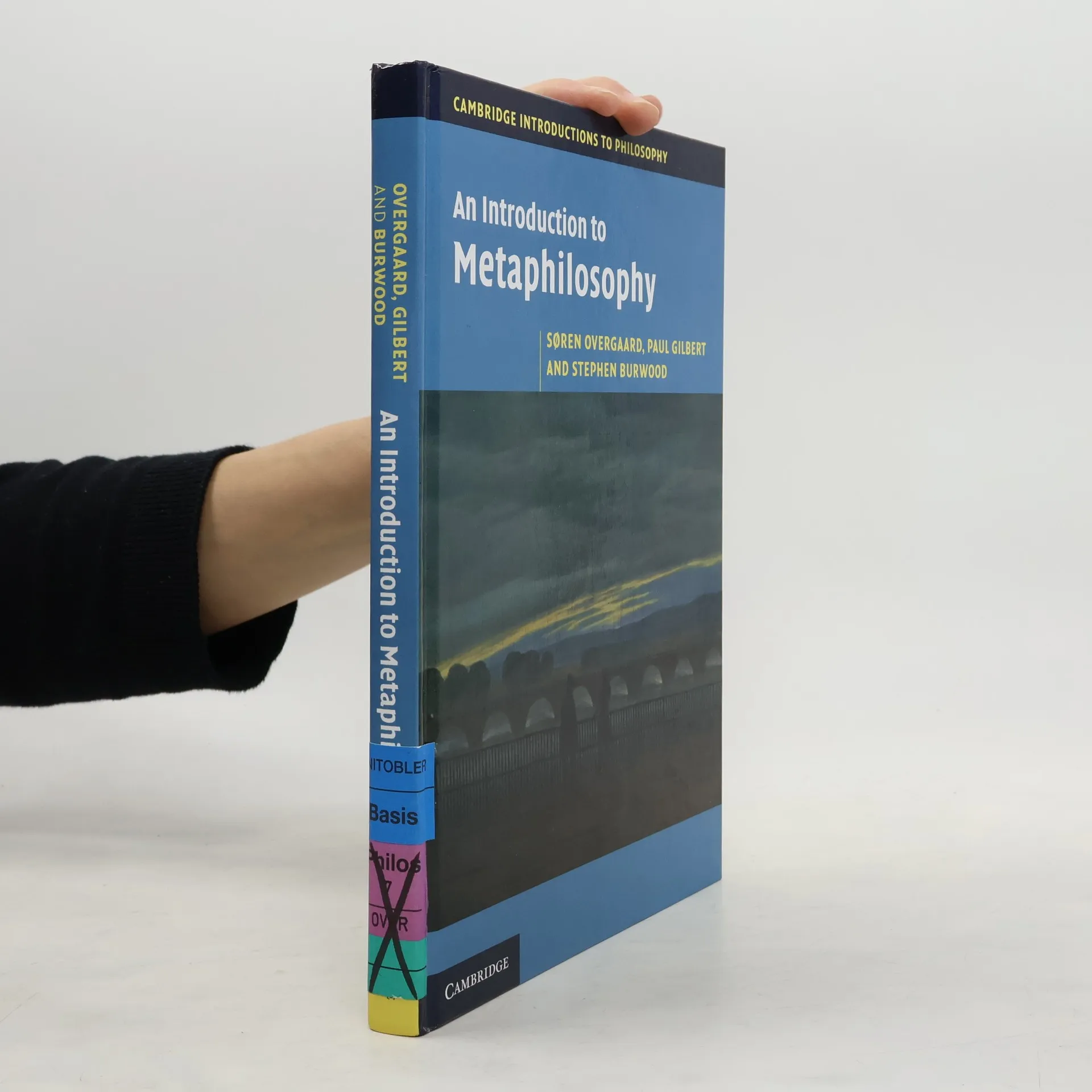
What is philosophy? How should we do it and why? This book is a clear and
comprehensive introduction to the branch of philosophy which asks these
questions about itself - metaphilosophy. Essential reading for students and
practitioners of philosophy and accessible to others interested in the
subject.
Dieses Buch ist eine Einführung in die nicht-klassische Aussagenlogik. Zum ersten Mal wird hier in einem Lehrbuch eine Reihe von Themen der Logik angesprochen, viele davon recht jung, einschließlich der Modallogik, der konditionalen, der intuitionistischen, der mehrwertigen, der parakonsistenten und der relevanten Logik und der Fuzzy Logic. Das Material wird durch das zugrunde liegende Thema der Semantik möglicher Welten geeint. All diese Themen werden mit Hilfe von solchen Instrumenten wie Tableau-Beweisen klar und verständlich erklärt und in ihrer Beziehung zu gegenwärtigen philosophischen Fragen und Debatten erörtert. Studierende mit Grundkenntnissen der klassischen Logik werden in diesem Buch eine wertvolle Einführung in einen Bereich finden, der sowohl für die Logik als auch für die Philosophie in zunehmender Weise von zentraler Bedeutung ist, bisher jedoch nur anhand von Forschungsliteratur studiert werden konnte. Es ist von Interesse für Studenten der Logik, für Studenten, die sich mit nicht-klassischer Logik aufgrund ihrer philosophischen Bedeutung beschäftigen, und allgemein für Leser aus dem Bereich der Mathematik und Computerwissenschaft, die mehr über diesen Bereich wissen wollen.