

Explore the latest books of this year!
Bookbot

Images of America: New York

This series delves into the rich history and vibrant past of New York State. Through hundreds of fascinating vintage photographs accompanied by detailed captions, it reveals the unique cultures, traditions, and unforgettable events that have shaped this iconic region. Each volume serves as a tribute to the people and places that make the Empire State so special.

Ogdensburg
Canisteo
The Roycroft Campus
Catholic New York City
Jewish Community of Long Island
Oceanside
  • Oceanside

    • 130 pages
    • 5 hours of reading

    Focusing on the vibrant history of a Long Island community, this book explores Oceanside's transformation from a major oyster-producing hub to a diverse town attracting various residents, including farmers, baymen, and affluent families. It highlights significant local attractions such as St. Anthony's underground church, Beall's Zoo, the Roadside Rest, and Nathan's Famous Restaurant, showcasing the rich cultural tapestry and evolution of this unique south shore town.

    Oceanside
    3.7
  • Jews have lived on Long Island since the Colonial era and had begun developing organized Jewish communitiess there by the late 1800s. The earliest communities were in Lindenhurst, where Congregatoin Neta Tzarschea incorporated a cemetery in 1876; Glen Cove, where Congregation Tifereth Israel has operated since 1897; and Sag Harbor, where Temple Adas Israel's original 1898 building still houses its congregation. Other initial Jewish communities formed in Kings Park, Patchogue, Bay Shore, and Greenport. Despite periods of threat from the Ku Klux Klan, the pro-Nazi bund, and social discrimination, the Jewish community flourished in a variety of local businesses, the military and politics. After World War II, Jewish communities expanded and developed as the region suburbanized. Long Island became home to a multitude of synagogues, Jewis day schools, and local branches of national Jewish organizations. The Jewish community continues to enrich the culture of Long Island over 100 years after its humble beginnings.

    Jewish Community of Long Island
    2.7
  • Catholic New York City

    • 130 pages
    • 5 hours of reading

    Exploring the rich tapestry of Catholic life in New York City, this book highlights the growth of the Catholic population from 200,000 to over 1.2 million between 1850 and 1900, driven by waves of European immigration. It chronicles significant milestones, including the establishment of the first Catholic church in the 1780s and the completion of St. Patrick's Cathedral in 1879. The narrative also delves into the diverse personalities, places, and events that have shaped the city's Catholic identity over the past two centuries.

    Catholic New York City
    3.5
  • The Roycroft Campus

    • 128 pages
    • 5 hours of reading

    The book delves into the rich history of the Roycroft community, founded by Elbert Hubbard, a pivotal force in the American Arts & Crafts Movement. Through over 200 images, it showcases the vibrant artisans and celebrities who contributed to this utopian crafts community in East Aurora, New York. Readers will discover rare photographs of key figures and their artistic creations, including handmade books, intricate metal works, and furniture. The documentation covers all 14 buildings that form the National Historic Landmark Roycroft Campus, highlighting their significance and legacy.

    The Roycroft Campus
    4.4
  • Canisteo

    • 130 pages
    • 5 hours of reading

    Set in the 1840s, the story unfolds with the construction of the Erie Railroad, transforming the Canisteo Valley into an industrial hub by 1851. The rapid growth of the town and surrounding hamlets is highlighted, along with a unique feature from the 1930s where an alfalfa farmer planted Scotch pines to create a visible sign of the town's name, which gained recognition in Ripley's Believe It or Not! Today, Canisteo is a tranquil bedroom community known for its agriculture and outdoor activities, attracting visitors for hunting and local produce.

    Canisteo
  • Ogdensburg

    • 130 pages
    • 5 hours of reading

    The book explores the rich history of Ogdensburg, the sole American city along the St. Lawrence River and within St. Lawrence County. It paints a vivid picture of a thriving community that served as a significant port of entry by ship and rail in the early twentieth century, influencing areas well beyond the Great Lakes. Additionally, it emphasizes the contributions of immigrants who arrived in Ogdensburg, showcasing their vital role in shaping the nation.

    Ogdensburg
    4.0
  • Coney Island and Astroland

    • 128 pages
    • 5 hours of reading

    Coney Island is depicted as a vibrant hub of innovation and entertainment, introducing iconic attractions like roller coasters and hot dogs. The dazzling lights of Luna Park and the adventurous spirit of Astroland, founded by Dewey and Jerome Albert, reflect the optimism of the early 1960s. Transforming Feltman's Restaurant into a futuristic amusement park, Astroland became a cornerstone of Coney Island's amusement zone, attracting millions and helping the area thrive despite the closure of Steeplechase Park.

    Coney Island and Astroland
    4.3
  • After enduring 10 harrowing years of the Great Depression, visitors to the 1939-1940 New York World's Fair found welcome relief in the fair's optimistic presentation of the "World of Tomorrow." Pavilions from America's largest corporations and dozens of countries were spread across a 1,216-acre site, showcasing the latest industrial marvels and predictions for the future intermingled with cultural displays from around the world. Well known for its theme structures, the Trylon and Perisphere, the fair was an intriguing mixture of technology, science, architecture, showmanship, and politics. Proclaimed by many as the most memorable world's fair ever held, it predicted wonderful times were ahead for the world even as the clouds of war were gathering. Through vintage photographs, most never published before, The 1939-1940 New York World's Fair recaptures those days when the eyes of the world were on New York and on the future.

    1939-1940 New York World's Fair
    4.2
  • Albany Revisited

    • 130 pages
    • 5 hours of reading

    The book showcases Albany's rich history, highlighting its architectural diversity and vibrant streetscapes from the early 20th century. It features historic photographs that capture the city's political significance and bustling downtown, including its renowned state government buildings. A unique aspect is the comprehensive collection of images of the Albany Senators, the city's professional baseball team, alongside rare photos of the 1911 capitol building fire, offering a detailed glimpse into the city's past.

    Albany Revisited
    5.0
  • Around Ovid

    • 130 pages
    • 5 hours of reading

    On land freed from American Indians upon the orders of George Washington, the town of Ovid was formed in 1794, after military lots were numbered by Simeon DeWitt and his assistants. In 1860, construction was completed on three brick buildings that became known as the Three Bears, which served as the town's courthouse, eventually served as the Seneca County Seat, and now serve as the Town of Ovid municipal offices. Gradually, more settlers came, cleared land, built roads, started businesses, and founded churches and schools. Bordered by the Seneca and Cayuga Lakes, where barges were used to transport goods, the town developed a vibrant farming community with productive orchards and vineyards. Tourism flourished, and summer homes were built by those looking to escape the city. One of these summer homes was that of Herman Westinghouse, who worked together with his brother George Westinghouse on their company's myriad inventions.

    Around Ovid
  • At the turn of the 20th century, Long Island s North Shore, the so-called Gold Coast, was becoming the most desirable residential area in the United States. Estates belonging to American captains of finance and industry lined the bluffs and bays from the city line to Eaton s Neck. Some of the nation s most renowned families including the Astors, Bakers, Huttons, Morgans, Pratts, Sloans, Roosevelts, Whitneys, and Vanderbilts used their yachts for racing, cruising, commuting, or epic voyages. These vessels regularly plied the waters of the North Shore and bolstered the development of yacht clubs like the New York and Seawanhaka Corinthian city institutions that established stations at Glen Cove and Centre Island, respectively. These clubs served to provide many outlets for the social gatherings that accompanied this pastime. Although the Great Depression and then World War II would bring the era of the great yachts to an end, a wealth of images remain that can be marveled at a century later."

    Great Yachts of Long Island's North Shore
  • New York City Vaudeville

    • 128 pages
    • 5 hours of reading

    The book offers a captivating visual journey through America's entertainment scene from the late 1800s to the early 1930s, focusing on the vibrant world of vaudeville. Featuring photographs and brief biographies, it immerses readers in an era where live performances were a staple of popular culture, showcasing the dynamic variety and talent that defined this unique art form.

    New York City Vaudeville
    4.1
  • Glen Cove

    • 130 pages
    • 5 hours of reading

    The narrative explores Glen Cove, a city on Long Island's north shore, celebrated for its rich history since 1668. It highlights the coexistence of rural, industrial, and suburban elements, showcasing the contrast between grand estates of affluent families and bustling factories. The arrival of Irish, Polish, and Italian immigrants shaped the community, contributing to its remarkable ethnic and economic diversity, making it one of America's most varied locales.

    Glen Cove
  • The book explores the rich history of Washington Heights, Inwood, and Marble Hill, highlighting their significant roles in the American Revolution and their vibrant cultural tapestry. It chronicles the area's evolution as a refuge for diverse immigrant groups, from Native Americans to Jewish refugees and the Latino community. Additionally, it showcases the notable dolomitic Inwood marble, used in prominent government buildings. Through vintage images, the narrative captures the transformation of these neighborhoods over the decades, emphasizing their contributions to the region's identity.

    Washington Heights, Inwood, and Marble Hill
    3.4
  • Dannemora

    • 130 pages
    • 5 hours of reading

    The discovery of iron ore near Chateaugay Lake in 1831 started the settlement later known as the town of Dannemora. In 1832, several local businessmen entered into partnership to mine the ore. St. John B.L. Skinner, a lawyer in Plattsburgh, owned most of the land and named it Dannemora. Dannemora's history is intertwined with iron ore and the development of the prison. The town is located in Clinton County in the foothills of Dannemora Mountain and is within the Blue Line, which marks the border of Adirondack Park. The prison is built on the side of the mountain, and a building to its right, which was the State Hospital for Insane Convicts, is now called the Annex. Surrounding Dannemora are Lyon Mountain, Chazy Lake, and Upper Chateaugay Lake.

    Dannemora
    5.0
  • The book explores Schenectady's Stockade, the first historic district in New York State, showcasing its significance as one of the oldest European-settled areas in the U.S. It highlights the architectural diversity within a compact area, featuring structures from the 17th century to modern times. Despite a devastating fire in 1819, over 40 historic buildings have survived for more than 200 years. Through photographs and maps, the narrative reveals the evolution of this unique community and its role in American history.

    Schenectady's Stockade: New York's First Historic District
    4.4
  • Lansingburgh

    • 128 pages
    • 5 hours of reading

    The book explores the rich history of Lansingburgh, the oldest settled area in New York's Rensselaer County, founded by Abraham Jacob Lansing in 1763. It details the transformation from a 5,000-acre farm to a vibrant village with 288 lots, driven by New England entrepreneurs. The 19th century saw a boom in various industries, making Lansingburgh a notable hub even after its incorporation into Troy in 1900. Featuring over 200 photographs from historian Frances Broderick's archives, the book captures the essence of Lansingburgh's 228-year legacy through its people, businesses, and landmarks.

    Lansingburgh
    4.4
  • Vivid and entrancing, the images of Clifton Park contained within this volume span more than a century of memories. Residents of the area, both natives and newcomers, will find a strong connection with the faces and places presented. Rare photographs of Clifton Park, many never before published, provide a glimpse of life from 1875 to 1950. We experience the area's gradual transition, from its agricultural roots through the era of the Erie Canal and the railroads to the early years of the automobile. Through pictures of local industries, shaded dirt roads, homes, and amusement parks, we learn how early Clifton Park residents worked and played. The book also features views of local taverns, general stores, churches, and schools--all the foundations of a changing, strong, and growing community.

    Clifton Park
    4.0
  • German New York City

    • 128 pages
    • 5 hours of reading

    Focusing on the vibrant legacy of German immigrants in New York City, the book explores their journey from 19th- and 20th-century Europe to America. It highlights the peak immigration periods of the 1850s and 1880s, when New York became home to a significant German-born population. The establishment of Kleindeutschland, or Little Germany, in downtown Manhattan is examined, along with the community's later migration to Yorkville and other boroughs, showcasing the enduring influence of German culture in the city.

    German New York City
    3.5
  • Shinnecock Indian Nation

    • 130 pages
    • 5 hours of reading

    The Shinnecock tribe, with a rich history spanning over 10,000 years along eastern Long Island, excelled as hunter-gatherers and whalers, initially navigating the Atlantic in dugout canoes. Renowned for their exquisite wampum craftsmanship, they faced challenges from settlers and land deals that reduced their territory since the 1500s. Despite these adversities and the wealth of neighboring communities, the Shinnecock continue to thrive as a federally recognized tribe with over 1,500 members, governed by a council of trustees.

    Shinnecock Indian Nation
  • Southampton

    • 130 pages
    • 5 hours of reading

    The transformation of Southampton, NY, from a quiet Puritan settlement in 1640 to a fashionable resort by the turn of the century is vividly captured through over 200 photographs, many rare and unpublished. These images chronicle the arrival of wealthy New Yorkers via the railroad in 1870, showcasing the evolution of agrarian life as summer residents converted farmhouses into boarding houses and built lavish cottages. The book highlights the blend of small-town charm and the opulence that defines Southampton today, renowned for its exclusive clubs and celebrity inhabitants.

    Southampton
    3.5
  • Around Oswegatchie

    • 130 pages
    • 5 hours of reading

    The book offers an insightful exploration of the agrarian lifestyle in northern New York State, focusing on the town of Oswegatchie and its evolution through numerous subdivisions. It highlights the contributions of notable figures from the region, including artists, politicians, industrialists, inventors, and Civil War heroes, who significantly impacted the nation and improved the lives of their communities. The narrative captures the rich history and cultural legacy of this area, showcasing its importance in shaping American society.

    Around Oswegatchie
    5.0
  • Newburgh

    • 130 pages
    • 5 hours of reading

    Set against the backdrop of Newburgh Bay in 1609, the narrative explores the historical significance of Newburgh, which evolved into a prominent city by the 1800s. It highlights key events, such as General George Washington awarding the first Purple Heart and his refusal of kingship, marking the area as a vital location in American history. The story encapsulates the rich heritage of Newburgh, emphasizing its transformation from a predicted village to a city with a legacy tied to pivotal moments in the nation's past.

    Newburgh
    4.4
  • Whaling on Long Island

    • 130 pages
    • 5 hours of reading

    The story of whales and the whalers who followed them is inextricably tied with Long Island's rich maritime history. Before the Long Island Expressway, strip malls, golf clubs, and suburban sprawl, calls of "Thar she blows!" rang out from Long Island harbors and ships. This book chronicles the rise and fall of whaling on the island and describes local whaleship fleets that traveled to the far corners of the world, the personalities behind local enterprises, and the villages whose cultures and economies grew from the industry. Be transported to a time when whalers roamed the streets between journeys, shipbuilders worked in the harbors, captains charted their expeditions, and whaleship masts seemed to pierce the clouds in Long Island's pursuit of the largest creatures in the world.

    Whaling on Long Island
    4.5
  • New York City Gangland

    • 130 pages
    • 5 hours of reading

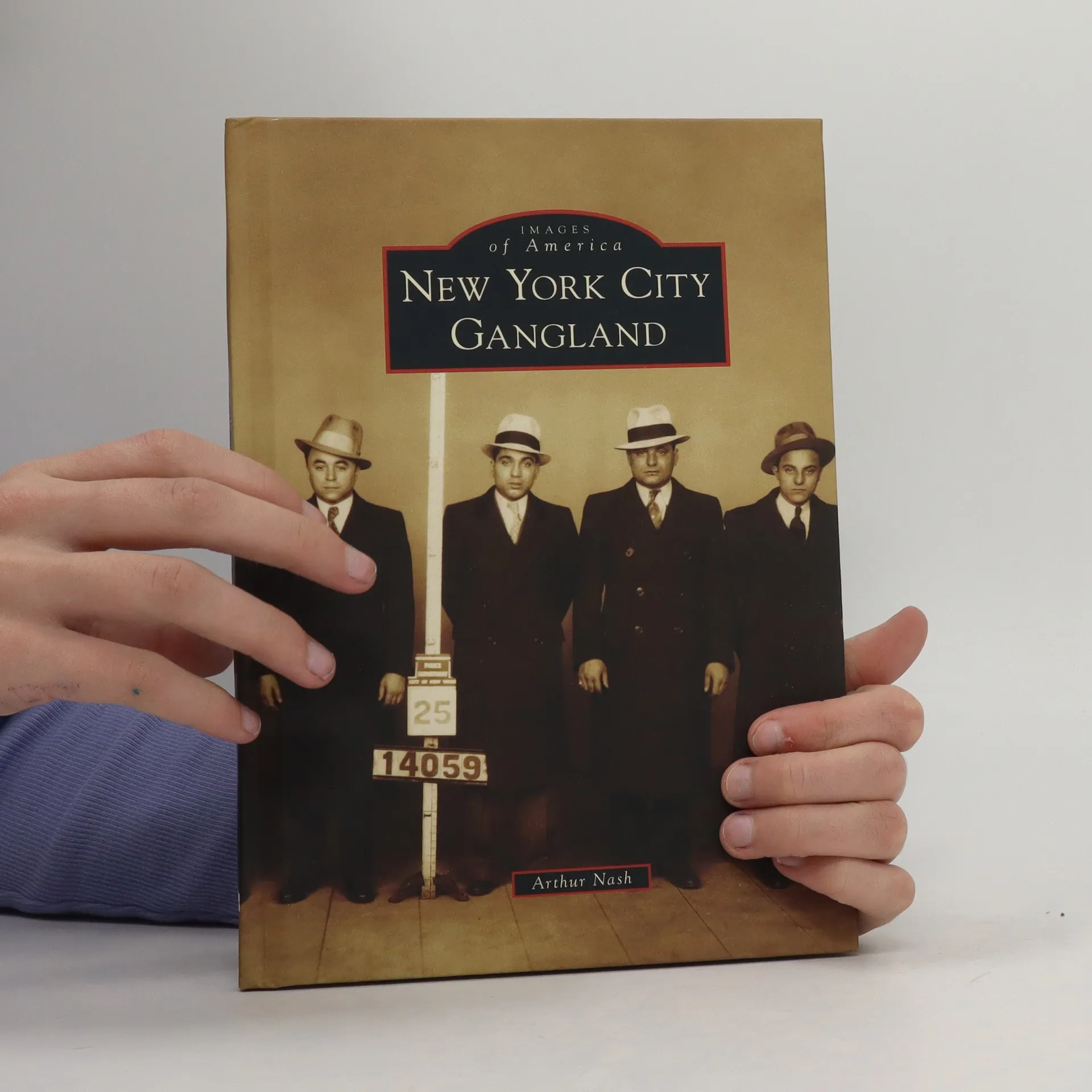
    Throughout the United States, there is no single major metropolitan area more closely connected to organized crime's rapid ascendancy on a national scale than New York City. In 1920, upon the advent of Prohibition, Gotham's shadowy underworld began evolving from strictly regional and often rag-tag street gangs into a sophisticated worldwide syndicate that was--like the chocolate egg creme--incubated within the confines of its five boroughs. New York City Gangland offers an unparalleled collection of rarely circulated images, many appearing courtesy of exclusive law enforcement sources, in addition to the private albums of indigenous racketeering figures such as Charles "Lucky" Luciano, Al "Scarface" Capone, Joe "The Boss" Masseria, "Crazy" Joe Gallo, and John Gotti."

    New York City Gangland
  • Potsdam

    • 130 pages
    • 5 hours of reading

    Red sandstone, lumber, paper, cows, and college students feature prominently in Potsdam. With its selection of two hundred stunning photographs, the book records aspects of life in Potsdam from the mid-1800s to the mid-1900s. Located on the Racquette River between the St. Lawrence River and the Adirondack Mountains, the town is one often that were created in 1787 to promote settlement of New York State. Education has played an important role in Potsdam since 1816, when St. Lawrence Academy opened. The success of the academy led to the establishment in 1866 of a normal school, the forerunner of Potsdam College, with its renowned Crane School of Music.

    Potsdam
    3.5
  • New Rochelle

    • 130 pages
    • 5 hours of reading

    The arrival of the train in 1848 marked a pivotal change for New Rochelle, transforming it from a quiet agricultural area into a thriving suburban hub. By the early 20th century, its appeal as a residential community grew, thanks to its proximity to Broadway, scenic waterfront, and a burgeoning retail scene. The population surged to 54,000 by 1930, fueled by commuter rails and the automobile. This vibrant community attracted influential figures across various fields, including artist Norman Rockwell and suffragist Carrie Chapman Catt, contributing to its rich cultural legacy.

    New Rochelle
    4.7
  • Patchogue: Volume II

    • 128 pages
    • 5 hours of reading

    Timeless images paired with well-researched text offer a captivating exploration of Patchogue, appealing to both residents and visitors. The book provides valuable insights into the area's history and culture, making it an enjoyable read for all ages.

    Patchogue: Volume II
  • From its humble, pioneer beginnings to its current incarnation as the largest independent county fair in the United States, the Erie County Fair in Hamburg, New York, is a beloved western New York institution. Annually, over one million people flock to its historic fairgrounds located just south of Buffalo to celebrate agriculture, showcase time-honored traditions, keep the spirit of competition alive, and, most importantly, come together as a community. Through vintage photographs, Erie County Fair presents a visual narrative of the fair's history and stimulates cherished memories rooted in decades of excitement found at this annual summer gathering. The continuity of the American county fair spirit is most evident through these images from the archives of the Erie County Agricultural Society.

    Erie County Fair
    4.0
  • The narrative captures the catastrophic 1938 hurricane that devastated Long Island, focusing on the stark contrast between a calm morning and the ensuing chaos. As residents went about their daily lives, they were blindsided by the storm's fury, leading to over 30 fatalities and widespread destruction. The book features over 150 photographs, primarily taken by local residents, documenting the immediate aftermath and the profound impact of the disaster on their communities.

    Hurricane in the Hamptons, 1938
    4.4
  • Around Brockport

    • 130 pages
    • 5 hours of reading

    The book explores the historical development of the Brockport area, highlighting its growth from the early 1800s through the impact of the Erie Canal and the Industrial Revolution. It showcases over 230 images, including rare glass negatives, that capture farm life, architecture, industry, and educational activities. The narrative emphasizes Brockport's evolution into a well-preserved Victorian village and the surrounding towns as agricultural and commuting hubs, alongside the establishment of a prominent college within the State University of New York system.

    Around Brockport
    3.7
  • Often separated from other immigrants because of their language, Italian immigrants to New York City in the 1880s formed communities apart from their new neighbors. They tended to think of themselves collectively as a small Italian colony, La Colonia, that made up part of the demographics of the city. In each of the five boroughs, Italians set up many colonie. Several of them dotted Manhattan in East Harlem, the West Village, what is now SoHo, and the downtown area of the Lower East Side, straddling Canal Street, which still identifies Manhattan's Little Italy, the best-known Italian neighborhood in America. Little Italy is made up of stunning photographs culled from numerous private and public collections. It begins with the first phase of immigrants to Lower Manhattan in the early 1800s, including political and religious refugees such as Lorenzo Da Ponte and Giuseppe Garibaldi. In the 1870s, more and more Italian immigrants settled in Little Italy. As the neighborhood grew up around the former Anthony and Orange Streets, New York's first "Little Italy" emerged. The tumultuous history of the Five Points area, the "Bloody Ole Sixth Ward," and many faces and memories from the Italian newspapers L'Eco d'Italia and Il Progresso Italo-Americano are also included in this long-awaited pictorial history.

    Images of America: Little Italy
    4.0
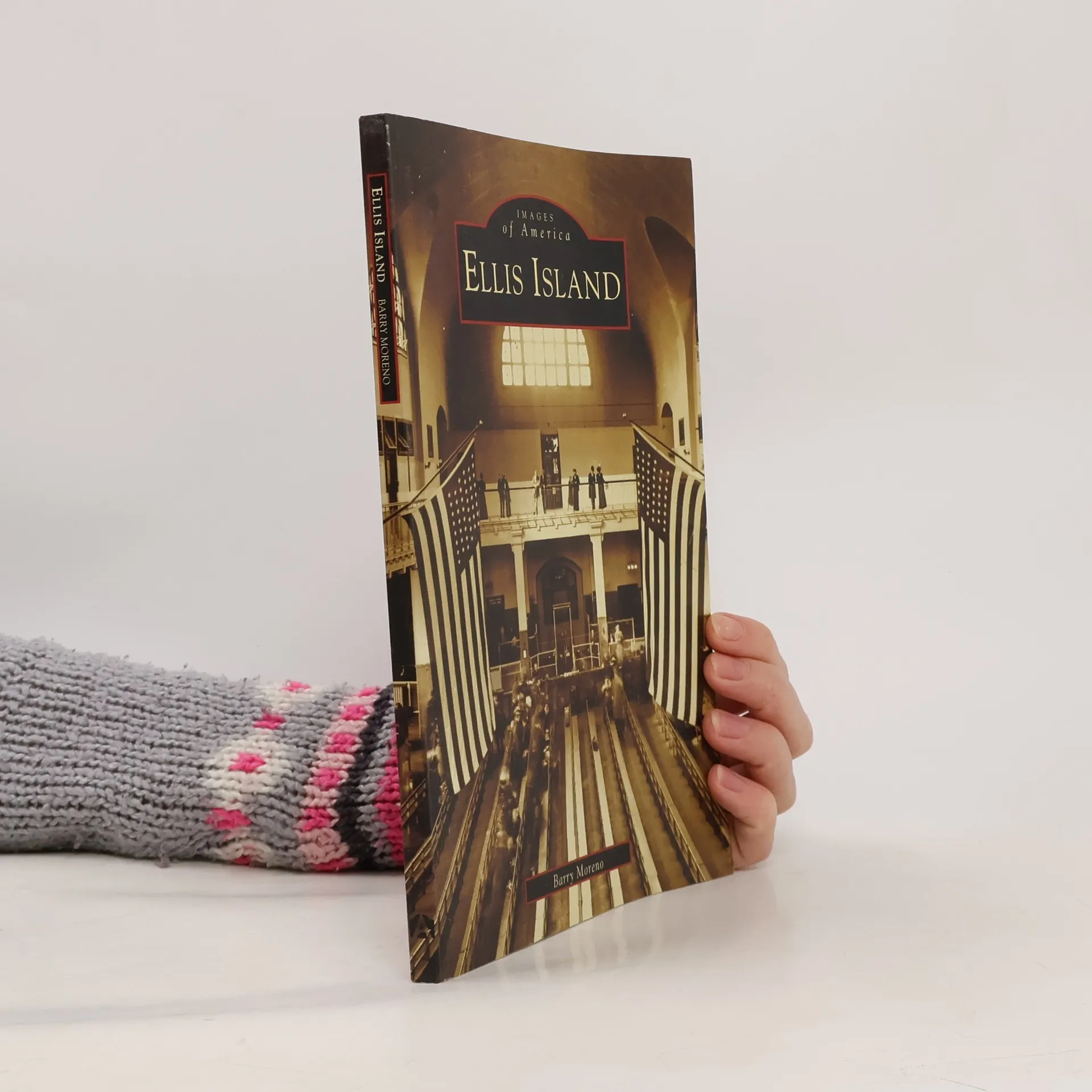
  • The United States is considered the world's foremost refuge for foreigners, and no place in the nation symbolizes this better than Ellis Island. Through Ellis Island's halls and corridors more than twelve million immigrants-of nearly every nationality and race-entered the country on their way to new experiences in North America. With an astonishing array of nineteenth- and twentieth-century photographs, Ellis Island leads the reader through the fascinating history of this small island in New York harbor from its pre-immigration days as one of the harbor's oyster islands to its spectacular years as the flagship station of the U.S. Bureau of Immigration to its current incarnation as the National Park Service's largest museum.

    Images of America: Ellis Island
    4.2