

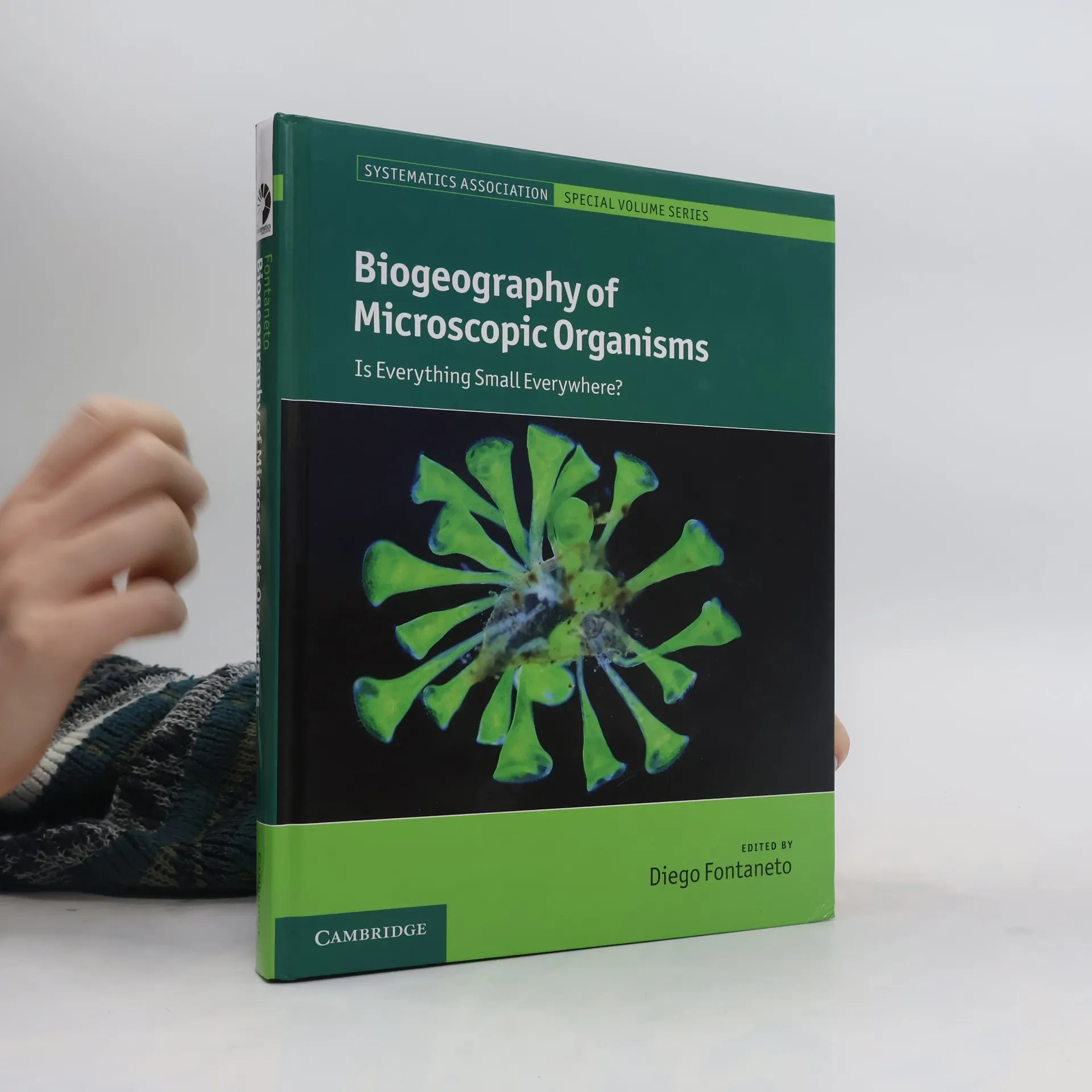
Systematics Association Special Volume - 79: Biogeography of Microscopic Organisms
Is Everything Small Everywhere?
- 384 pages
- 14 hours of reading
Bringing together the viewpoints of leading experts in taxonomy, ecology and biogeography of different taxa, this book synthesises discussion surrounding the so-called 'everything is everywhere' hypothesis. It addresses the processes that generate spatial patterns of diversity and biogeography in organisms that can potentially be cosmopolitan. The contributors discuss questions such as: are microorganisms (e.g. prokaryotes, protists, algae, yeast and microscopic fungi, plants and animals) really cosmopolitan in their distribution? What are the biological properties that allow such potential distribution? Are there processes that would limit their distribution? Are microorganisms intrinsically different from macroscopic ones? What can microorganisms tell us about the generalities of biogeography? Can they be used for experimental biogeography? Written for graduate students and academic researchers, the book promotes a more complete understanding of the spatial patterns and the general processes in biogeography.