The State and International Relations
- 266 pages
- 10 hours of reading
This book, first published in 2000, provides an overview of theories of the state found in International Relations.


This textbook series offers authoritative surveys of central topics in international relations. Designed for upper-level undergraduates and graduates, it provides concise, accessible, and comprehensive coverage. Each volume delves into the main theoretical and empirical aspects of its subject, exploring its connections to broader debates within the field. The books are further enhanced with chapter-by-chapter reading guides and discussion questions for students.


This book, first published in 2000, provides an overview of theories of the state found in International Relations.
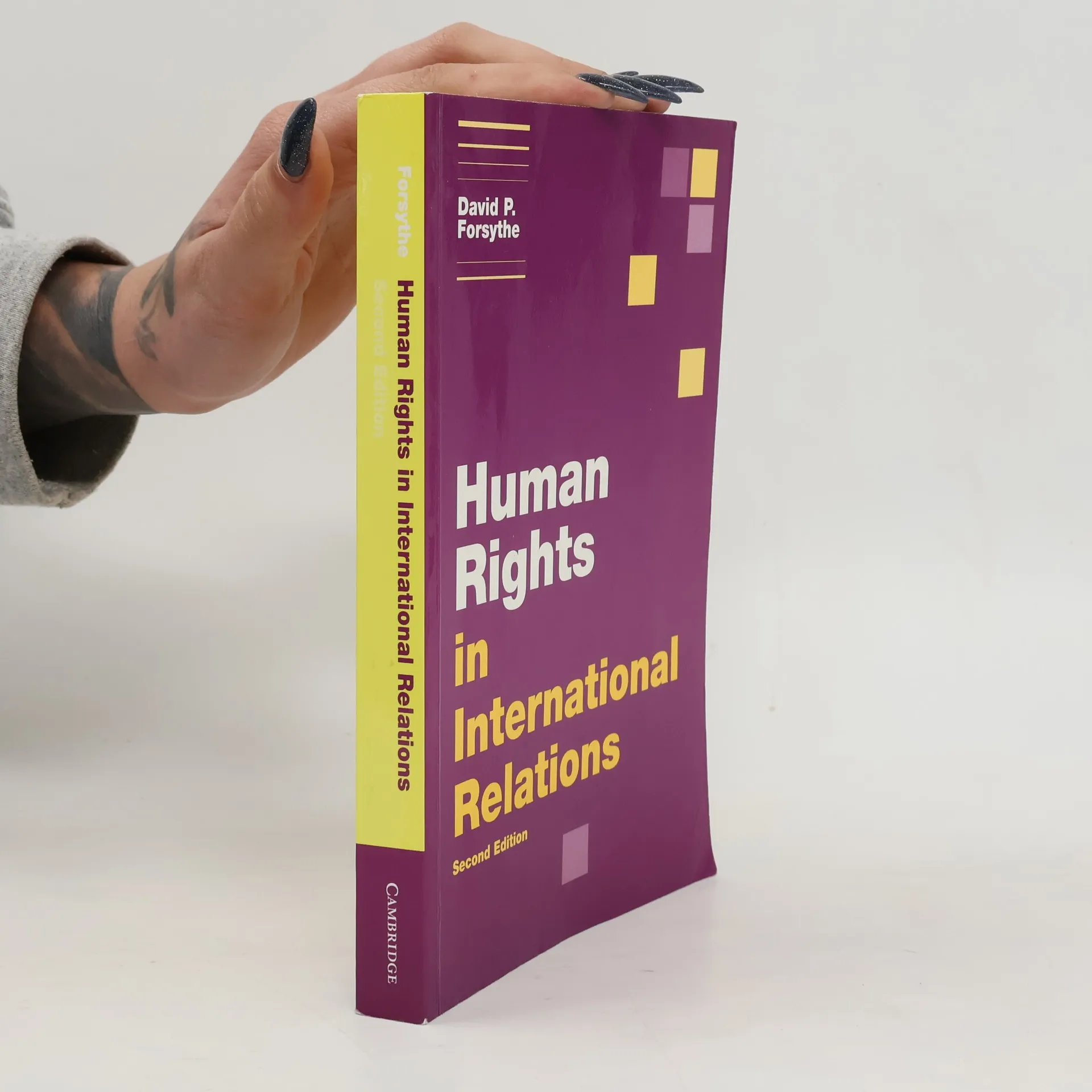
Part I. The Foundations: 1. Introduction: human rights in international relations; 2. Establishing human rights standards; Part II. Implementing Human Rights Standards: 3. Global application of human rights norms; 4. Transitional justice; 5. Regional application of human rights norms; 6. Human rights and foreign policy in comparative perspective; 7. Non-governmental organizations and human rights; 8. Transnational corporations and human rights; 9. The communications media and human rights: traditional and social domains; Part III. Conclusion: 10. The politics of liberalism in a realist world.
Preface; Acknowledgements; List of commonly used abbreviations; 1. Introduction: the environment and international relations; 2. Global environmental problems; 3. Actors in global environmental politics; 4. State- led global environmental governance; 5. The impacts and effectiveness of global environmental governance; 6. Global economic governance and the environment; 7. Non-state global environmental governance; 8. The global politics of market mechanisms; 9. Conclusions: the environment and international relations in the twenty-first century; References; Index.
Security studies are explored as a distinct area within international relations theory, offering a comprehensive overview of the field. The book delves into key concepts, frameworks, and debates that shape security studies, making it a valuable resource for understanding contemporary issues in international security. It aims to enhance readers' grasp of the complexities and dynamics involved in global security challenges.
Second Edition
This new edition of David Forsythe's successful textbook provides an authoritative overview of the place of human rights in international politics in an age of terrorism. The book focuses on four central themes: the resilience of human rights norms, the importance of 'soft' law, the key role of non-governmental organizations, and the changing nature of state sovereignty. Human rights standards are examined according to global, regional, and national levels of analysis with a separate chapter dedicated to transnational corporations. This second edition has been updated to reflect recent events, notably the creation of the ICC and events in Iraq and Guantanamo Bay, and new sections have been added on subjects such as the correlation between world conditions and the fate of universal human rights. Containing chapter-by-chapter guides to further reading and discussion questions, this book will be of interest to undergraduate and graduate students of human rights, and their teachers. David Forsythe received the Distinguished Scholar Award for 2007 from the Human Rights Section of the American Political Science Association.