

Un argomento radicale secondo cui la crescita dell'ordine guida il passaggio del tempo. Il tempo è uno dei più grandi misteri dell'universo. Perché, quando la maggior parte delle leggi della fisica consente che fluisca avanti e indietro, esso scorre solo in avanti? I fisici hanno a lungo fatto riferimento alla seconda legge della termodinamica, ritenuta in grado di prevedere l'aumento del disordine nell'universo, per spiegare questo fenomeno. In "Il punto di Giano", il fisico Julian Barbour sostiene che la seconda legge sia stata applicata in modo errato e che la crescita dell'ordine determini come esperiamo il tempo. Secondo la sua visione, il big bang diventa il "punto di Giano", un momento di ordine minimo da cui il tempo potrebbe fluire e l'ordine aumentare in due direzioni. Il punto di Giano ha implicazioni notevoli: mentre la maggior parte dei fisici prevede che l'universo si impantani nel disordine, Barbour vede la possibilità che l'ordine - la sostanza della vita - possa crescere senza limiti. Un'opera importante di fisica, "Il punto di Giano" trasformerà la nostra comprensione della natura dell'esistenza.
Julian Barbour Book order (chronological)
Barbour has supported himself and his family without an academic position, working part-time as a translator since receiving his PhD in the foundations of Einstein's general theory of relativity. His research interests lie in quantum gravity and the history of science.


Nowa teoria czasu
- 464 pages
- 17 hours of reading
„Historia jest ścieżką, która wije się przez przestrzeń kształtów” - pisze Julian Barbour w swojej nowej opowieści o Wszechświecie. Podążając tą ścieżką nie dojdziemy, jak sugeruje większość teorii kosmologicznych, do smutnego końca, czyli śmierci cieplnej. Opowieść Barboura jest dowodem oświeconej nadziei, z którą ten znakomity brytyjski fizyk i kosmolog spogląda w daleką przyszłość. Wszechświat widziany jego oczami nie jest osuwaniem się w degradację i Wielkie Otępienie, a wielkim stawaniem się, dążeniem ku pięknu. W wyjątkowej, naukowej, ale też zaskakująco osobistej książce Barbour zdaje relację z trwającego blisko pół wieku procesu budowania teorii, która podsuwa odpowiedź na pytanie o naturę czasu. W jego teorii kształtów kosmos jest względem owego czasu symetryczny. Żaden kierunek nie zostaje wyróżniony. Nie ma początku ani końca. W swoich poszukiwaniach Barbour przemierza zapomniane terytoria nauki. Historia nie jest dla niego cmentarzem możliwości, a przestrzenią potencjalnie rewolucyjnych inspiracji. Także w tym sensie dla Juliana Barboura czas zdaje się istnieć inaczej niż zwykliśmy sądzić.
The Janus Point
- 400 pages
- 14 hours of reading
What is time? The Janus Point offers a ground-breaking solution to one of the greatest mysteries in physics. For over a century, the greatest minds have sought to understand why time seems to flow in one direction, ever forward. In The Janus Point, Julian Barbour offers a radically new answer: it doesn't. At the heart of this book, Barbour provides a new vision of the Big Bang - the Janus Point - from which time flows in two directions, its currents driven by the expansion of the universe and the growth of order in the galaxies, planets and life itself. What emerges is not just a revolutionary new theory of time, but a hopeful argument about the destiny of our universe. 'Both a work of literature and a masterpiece of scientific thought' Lee Smolin, author of The Trouble with Physics 'Profound...original...accessible to anyone who has pondered the mysteries of space and time' Martin Rees, Astronomer Royal 'Takes on fundamental questions, offering a new perspective on how the Universe started and where it may be headed' Science Magazine
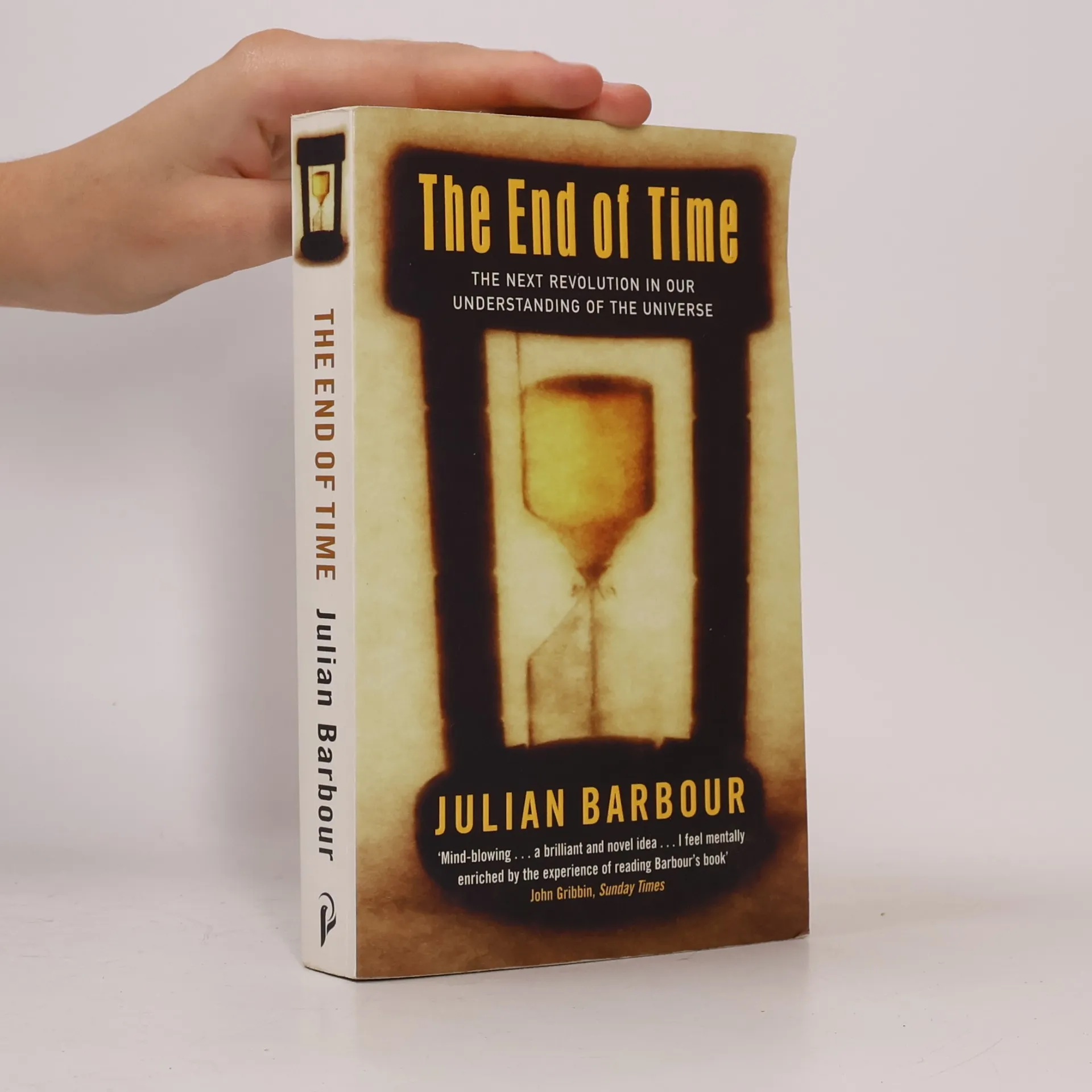
The End of Time: The Next Revolution in Physics
- 384 pages
- 14 hours of reading
Provides basic evidence for the nonexistence of time, explaining what a timeless universe is like and showing how the nonexistence of time solves a great paradox of modern science.
The End Of Time
- 384 pages
- 14 hours of reading
A brilliant theoretical physicist argues that the solution to the ultimate question in science: how to unify Einstein's theory of general relativity with quantum mechanics, is possible only if we abolish time from the foundations of the universe. In other words, despite our deepest intuitions, time does not exist. schovat popis