



Explore the latest books of this year!
Bookbot

Jeff Jarvis

    Jeff Jarvis is an American journalist who has written for prominent publications such as the New York Daily News, the San Francisco Examiner, and The Guardian. In 2006, he took on an academic role as an associate professor at the City University of New York's Graduate School of Journalism, where he directed its new media program. He is also a co-host on the popular show 'This Week in Google,' featured on the TWiT Network.

    Jeff Jarvis
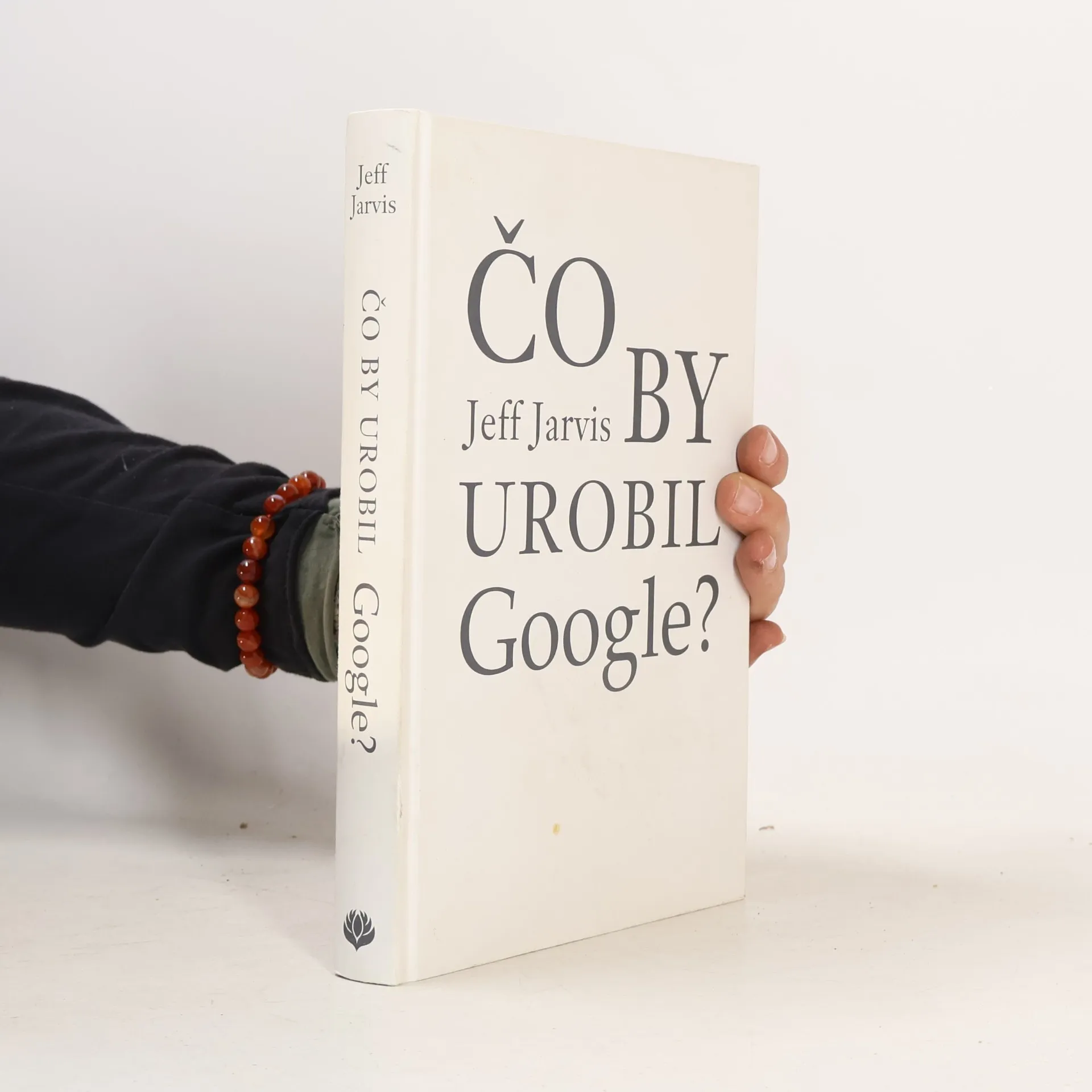
    Čo by urobil google?
    Mehr Transparenz wagen!
    Magazine
    The Gutenberg Parenthesis
    Effective Etudes for Jazz
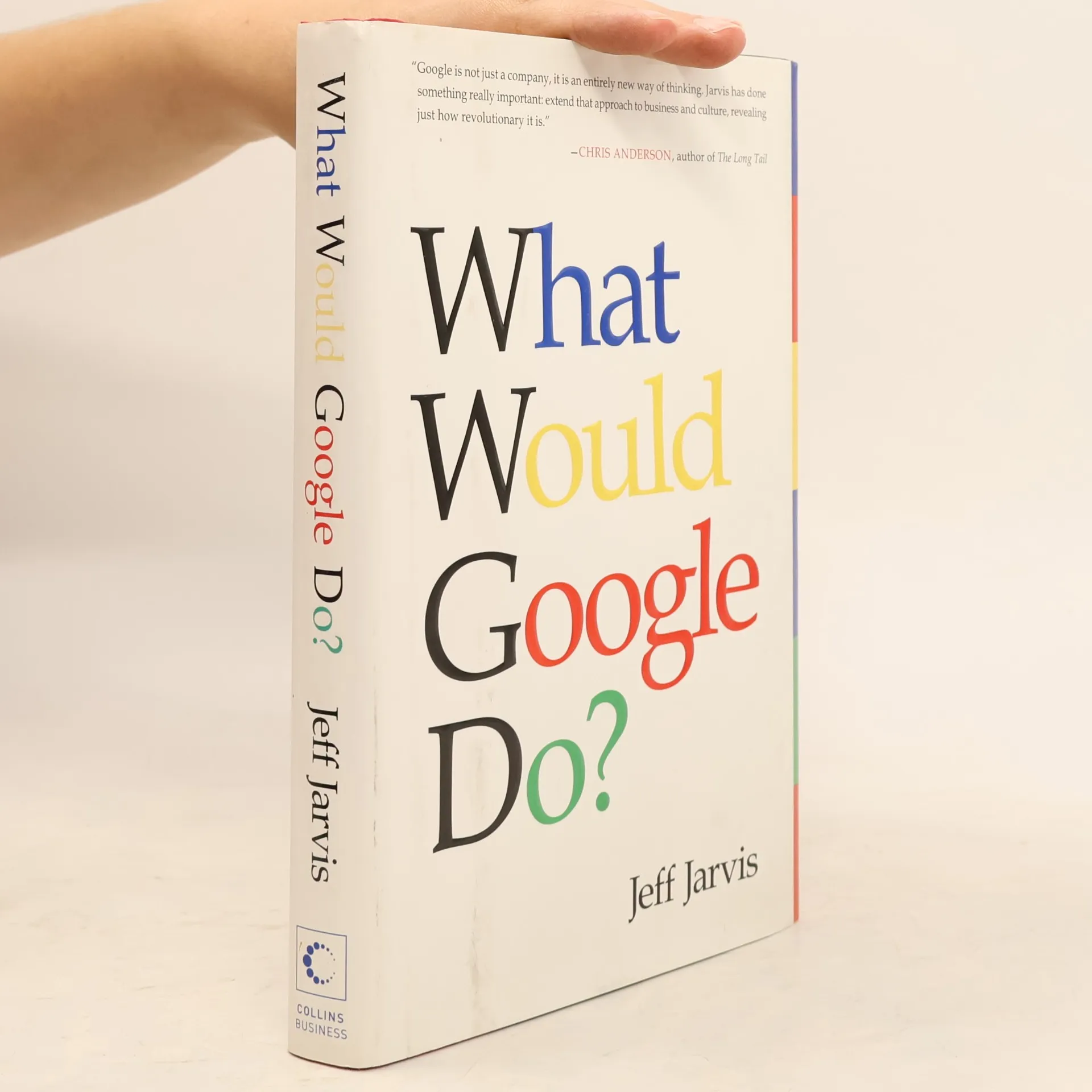
    What Would Google Do?
    • What Would Google Do?

      • 257 pages
      • 9 hours of reading
      3.9(10150)Add rating

      A bold and vital book that asks and answers the most urgent question of today: What Would Google Do? In a book that's one part prophecy, one part thought experiment, one part manifesto, and one part survival manual, internet impresario and blogging pioneer Jeff Jarvis reverse-engineers Google—the fastest-growing company in history—to discover forty clear and straightforward rules to manage and live by. At the same time, he illuminates the new worldview of the internet generation: how it challenges and destroys, but also opens up vast new opportunities. His findings are counterintuitive, imaginative, practical, and above all visionary, giving readers a glimpse of how everyone and everything—from corporations to governments, nations to individuals—must evolve in the Google era. Along the way, he looks under the hood of a car designed by its drivers, ponders a worldwide university where the students design their curriculum, envisions an airline fueled by a social network, imagines the open-source restaurant, and examines a series of industries and institutions that will soon benefit from this book's central question. The result is an astonishing, mind-opening book that, in the end, is not about Google. It's about you.

      What Would Google Do?
    • "As we begin to leave the Gutenberg age, and into a era dominated by the Internet, we have much to learn from how we transitioned into the age of print and how it changed how we think and communicate"--

      The Gutenberg Parenthesis
    • Object Lessons is a series of short, beautifully designed books about the hidden lives of ordinary things.For a century, magazines were the authors of culture and taste, of intelligence and policy -- until they were overthrown by the voices of the public themselves online. Here is a tribute to all that magazines were, from their origins in London and on Ben Franklin's press; through their boom -- enabled by new technologies -- as creators of a new media aesthetic and a new mass culture; into their opulent days in advertising-supported conglomerates; and finally to their fall at the hands of the internet. This tale is told through the experience of a magazine founder, the creator of Entertainment Weekly at Time Inc., who was also TV critic at TV Guide and People and finally an executive at Condé Nast trying to shepherd its magazines into the digital age.Object Lessons is published in partnership with an essay series in The Atlantic.

      Magazine
    • Wer sein Laptop oder Smartphone einschaltet, denkt gar nicht mehr daran, dass diese wunderbare Technologie gerade mal zwanzig Jahre alt ist. Wir googeln, twittern, surfen und vernetzen uns, ja, wir leben im Netz. Und alle anderen sind auch da. Zugleich ist die Sache uns unheimlich. Google, Amazon, Facebook und Twitter wissen mehr über uns als unsere Eltern und Freunde je wussten. Machen wir uns nicht zu Sklaven des Internets, während die reale Welt sich wie rasend verändert? Regierungen werden gestürzt, Autoritäten werden durch Internetforen ersetzt, die Zeitungen sterben, der Einzelhandel steht mit dem Rücken an der Wand. Daten sind der kostbarste Rohstoff des neuen Jahrtausends. Jeff Jarvis hat nach unseren Erwartungen, Möglichkeiten, Ängsten gefragt. Sein Ergebnis: Wir stehen am Anfang einer Umwälzung, deren Ende noch niemand absehen kann. Aber wir müssen keine Angst vor der neuen Transparenz und Öffentlichkeit haben, die das Internet uns ermöglicht. Sie werden die Gesellschaft, den Staat und die Wirtschaft von Grund auf erneuern und jeden Einzelnen auf ungeahnte Weise emanzipieren. Beruht auf Interviews mit Mark Zuckerberg (Facebook), Eric Schmidt (Google), Evan Williams (Twitter) Die Vision einer öffentlichen, transparenten, vernetzten Welt, in der alle mit allen zusammenarbeiten Nach „Was würde Google tun?“ der zweite Superseller von Jeff Jarvis Behandelt ausführlich auch die Transparenz-Debatte hierzulande

      Mehr Transparenz wagen!