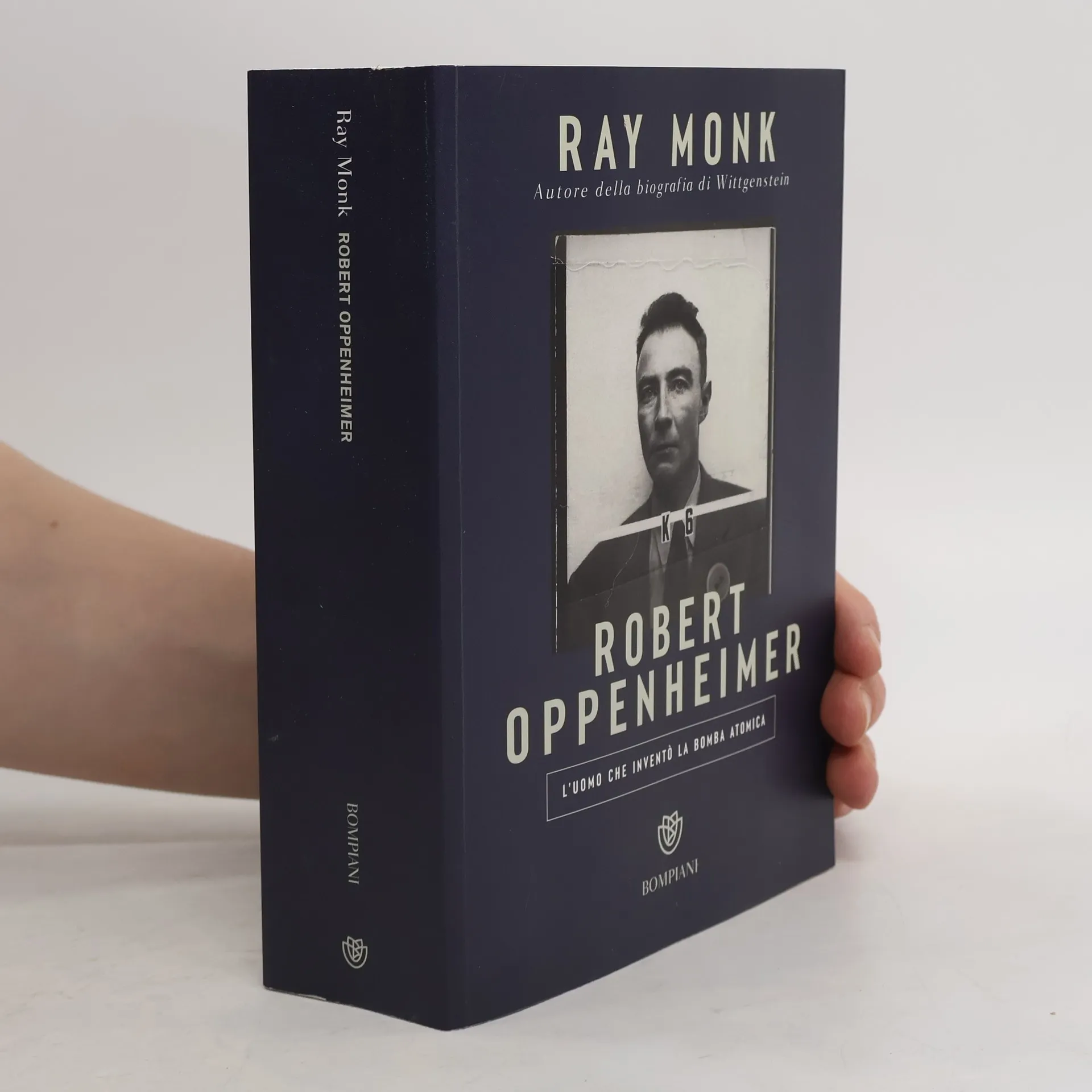
Tascabili. Saggi: Robert Oppenheimer. L'uomo che inventò la bomba atomica
- 1216 pages
- 43 hours of reading


Ray Monk is a professor of philosophy whose interests lie in the philosophy of mathematics, the history of analytic philosophy, and the philosophical aspects of biographical writing. His work delves into the profound connection between life and thought, focusing on revealing the essential truths of his subjects. Monk's approach is incisive, uncovering the complex motivations and philosophical underpinnings that shape not only the minds of his subjects but also the very act of writing biography. He is dedicated to exploring the intellectual and existential struggles through precise philosophical analysis.


An unforgettable story of discovery and unimaginable destruction and a major biography of one of America’s most brilliant—and most divisive—scientists, Robert Oppenheimer: A Life Inside the Center vividly illuminates the man who would go down in history as “the father of the atomic bomb.” “Impressive. . . . An extraordinary story.”—The New York Times Book Review “Judicious, comprehensive and reliable. . . . By far the most thorough survey yet written of Oppenheimer’s physics."—Washington Post Oppenheimer’s talent and drive secured him a place in the pantheon of great physicists and carried him to the laboratories where the secrets of the universe revealed themselves. But they also led him to contribute to the development of the deadliest weapon on earth, a discovery he soon came to fear. His attempts to resist the escalation of the Cold War arms race—coupled with political leanings at odds with post-war America—led many to question his loyalties, and brought down upon him the full force of McCarthyite anti-communism. Digging deeply into Oppenheimer’s past to solve the enigma of his motivations and his complex personality, Ray Monk uncovers the extraordinary, charming, tortured man—and the remarkable mind—who fundamentally reshaped the world.
This series--a personal master class in reading--presents the work of some of the most influential and challenging writers in history. The volumes present a context and explanation that will facilitate understanding of the text.
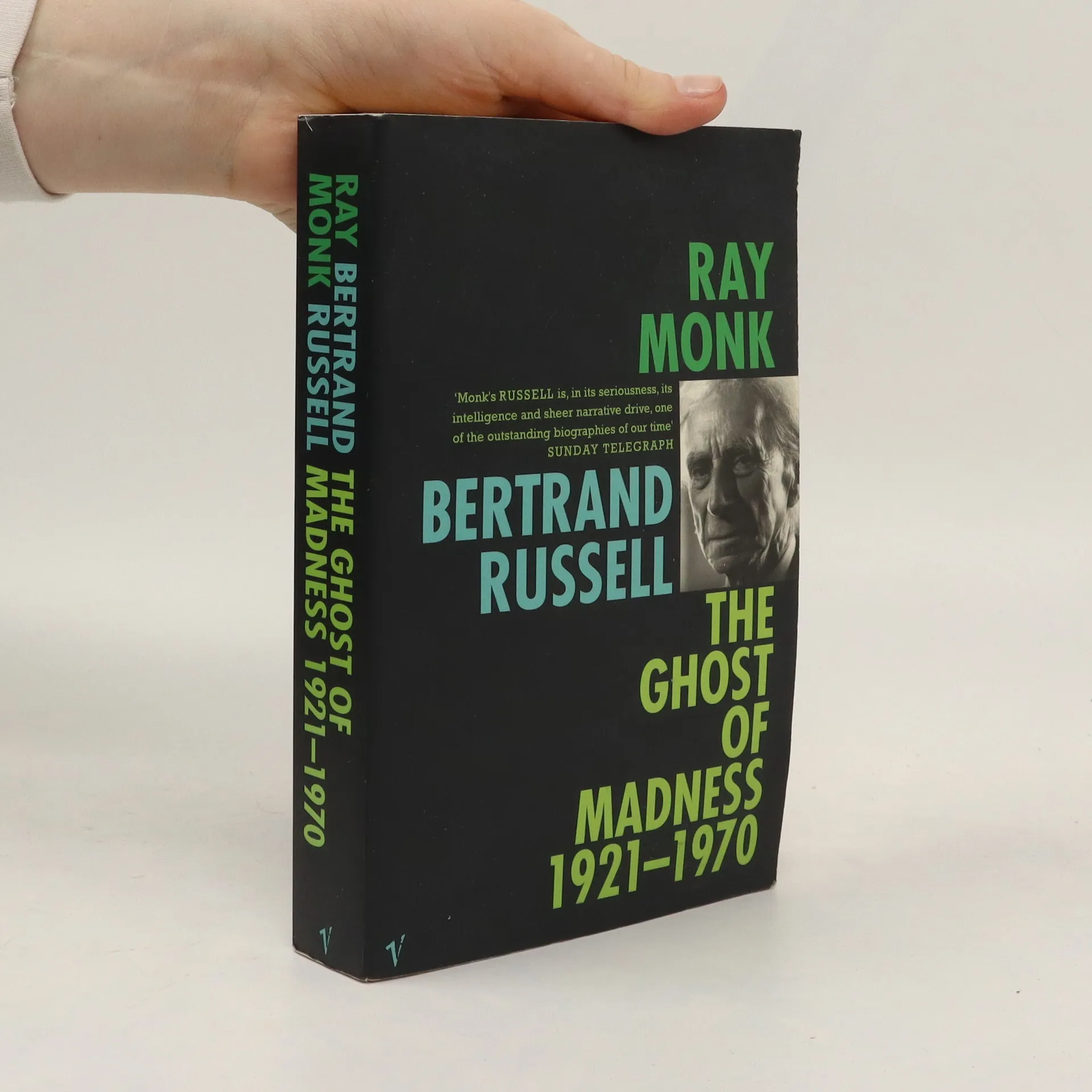
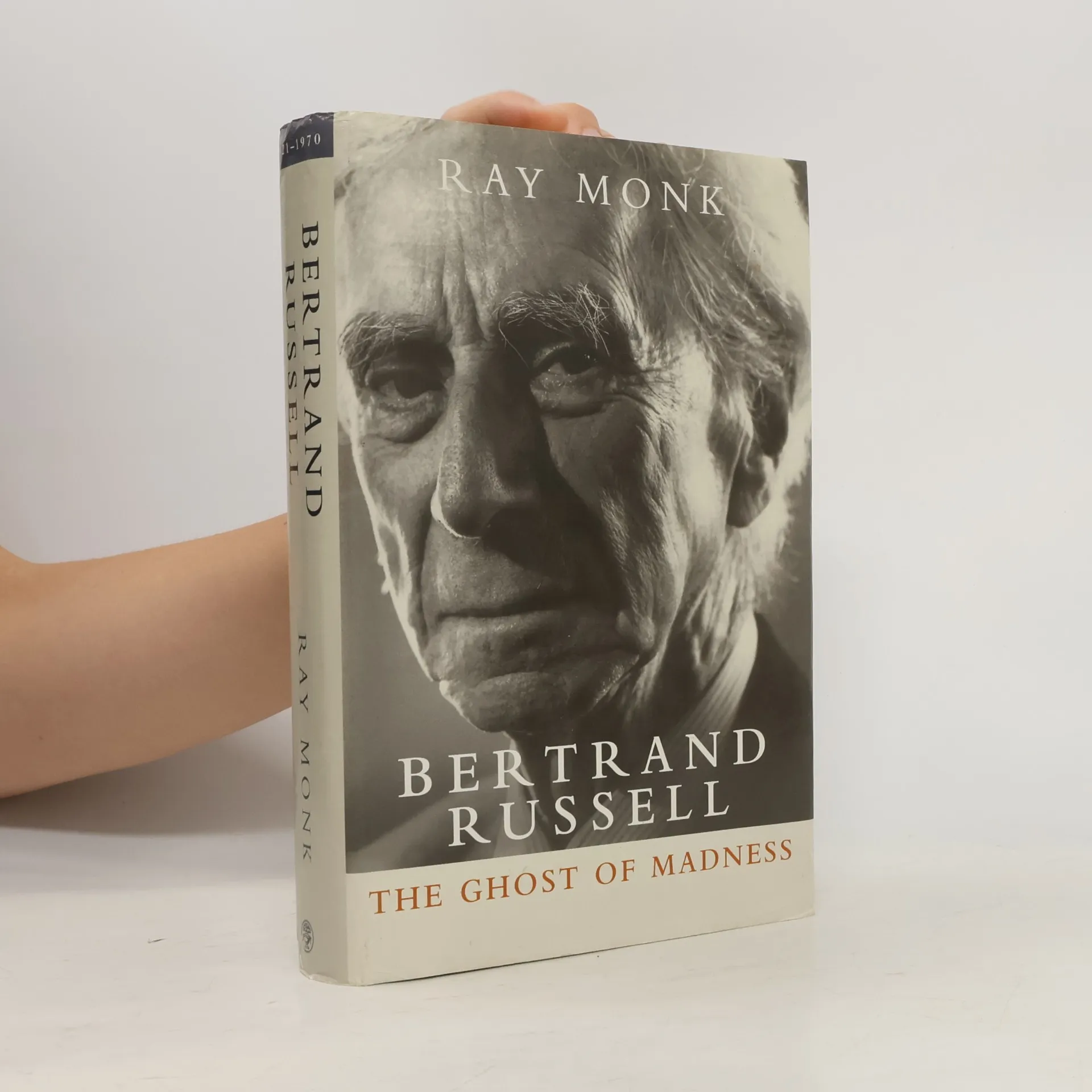
Whereas the highly acclaimed first volume of Ray Monk's biography focused on Bertrand Russell's achievements in philosophy and his often tortured relations with friends and lovers, this volume has at its centre the tragic and deeply moving story of Russell's relationship with his first son, John. That story, until now largely untold, traces Russell's joy at John's birth to his frightened dismay at John's collapse into schizophrenia. Russell had fervent hopes that education and parenthood could produce an 'independent, fearless and free' generation that would transform society, of which John would provide a leading example. In John's decline can also be seen Russell's disappointment at the difficulty of the reform of society. By describing the private as well as the public sides of Russell's life, this book at last does justice to the complexities of one of the most extraordinary men of the twentieth century.
The Ghost of Madness
"Making full use of the thousands of documents collected at the Russell Archives in Canada, Ray Monk steers a coherent line through the turbulence of Russell's public activities and subjects them to rigorous scrutiny and criticism. His focus, however, is on the tragedy of Russell's personal life, and here he has been helped by the co-operation of Russell's surviving relatives and by having access to hitherto unused legal and private correspondence. The story that emerges from these sources is a heartbreaking one that has at its centre Russell's relationship with his first son, John, arguably the most important relationship of his life. Russell thought that, by applying the methods of modern psychology, a generation of children could be produced that was 'independent, fearless and free'. John was to have been the model example. Instead, John became anxious, withdrawn and, eventually, schizophrenic, after which Russell refused to have anything to do with him and took over the upbringing of John's children, Anne, Sarah and Lucy. This proved to be disastrous and Lucy, Russell's favourite, became so emotionally disturbed that, at the age of twenty-six, she took her own life."--Jacket
Focusing on the life of Bertrand Russell, this biography delves into the contributions of the influential twentieth-century philosopher and co-author of Principia Mathematica. It explores his intellectual achievements, personal struggles, and the impact of his work on philosophy and mathematics. The narrative highlights Russell's brilliance and complexity, offering insights into his ideas and the broader context of his time.
'Monk's energetic enterprise is remarkable for the interweaving of the philosophical and the emotional aspects of Wittgenstein's life' Sunday Times 'Ray Monk's reconnection of Wittgenstein's philosophy with his life triumphantly carries out the Wittgensteinian task of \"changing the aspect\" of Wittgenstein's work, getting us to see it in a new way' Sunday Telegraph 'This biography transforms Wittgenstein into a human being' Independent on Sunday 'It is much to be recommended' Observer 'Monk's biography is deeply intelligent, generous to the ordinary reader... It is a beautiful portrait of a beautiful life' Guardian