

The book is currently out of stock
Parameters
- 198 pages
- 7 hours of reading
More about the book
Friedrich Nietzsche's work serves as a powerful critique of modernity, challenging established notions in science, arts, and politics. He argues against the universality of morality, asserting that moral systems are shaped by individual perspectives rather than absolute truths. The book particularly targets European and Christian morality, which Nietzsche sees as hypocritical and life-denying. Through this provocative analysis, it examines themes of identity, religion, democracy, psychology, and individual freedom, influencing contemporary moral philosophy significantly.


Publication
- 2024

- 2024
- 2023
- 2023
- 2023
- 2023
- 2023
- 2023
- 2023
- 2023
- 2023
- 2023

- 2022
- 2022
- 2022
- 2022
- 2022
- 2022
- 2022
- 2021
- 2021
- 2021
- 2021
- 2021
- 2021
- 2021
- 2021

- 2020
- 2020
- 2020
- 2020
- 2020
- 2020
- 2020
- 2020
- 2020
- 2020
- 2020
- 2020
- 2020
- 2020
- 2020
- 2020
- 2020
- 2020
- 2020

- 2019
- 2019
- 2019
- 2019
- 2019


- 2018

- 2018
- 2018
- 2018
- 2018
- 2018
- 2018
- 2018
- 2018
- 2018
- 2017
- 2017
- 2017
- 2017
- 2016

- 2013
- 2012
- 2010
- 2009
- 2009

- 2008
- 2008
- 2008
- 2008
- 2007
- 2007
- 2006
- 2005
- 2005
- 2004
- 2004





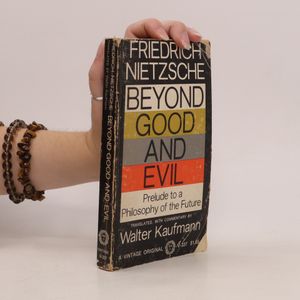


Book purchase
Beyond Good and Evil, Friedrich Nietzsche
- Language

- Released
- 2024
We’ll email you as soon as we track it down.
Payment methods
We’re missing your review here.
- Title
- Beyond Good and Evil
- Language
- English
- Authors
- Friedrich Nietzsche
- Publisher
- Warbler Classics
- Released
- 2024
- Pages
- 198
- ISBN13
- 9781962572675
- Series
- Tags
- Non-Fiction, Social Sciences, True Stories, Psychological Topics, Philosophical Topics, German Literature, Opinion Journalism & Essays, 19th century
- First published
- 1886
- Original title
- Jenseits von Gut und Böse
- Rating
- 4.25 out of 5
- Description
- Friedrich Nietzsche's work serves as a powerful critique of modernity, challenging established notions in science, arts, and politics. He argues against the universality of morality, asserting that moral systems are shaped by individual perspectives rather than absolute truths. The book particularly targets European and Christian morality, which Nietzsche sees as hypocritical and life-denying. Through this provocative analysis, it examines themes of identity, religion, democracy, psychology, and individual freedom, influencing contemporary moral philosophy significantly.