



More about the book
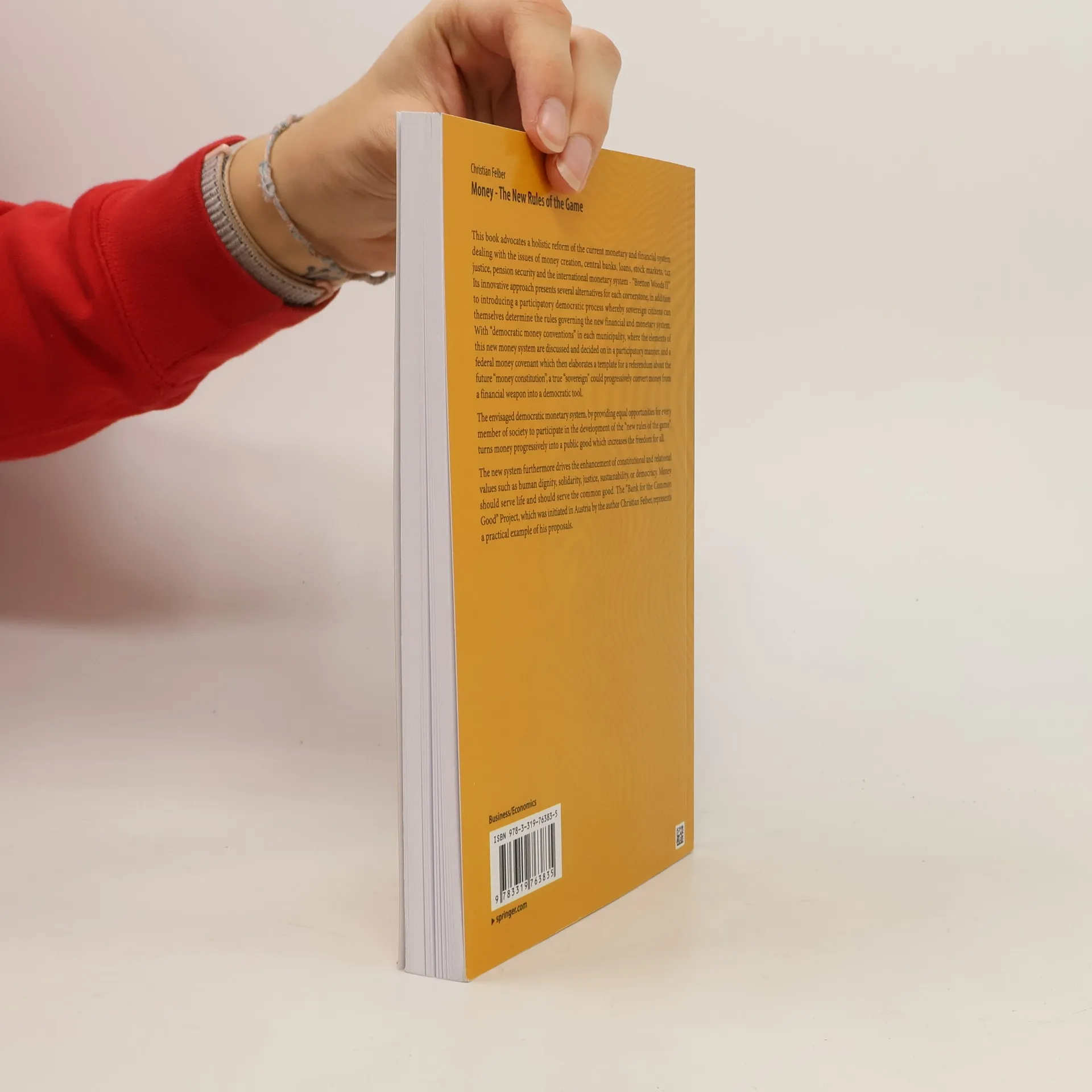
This book advocates for a holistic reform of the monetary and financial system, addressing issues such as money creation, central banks, loans, stock markets, tax justice, pension security, and the international monetary system—termed “Bretton Woods II.” It presents innovative alternatives for each cornerstone and introduces a participatory democratic process allowing citizens to determine the rules of the new financial and monetary system. Through “democratic money conventions” in municipalities, citizens can discuss and decide on aspects of this new system. A federal money covenant would then create a template for a referendum on the future “money constitution,” enabling a transformation of money from a financial weapon into a democratic tool. This envisioned system aims to provide equal opportunities for all members of society to participate in shaping the “new rules of the game,” progressively turning money into a public good that enhances freedom for everyone. Additionally, it promotes constitutional and relational values such as human dignity, solidarity, justice, sustainability, and democracy. The concept emphasizes that money should serve life and the common good. The “Bank for the Common Good” Project, initiated by Christian Felber in Austria, exemplifies these proposals in action.
Book purchase
Money - The New Rules of the Game, Christian Felber
- Language

- Released
- 2018
- Binding
- (Paperback)
Payment methods
No one has rated yet.
- Title
- Money - The New Rules of the Game
- Language
- English
- Authors
- Christian Felber
- Publisher
- Springer
- Released
- 2018
- Format
- Paperback
- Pages
- 244
- ISBN10
- 3319763830
- ISBN13
- 9783319763835
- Series
- Categories
- Tags
- Business
- Description
- This book advocates for a holistic reform of the monetary and financial system, addressing issues such as money creation, central banks, loans, stock markets, tax justice, pension security, and the international monetary system—termed “Bretton Woods II.” It presents innovative alternatives for each cornerstone and introduces a participatory democratic process allowing citizens to determine the rules of the new financial and monetary system. Through “democratic money conventions” in municipalities, citizens can discuss and decide on aspects of this new system. A federal money covenant would then create a template for a referendum on the future “money constitution,” enabling a transformation of money from a financial weapon into a democratic tool. This envisioned system aims to provide equal opportunities for all members of society to participate in shaping the “new rules of the game,” progressively turning money into a public good that enhances freedom for everyone. Additionally, it promotes constitutional and relational values such as human dignity, solidarity, justice, sustainability, and democracy. The concept emphasizes that money should serve life and the common good. The “Bank for the Common Good” Project, initiated by Christian Felber in Austria, exemplifies these proposals in action.