


More about the book
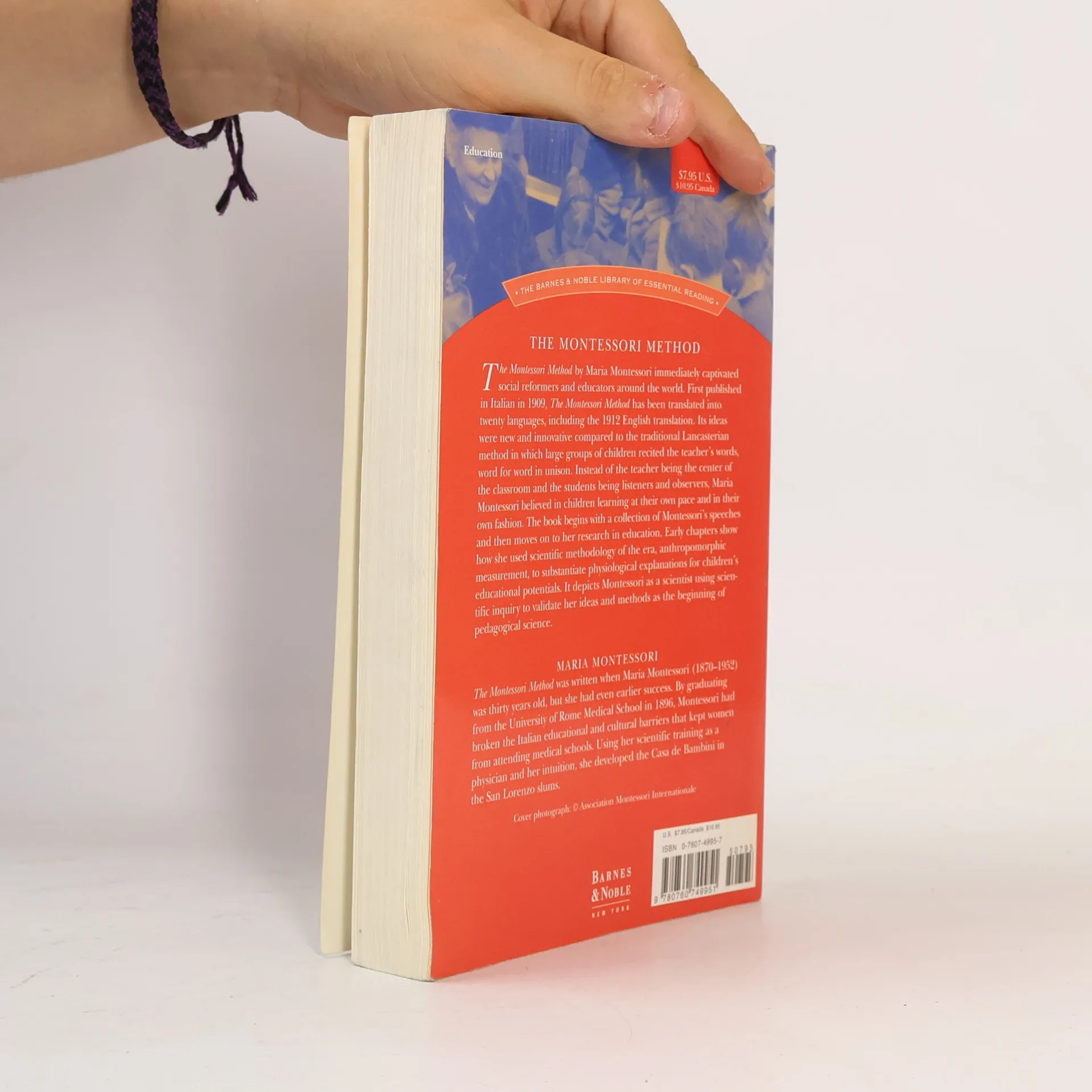
The Montessori Method by Maria Montessori captivated educators and social reformers worldwide upon its release in 1909. Originally published in Italian, it has since been translated into twenty languages, including an English version in 1912. Montessori's innovative approach contrasted sharply with the traditional Lancasterian method, where children recited the teacher's words in unison. Instead, she advocated for children to learn at their own pace and in their own style, shifting the focus from the teacher to the learner. The book opens with a collection of Montessori's speeches, followed by her research in education. Early chapters illustrate her use of scientific methodologies, including anthropomorphic measurement, to provide physiological explanations for children's educational potential. This portrayal positions Montessori as a scientist validating her ideas and methods through scientific inquiry, marking the inception of pedagogical science. Written when Montessori was just thirty, the book reflects her earlier accomplishments, including graduating from the University of Rome Medical School in 1896, breaking barriers for women in education. Her scientific training and intuition led to the establishment of the Casa de Bambini in the San Lorenzo slums, showcasing her commitment to innovative education.
Language







Book purchase
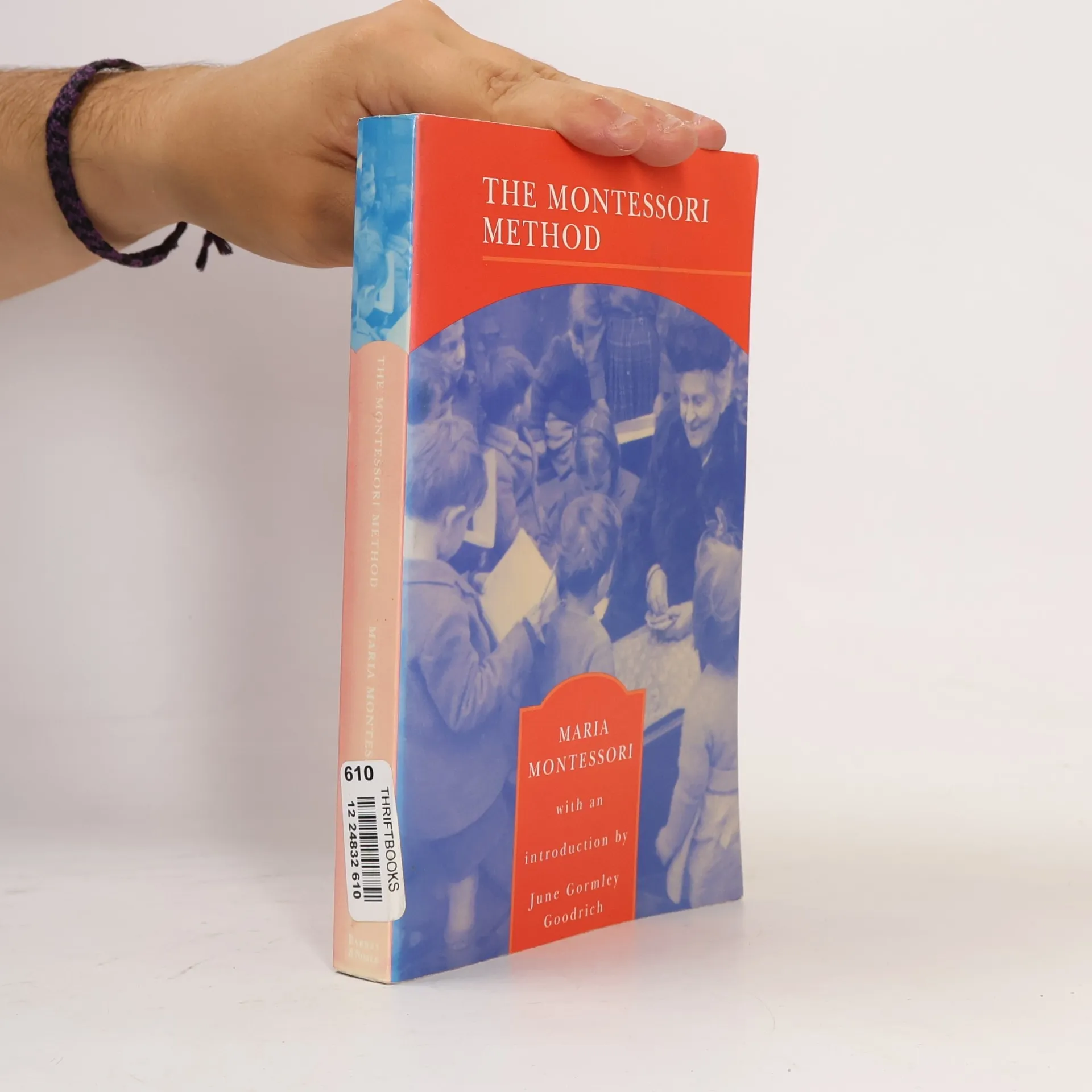
Barnes & Noble Library of Essential Reading: The Montessori Method, Maria Montessori, June Gormley Goodrich, Anne E. George
- Language

- Released
- 2003
- Binding
- (Paperback),
- Book condition
- Damaged
- Price
- €2.07
Payment methods
We’re missing your review here.
- Language
- English
- Publisher
- Barnes & Noble
- Released
- 2003
- Format
- Paperback
- Pages
- 336
- ISBN10
- 0760749957
- ISBN13
- 9780760749951
- Series
- Tags
- Non-Fiction, Social Sciences, Self-Help, Psychological Topics, Philosophical Topics, Philosophy, Pedagogy, Parenting, Education & School System, Parenthood
- Original title
- Discovery of child
- Rating
- 4.3 out of 5
- Description
- The Montessori Method by Maria Montessori captivated educators and social reformers worldwide upon its release in 1909. Originally published in Italian, it has since been translated into twenty languages, including an English version in 1912. Montessori's innovative approach contrasted sharply with the traditional Lancasterian method, where children recited the teacher's words in unison. Instead, she advocated for children to learn at their own pace and in their own style, shifting the focus from the teacher to the learner. The book opens with a collection of Montessori's speeches, followed by her research in education. Early chapters illustrate her use of scientific methodologies, including anthropomorphic measurement, to provide physiological explanations for children's educational potential. This portrayal positions Montessori as a scientist validating her ideas and methods through scientific inquiry, marking the inception of pedagogical science. Written when Montessori was just thirty, the book reflects her earlier accomplishments, including graduating from the University of Rome Medical School in 1896, breaking barriers for women in education. Her scientific training and intuition led to the establishment of the Casa de Bambini in the San Lorenzo slums, showcasing her commitment to innovative education.