

Parameters
- 351 pages
- 13 hours of reading
More about the book
In this brilliant and profound study the distinguished American anthropologist Marvin Harris shows how the endless varieties of cultural behavior -- often so puzzling at first glance -- can be explained as adaptations to particular ecological conditions. His aim is to account for the evolution of cultural forms as Darwin accounted for the evolution of biological forms: to show how cultures adopt their characteristic forms in response to changing ecological modes. "[A] magisterial interpretation of the rise and fall of human cultures and societies." -- Robert Lekachman, Washington Post Book World "Its persuasive arguments asserting the primacy of cultural rather than genetic or psychological factors in human life deserve the widest possible audience." -- Gloria Levitas The New Leader "[An] original and...urgent theory about the nature of man and at the reason that human cultures take so many diverse shapes." -- The New Yorker "Lively and controversial." -- I. Bernard Cohen, front page, The New York Times Book Review




Book purchase
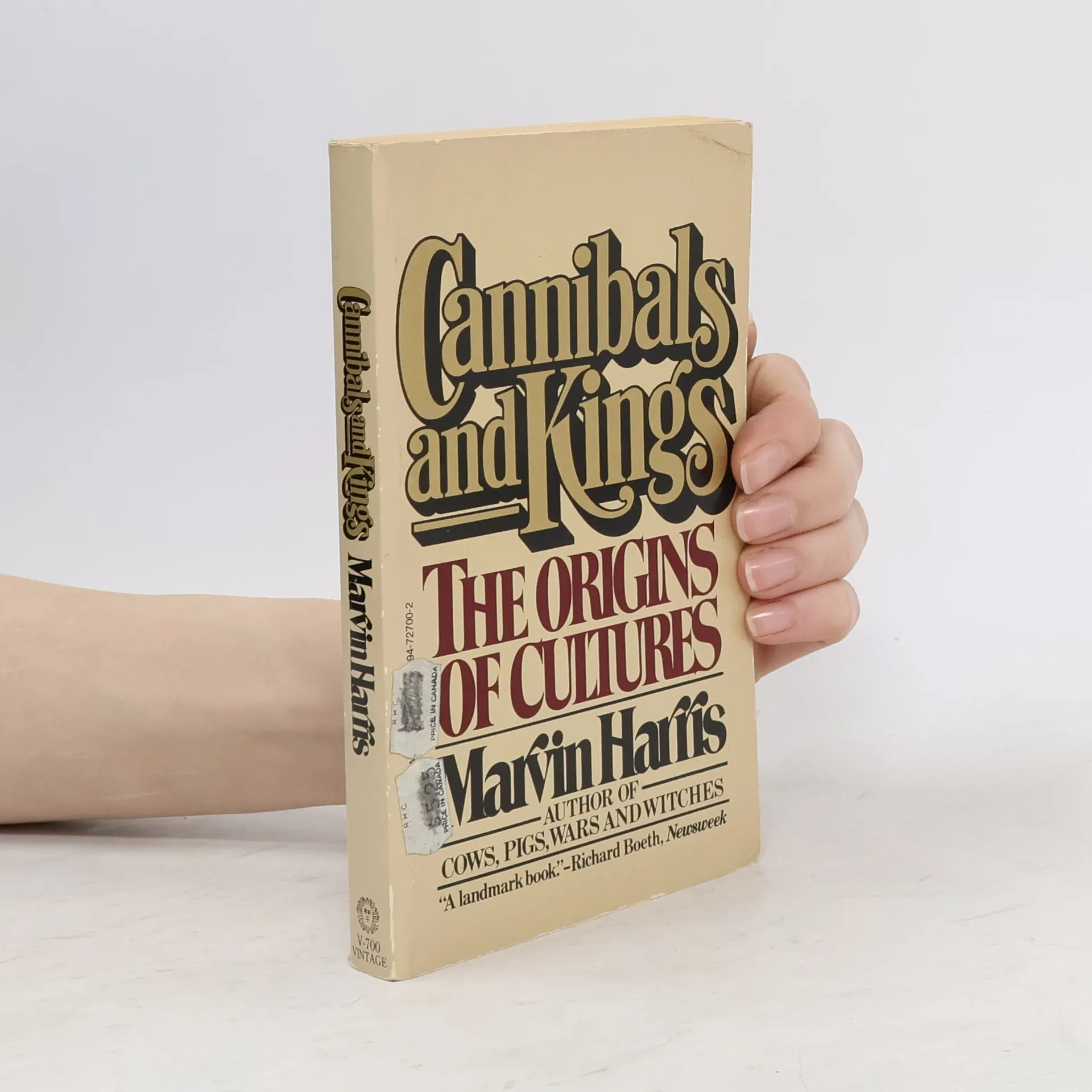
Vintage - 700: Cannibals And Kings, Marvin Harris
- Language

- Released
- 1978
- Binding
- (Paperback)
Payment methods
We’re missing your review here.
- Title
- Vintage - 700: Cannibals And Kings
- Language
- English
- Authors
- Marvin Harris
- Publisher
- Vintage
- Released
- 1978
- Format
- Paperback
- Pages
- 351
- ISBN10
- 0394727002
- ISBN13
- 9780394727004
- Series
- Categories
- Tags
- Historical Themes, Science, Culture and Society, Cultural History, Vegetarianism, Civilization, Cannibalism
- Original title
- Cannibals and kings
- Rating
- 4.05 out of 5
- Description
- In this brilliant and profound study the distinguished American anthropologist Marvin Harris shows how the endless varieties of cultural behavior -- often so puzzling at first glance -- can be explained as adaptations to particular ecological conditions. His aim is to account for the evolution of cultural forms as Darwin accounted for the evolution of biological forms: to show how cultures adopt their characteristic forms in response to changing ecological modes. "[A] magisterial interpretation of the rise and fall of human cultures and societies." -- Robert Lekachman, Washington Post Book World "Its persuasive arguments asserting the primacy of cultural rather than genetic or psychological factors in human life deserve the widest possible audience." -- Gloria Levitas The New Leader "[An] original and...urgent theory about the nature of man and at the reason that human cultures take so many diverse shapes." -- The New Yorker "Lively and controversial." -- I. Bernard Cohen, front page, The New York Times Book Review