

Parameters
More about the book
E. T. A. Hoffmann, originally named Ernst Theodor Wilhelm, later adopted the name Ernst Theodor Amadeus in honor of Mozart. Born in 1776 in Königsberg, he studied law and became a referendary at the Berlin Kammergericht. His career took a turn when he was punished for caricatures of Prussian officers, leading to a transfer to Poland, and eventually, he became a Kapellmeister in Bamberg. Hoffmann dedicated much of his artistic output to music until his return to Berlin in 1814, where he was appointed Kammergerichtsrat and founded the Serapinenorden. He authored significant works, including "Die Elixiere des Teufels" and "Die Lebensansichten des Katers Murr," along with numerous stories. His penultimate tale, "Der Meister Floh," faced censorship due to its perceived satire of a Prussian police director. In 1822, Hoffmann fell gravely ill and dictated "Des Vetters Eckfenster" from his deathbed, marking his shift towards critical realism. He passed away on June 25 in Berlin. This edition includes a biography of the author and is based on the 1963 edition of his poetic works, with precise pagination noted. The cover features artwork by Petrus Christus.


Book purchase
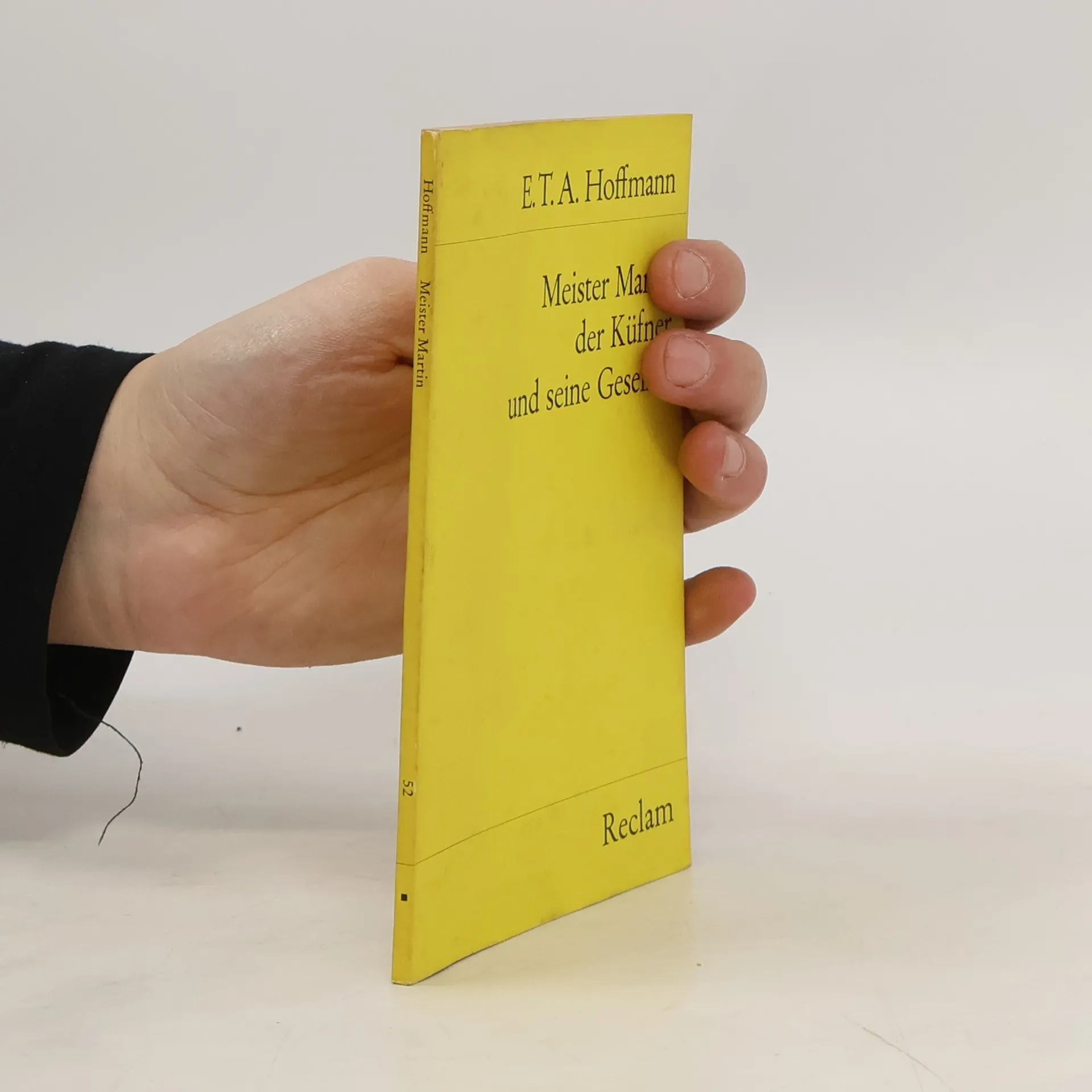
Meister Martin, der Küfner, und seine Gesellen, E. T. A. Hoffmann
- Language

- Released
- 1986
- product-detail.submit-box.info.binding
- (Paperback)
Payment methods
No one has rated yet.
- Language
- German
- Authors
- E. T. A. Hoffmann
- Publisher
- Reclam
- Released
- 1986
- Format
- Paperback
- ISBN10
- 3150000521
- ISBN13
- 9783150000526
- Series
- Description
- E. T. A. Hoffmann, originally named Ernst Theodor Wilhelm, later adopted the name Ernst Theodor Amadeus in honor of Mozart. Born in 1776 in Königsberg, he studied law and became a referendary at the Berlin Kammergericht. His career took a turn when he was punished for caricatures of Prussian officers, leading to a transfer to Poland, and eventually, he became a Kapellmeister in Bamberg. Hoffmann dedicated much of his artistic output to music until his return to Berlin in 1814, where he was appointed Kammergerichtsrat and founded the Serapinenorden. He authored significant works, including "Die Elixiere des Teufels" and "Die Lebensansichten des Katers Murr," along with numerous stories. His penultimate tale, "Der Meister Floh," faced censorship due to its perceived satire of a Prussian police director. In 1822, Hoffmann fell gravely ill and dictated "Des Vetters Eckfenster" from his deathbed, marking his shift towards critical realism. He passed away on June 25 in Berlin. This edition includes a biography of the author and is based on the 1963 edition of his poetic works, with precise pagination noted. The cover features artwork by Petrus Christus.