

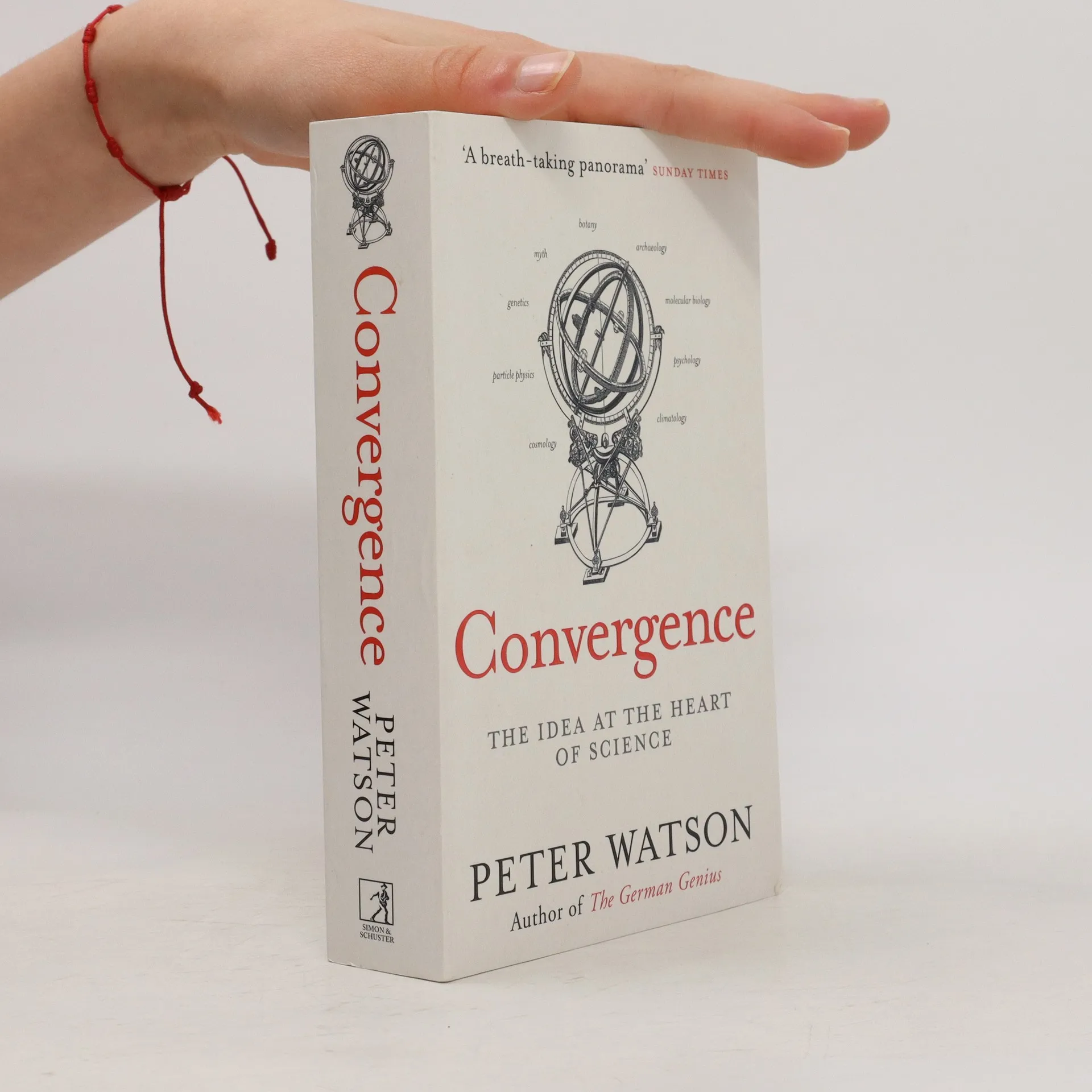


Parameters
- 576 pages
- 21 hours of reading
More about the book
Peter Watson's Convergence is an impressive and original journey through the history of scientific ideas. In this work, Watson meticulously examines the close relationship between physics and chemistry, how quantum theory converges with other sciences, and the connections between climatology and mythology, as well as botany and archaeology, addressing all matters of interdisciplinary harmony. Different sciences come together despite their varied starting points and interests; they converge to narrate the dominant story of the universe's history. Initially met with skepticism, "convergence" is, as Nobel laureate physicist Steven Weinberg expressed, "the deepest idea that explains the universe." In today's knowledge societies, it has become a significant trend, influencing various fields such as business, education, and technology. This provocative historical study explores connections that help unite scientific disciplines. Watson compellingly reveals how these connections are woven together. Whether you are a biologist, mathematician, or astrophysicist, one thing is certain: everyone ultimately works on the same system.
Book purchase
Convergence : the deepest idea in the universe, Peter Watson
- Language

- Released
- 2016
- Binding
- (Paperback)
Payment methods
We’re missing your review here.
- Title
- Convergence : the deepest idea in the universe
- Language
- English
- Authors
- Peter Watson
- Publisher
- Simon & Schuster, a CBS company
- Released
- 2016
- Format
- Paperback
- Pages
- 576
- ISBN10
- 1471129012
- ISBN13
- 9781471129018
- Series
- Categories
- Tags
- Historical Themes, Natural sciences, Philosophical Topics, Science, Technology, History of Science
- Rating
- 4.1 out of 5
- Description
- Peter Watson's Convergence is an impressive and original journey through the history of scientific ideas. In this work, Watson meticulously examines the close relationship between physics and chemistry, how quantum theory converges with other sciences, and the connections between climatology and mythology, as well as botany and archaeology, addressing all matters of interdisciplinary harmony. Different sciences come together despite their varied starting points and interests; they converge to narrate the dominant story of the universe's history. Initially met with skepticism, "convergence" is, as Nobel laureate physicist Steven Weinberg expressed, "the deepest idea that explains the universe." In today's knowledge societies, it has become a significant trend, influencing various fields such as business, education, and technology. This provocative historical study explores connections that help unite scientific disciplines. Watson compellingly reveals how these connections are woven together. Whether you are a biologist, mathematician, or astrophysicist, one thing is certain: everyone ultimately works on the same system.