


Parameters
- 290 pages
- 11 hours of reading
More about the book
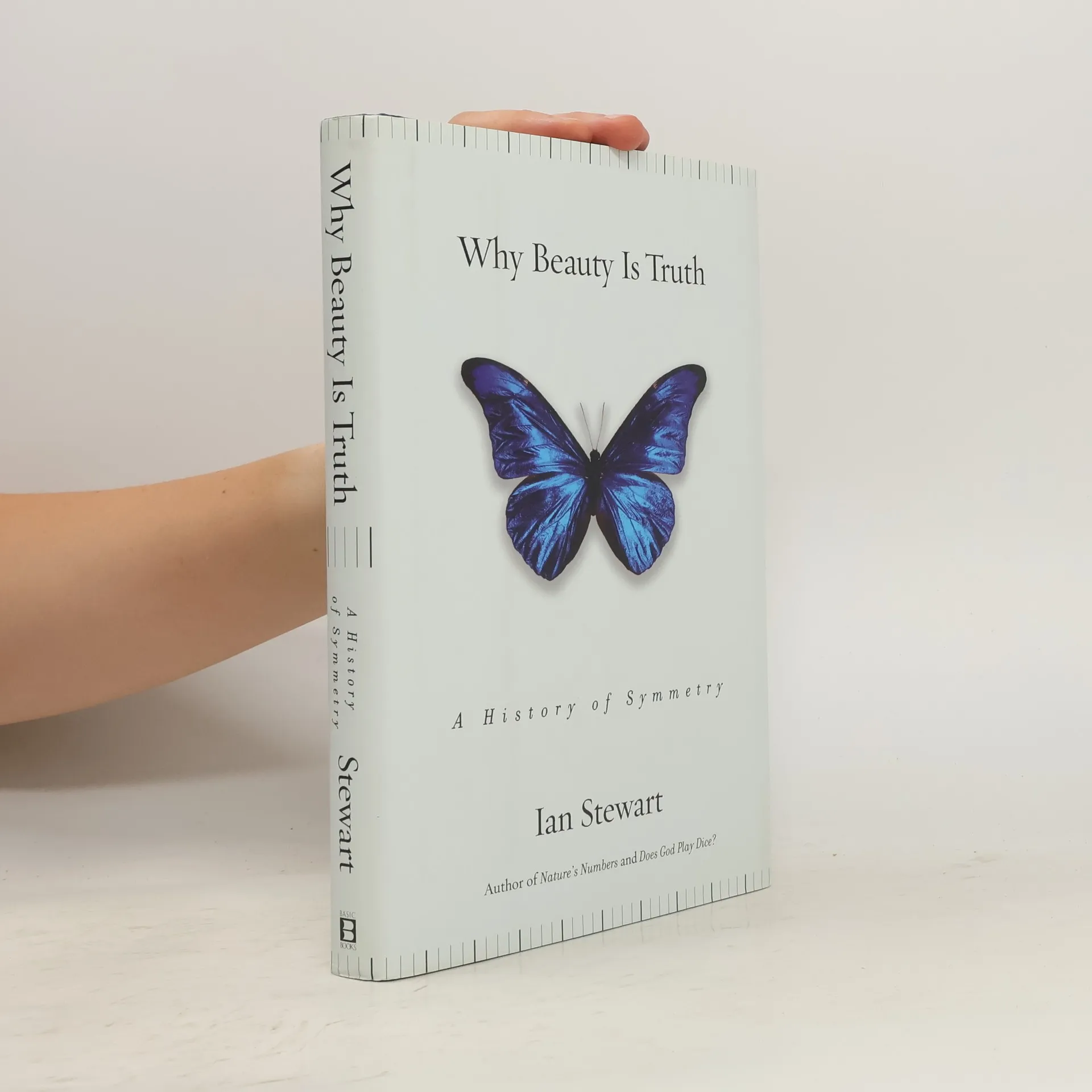
At the heart of relativity theory, quantum mechanics, string theory, and much of modern cosmology lies one concept: symmetry. In Why Beauty Is Truth, world-famous mathematician Ian Stewart narrates the history of the emergence of this remarkable area of study. Stewart introduces us to such characters as the Renaissance Italian genius, rogue, scholar, and gambler Girolamo Cardano, who stole the modern method of solving cubic equations and published it in the first important book on algebra, and the young revolutionary Evariste Galois, who refashioned the whole of mathematics and founded the field of group theory only to die in a pointless duel over a woman before his work was published. Stewart also explores the strange numerology of real mathematics, in which particular numbers have unique and unpredictable properties related to symmetry. He shows how Wilhelm Killing discovered “Lie groups” with 14, 52, 78, 133, and 248 dimensions-groups whose very existence is a profound puzzle. Finally, Stewart describes the world beyond superstrings: the “octonionic” symmetries that may explain the very existence of the universe.


Book purchase
Why Beauty Is Truth, Ian Stewart
- Language

- Released
- 2007
- product-detail.submit-box.info.binding
- (Hardcover)
Payment methods
We’re missing your review here.
- Title
- Why Beauty Is Truth
- Subtitle
- A History of Symmetry
- Language
- English
- Authors
- Ian Stewart
- Publisher
- Basic Books
- Released
- 2007
- Format
- Hardcover
- Pages
- 290
- ISBN10
- 046508236X
- ISBN13
- 9780465082360
- Series
- Tags
- Non-Fiction, Social Sciences, Historical Themes, History, Science & Math, Natural sciences, Philosophical Topics, Philosophy, Science, Mathematics, Physics
- Rating
- 3.85 out of 5
- Description
- At the heart of relativity theory, quantum mechanics, string theory, and much of modern cosmology lies one concept: symmetry. In Why Beauty Is Truth, world-famous mathematician Ian Stewart narrates the history of the emergence of this remarkable area of study. Stewart introduces us to such characters as the Renaissance Italian genius, rogue, scholar, and gambler Girolamo Cardano, who stole the modern method of solving cubic equations and published it in the first important book on algebra, and the young revolutionary Evariste Galois, who refashioned the whole of mathematics and founded the field of group theory only to die in a pointless duel over a woman before his work was published. Stewart also explores the strange numerology of real mathematics, in which particular numbers have unique and unpredictable properties related to symmetry. He shows how Wilhelm Killing discovered “Lie groups” with 14, 52, 78, 133, and 248 dimensions-groups whose very existence is a profound puzzle. Finally, Stewart describes the world beyond superstrings: the “octonionic” symmetries that may explain the very existence of the universe.