


Parameters
- 400 pages
- 14 hours of reading
More about the book
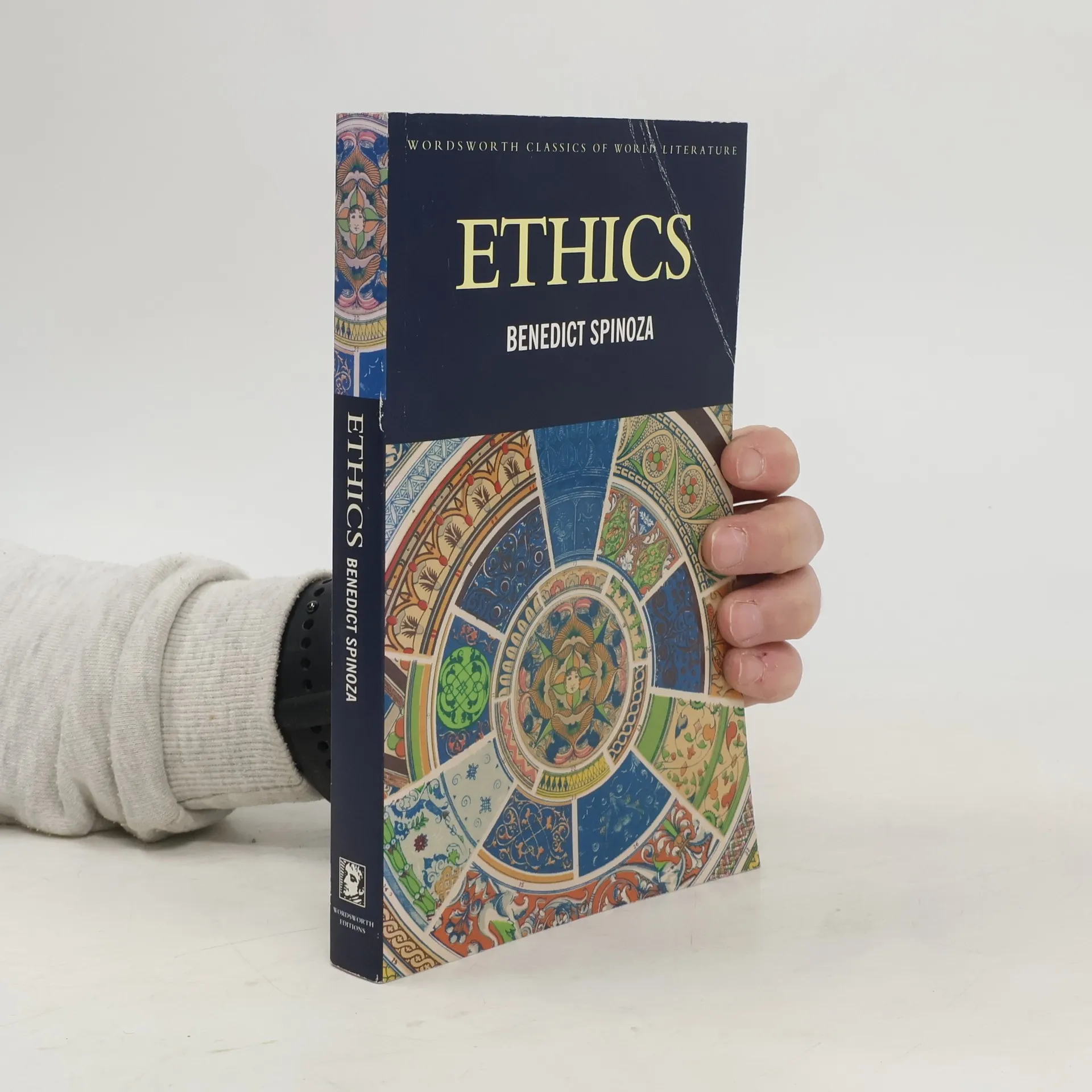
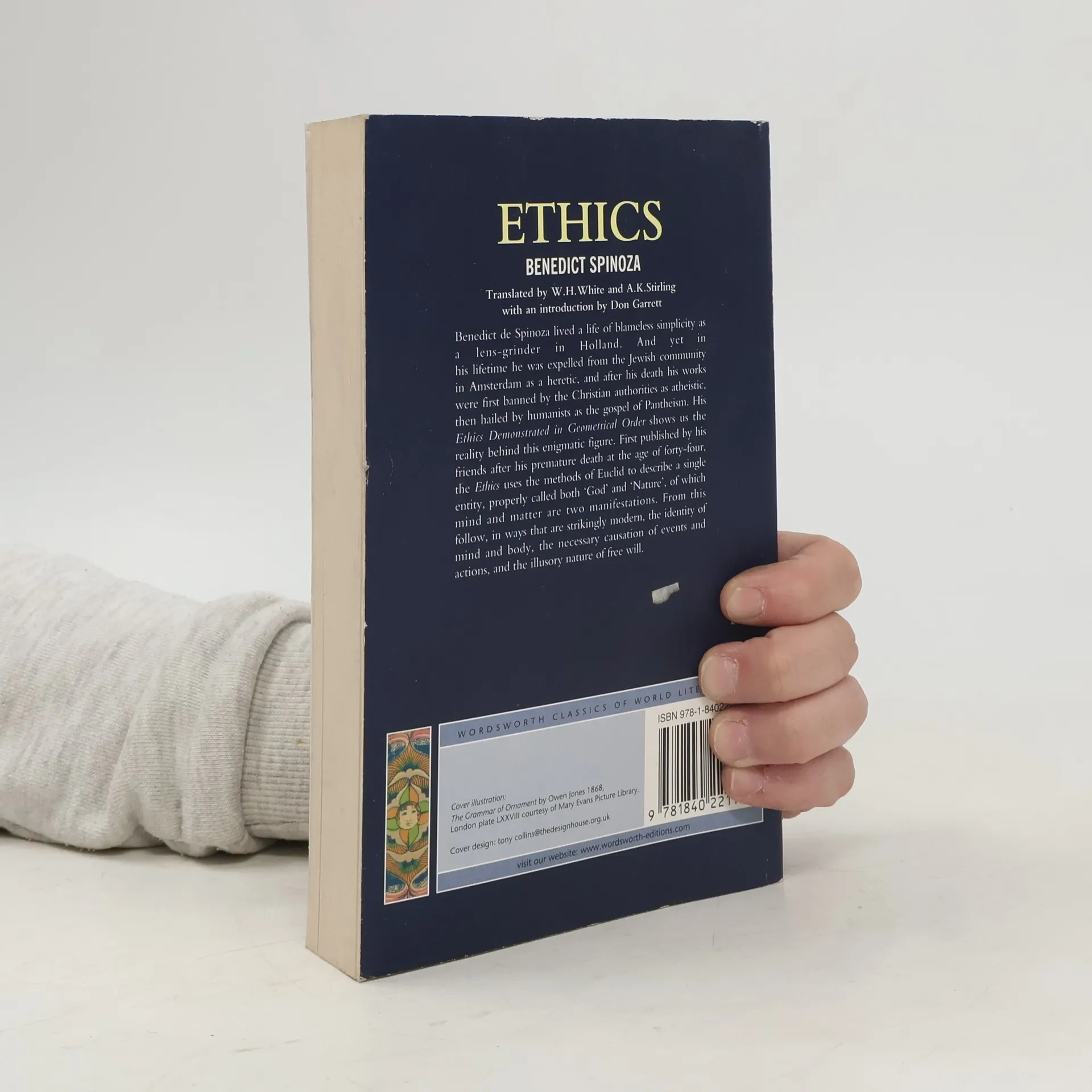
Translated by W.H.White and A.K.Stirling. With an Introduction by Don Garrett. Benedict de Spinoza lived a life of blameless simplicity as a lens-grinder in Holland. And yet in his lifetime he was expelled from the Jewish community in Amsterdam as a heretic, and after his death his works were first banned by the Christian authorities as atheistic, then hailed by humanists as the gospel of Pantheism. His Ethics Demonstrated in Geometrical Order shows us the reality behind this enigmatic figure. First published by his friends after his premature death at the age of forty-four, the Ethics uses the methods of Euclid to describe a single entity, properly called both 'God' and 'Nature', of which mind and matter are two manifestations. From this follow, in ways that are strikingly modern, the identity of mind and body, the necessary causation of events and actions, and the illusory nature of free will.





Book purchase
Ethics, Benedictus de Spinoza
- Language

- Released
- 2001
- product-detail.submit-box.info.binding
- (Paperback),
- Book condition
- Good
- Price
- €3.59
Payment methods
We’re missing your review here.
- Title
- Ethics
- Language
- English
- Authors
- Benedictus de Spinoza
- Publisher
- Wordsworth Editions
- Released
- 2001
- Format
- Paperback
- Pages
- 400
- ISBN10
- 1840221194
- ISBN13
- 9781840221190
- Series
- Tags
- Non-Fiction, Social Sciences, Religion & Spirituality, Political Science & Politics, Psychological Topics, Religious Topics, Philosophical Topics, Religion, Politics, Gifts for grandpa, Scientific Theories, University, College, Ethics, 17th century, Metaphysics, Philosophers
- First published
- 1677
- Original title
- Ethica
- Rating
- 4.1 out of 5
- Description
- Translated by W.H.White and A.K.Stirling. With an Introduction by Don Garrett. Benedict de Spinoza lived a life of blameless simplicity as a lens-grinder in Holland. And yet in his lifetime he was expelled from the Jewish community in Amsterdam as a heretic, and after his death his works were first banned by the Christian authorities as atheistic, then hailed by humanists as the gospel of Pantheism. His Ethics Demonstrated in Geometrical Order shows us the reality behind this enigmatic figure. First published by his friends after his premature death at the age of forty-four, the Ethics uses the methods of Euclid to describe a single entity, properly called both 'God' and 'Nature', of which mind and matter are two manifestations. From this follow, in ways that are strikingly modern, the identity of mind and body, the necessary causation of events and actions, and the illusory nature of free will.