



Parameters
- 226 pages
- 8 hours of reading
More about the book
Francis Fukuyama critiques the Bush administration's decision to invade Iraq, highlighting its failure in managing American foreign policy. He argues that the administration mistakenly prioritized preventive war as a core principle and misjudged the global response to its concept of “benevolent hegemony.” Furthermore, it underestimated the complexities of large-scale social engineering, particularly in establishing a viable democratic government in Iraq. Fukuyama addresses claims that the administration's foreign policy was driven by a neoconservative agenda during Bush's first term. He provides a compelling history of neoconservative thought since the 1930s, suggesting that its legacy is multifaceted and can be viewed differently than it was post-Cold War. By analyzing the administration's errors in addressing the post–September 11 landscape, Fukuyama advocates for a revised approach to American foreign policy. He proposes a strategy that combines the positive elements of the neoconservative legacy with a more pragmatic understanding of how American power can be effectively utilized on the global stage.
Language

Publication

Book purchase
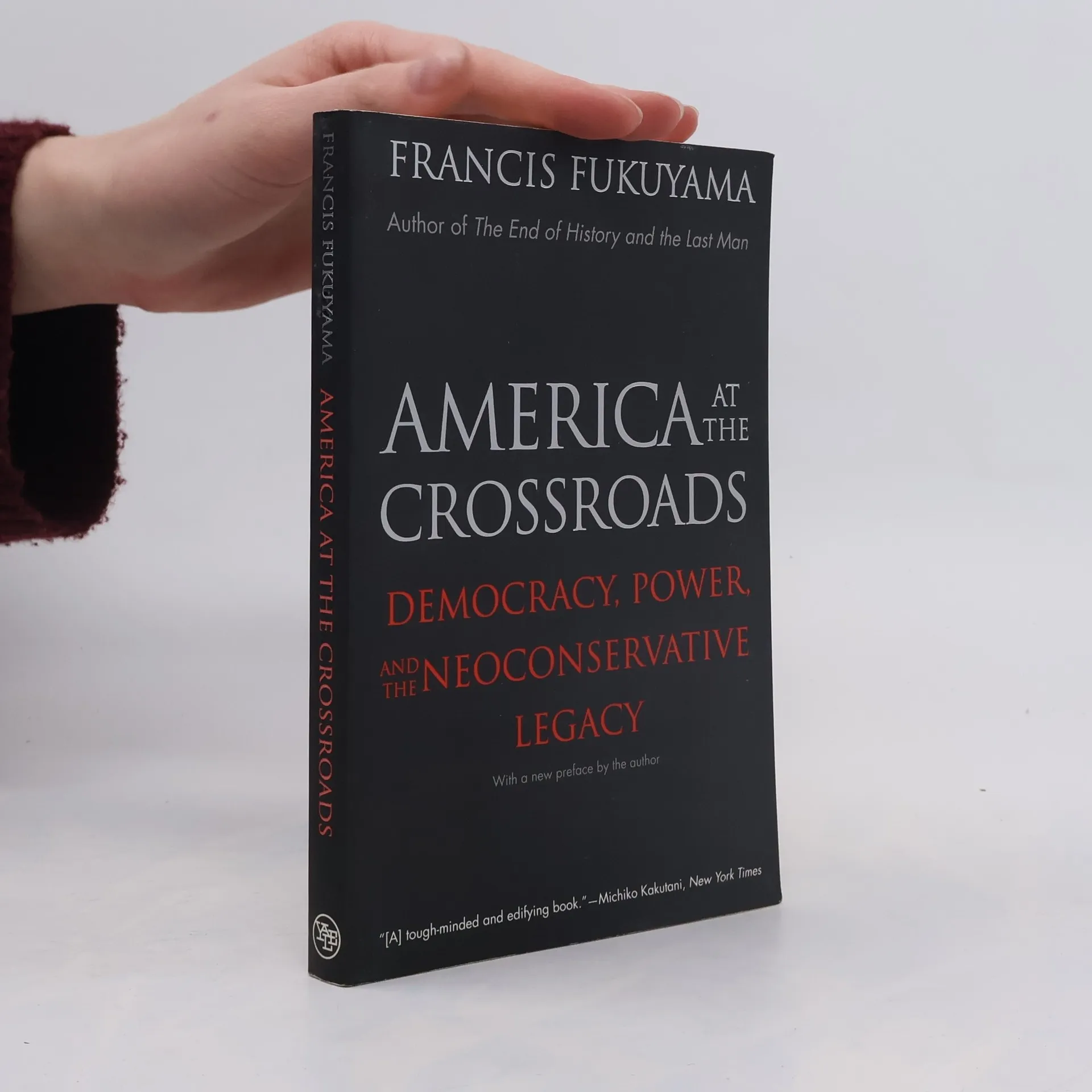
America at the Crossroads, Francis Fukuyama
- Language

- Released
- 2007
- Binding
- (Paperback)
Payment methods
We’re missing your review here.
- Title
- America at the Crossroads
- Subtitle
- Democracy, Power, and the Neoconservative Legacy
- Language
- English
- Authors
- Francis Fukuyama
- Publisher
- Yale University Press
- Released
- 2007
- Format
- Paperback
- Pages
- 226
- ISBN10
- 0300122535
- ISBN13
- 9780300122534
- Series
- Categories
- Tags
- Historical Themes, Philosophical Topics, Politics, USA, American Literature, International Relations, Iraq, Washington, Invasion, Presidents of the USA, American Politics
- Original title
- America at the crossroads
- Rating
- 3.55 out of 5
- Description
- Francis Fukuyama critiques the Bush administration's decision to invade Iraq, highlighting its failure in managing American foreign policy. He argues that the administration mistakenly prioritized preventive war as a core principle and misjudged the global response to its concept of “benevolent hegemony.” Furthermore, it underestimated the complexities of large-scale social engineering, particularly in establishing a viable democratic government in Iraq. Fukuyama addresses claims that the administration's foreign policy was driven by a neoconservative agenda during Bush's first term. He provides a compelling history of neoconservative thought since the 1930s, suggesting that its legacy is multifaceted and can be viewed differently than it was post-Cold War. By analyzing the administration's errors in addressing the post–September 11 landscape, Fukuyama advocates for a revised approach to American foreign policy. He proposes a strategy that combines the positive elements of the neoconservative legacy with a more pragmatic understanding of how American power can be effectively utilized on the global stage.