

Parameters
More about the book
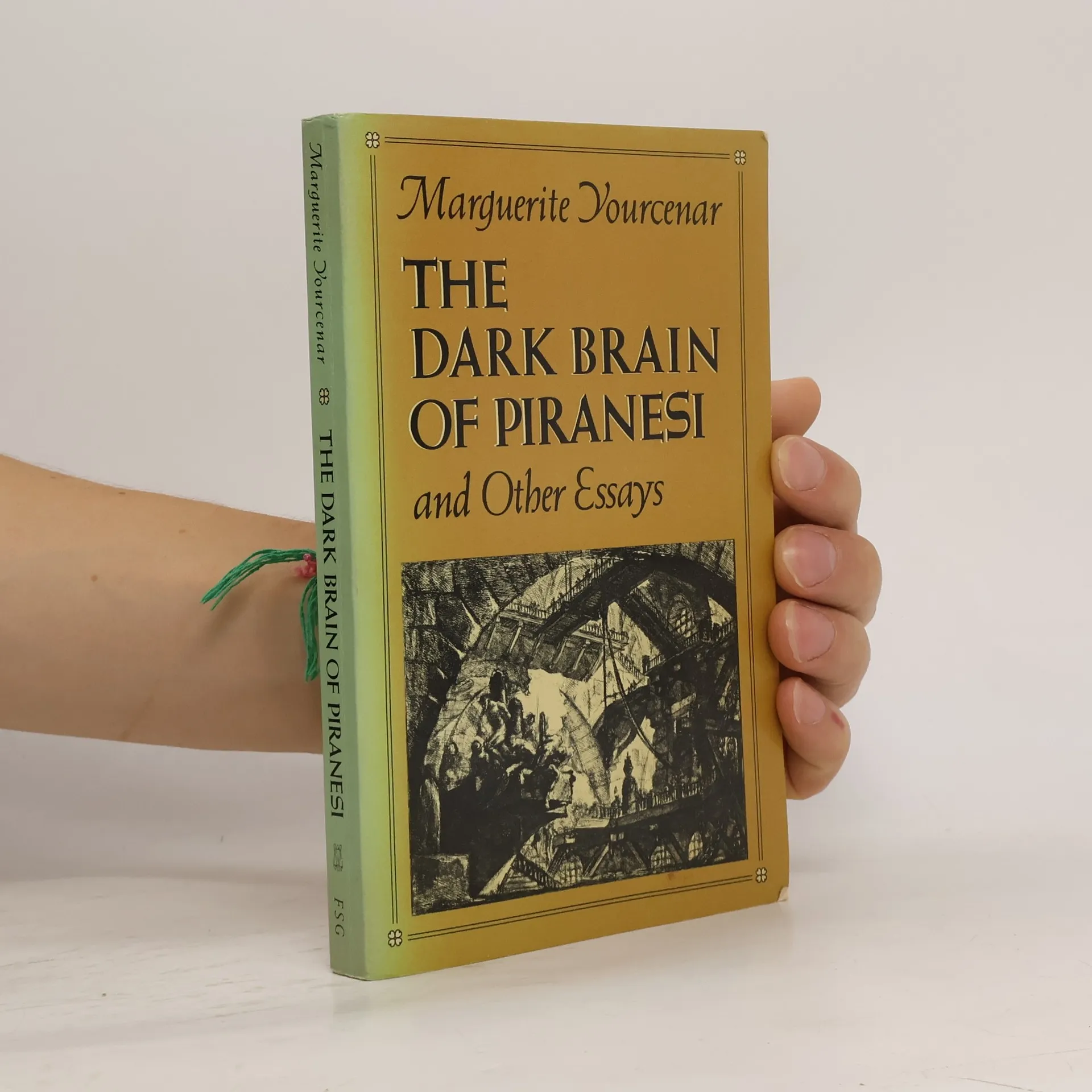
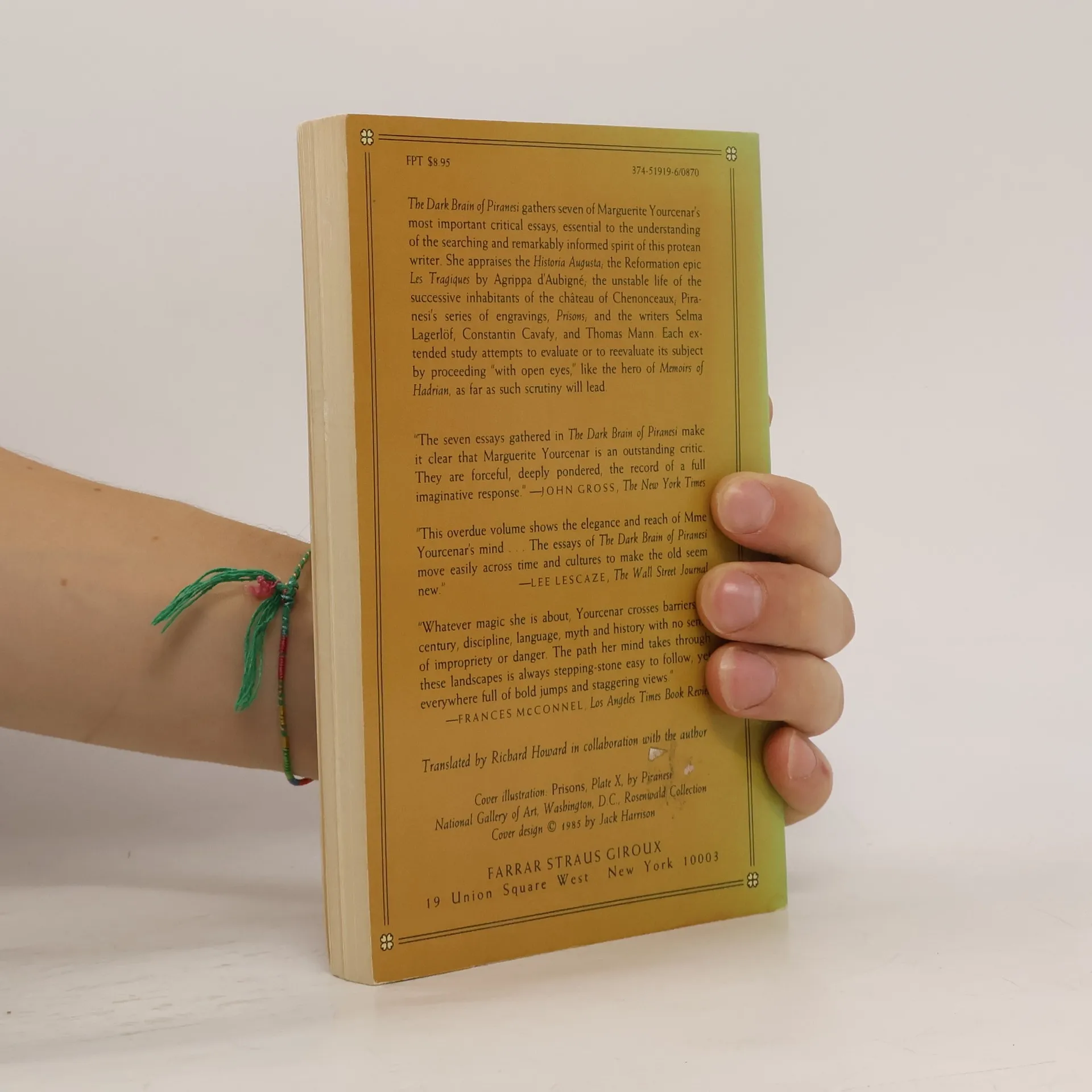
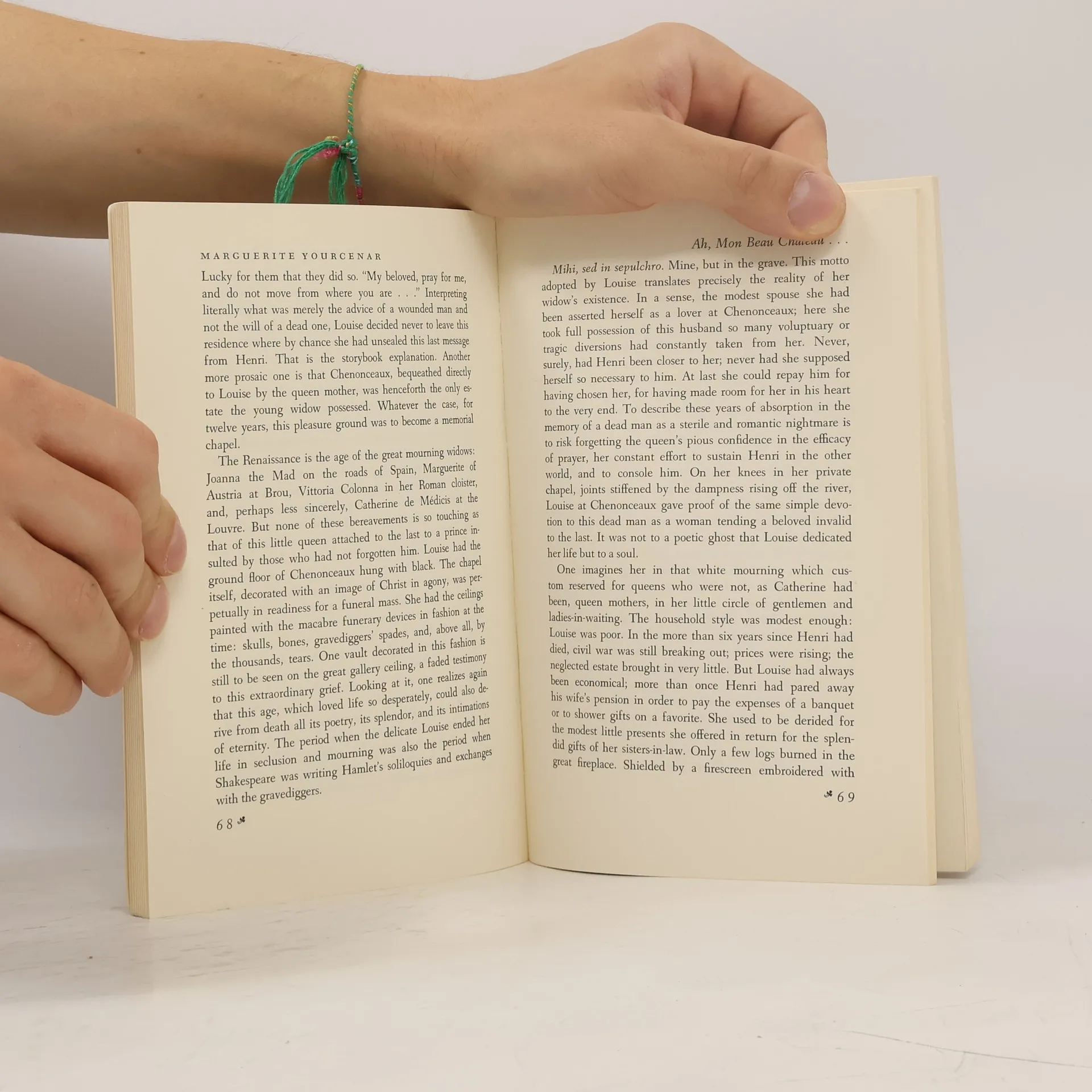
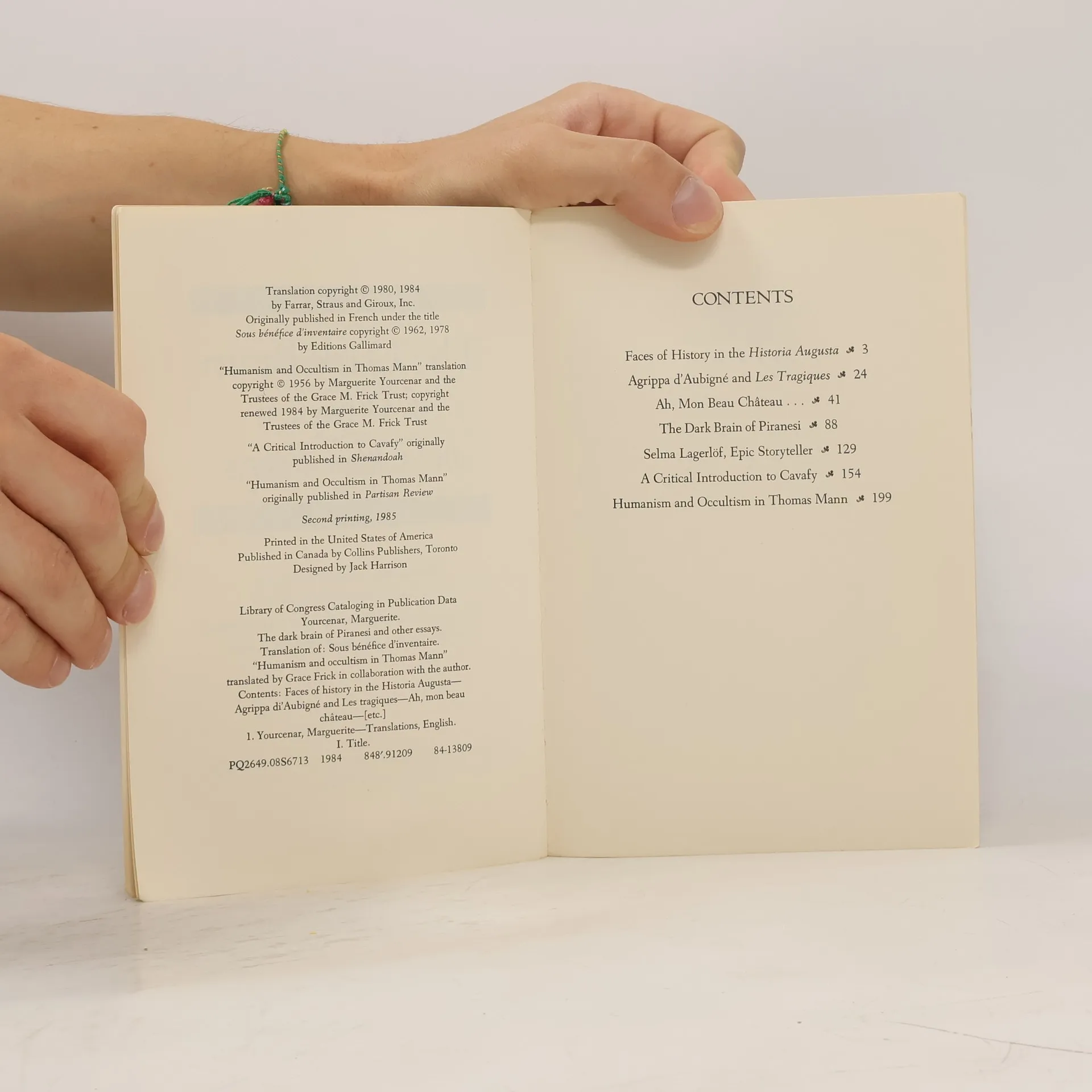
Those who love Marguerite Yourcenar as a novelist will find in her essays the same unusual ability to immerse herself in time to understand the spirit of past eras; or to penetrate "with open eyes" into the inner world of illustrious characters, to discover the intimate motivations behind their historical or creative acts. The essay on Rome during the decadent period, viewed through the lens of the Augustan Chronicle, and the one on the châteaux of Chenonceaux could serve as the basis for historical novels akin to Memoirs of Hadrian. The other studies in this volume seem to be, at least in part, the files of possible biographical novels. Their characters include Agrippa d'Aubigné, a French Renaissance poet and faithful witness of the Reformation; Piranesi, the 18th-century Italian architect and engraver, in whose imaginary prisons one can recognize the universe populated with the fantasies of the human brain; and finally, three important names in modern literature: Selma Lagerlöf, one of the few women among truly great novelists; Constantin Cavafy, the famous poet of modern Greece, whose poems draw from the inexhaustible material of the past; and Thomas Mann, whose work, upon closer inspection, claims its roots in the ancient hermetic tradition that posits that knowledge of the world is only possible "under the aspect of interiority."


Book purchase
The Dark Brain of Piranesi, Marguerite Yourcenar
- Language

- Released
- 1985
- product-detail.submit-box.info.binding
- (Paperback)
Payment methods
We’re missing your review here.
- Subtitle
- And Other Essays
- Language
- English
- Authors
- Marguerite Yourcenar
- Publisher
- Farrar, Straus and Giroux
- Released
- 1985
- Format
- Paperback
- Series
- Rating
- 4 out of 5
- Description
- Those who love Marguerite Yourcenar as a novelist will find in her essays the same unusual ability to immerse herself in time to understand the spirit of past eras; or to penetrate "with open eyes" into the inner world of illustrious characters, to discover the intimate motivations behind their historical or creative acts. The essay on Rome during the decadent period, viewed through the lens of the Augustan Chronicle, and the one on the châteaux of Chenonceaux could serve as the basis for historical novels akin to Memoirs of Hadrian. The other studies in this volume seem to be, at least in part, the files of possible biographical novels. Their characters include Agrippa d'Aubigné, a French Renaissance poet and faithful witness of the Reformation; Piranesi, the 18th-century Italian architect and engraver, in whose imaginary prisons one can recognize the universe populated with the fantasies of the human brain; and finally, three important names in modern literature: Selma Lagerlöf, one of the few women among truly great novelists; Constantin Cavafy, the famous poet of modern Greece, whose poems draw from the inexhaustible material of the past; and Thomas Mann, whose work, upon closer inspection, claims its roots in the ancient hermetic tradition that posits that knowledge of the world is only possible "under the aspect of interiority."