

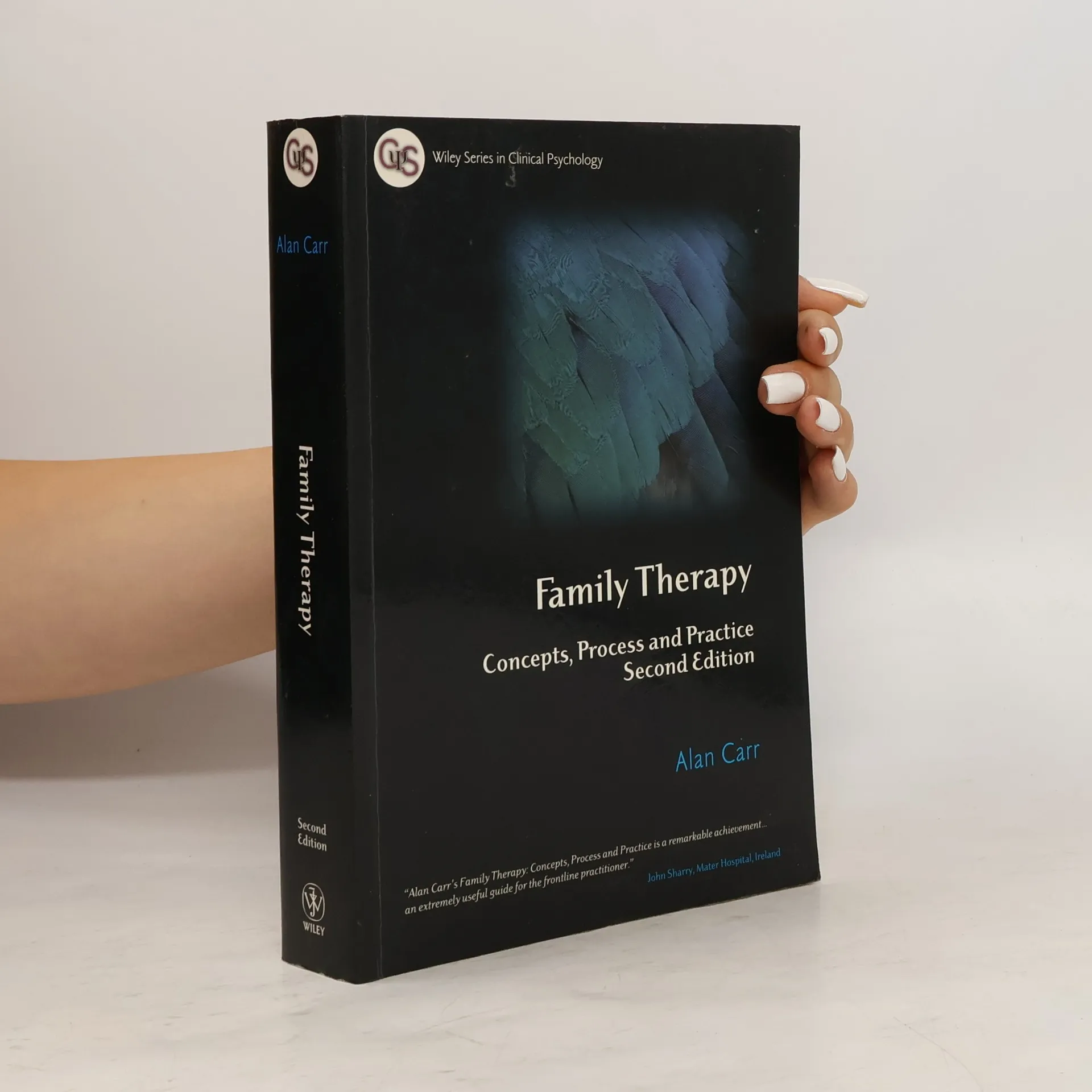


Wiley Series in Clinical Psychology: Family Therapy
Concepts, Process and Practice - Second Edition
Authors
Book rating
More about the book
This highly regarded and well-established textbook includes up-to-date coverage of recent advances in family therapy practice and reviews of the latest research, whilst retaining the popular structure and chapter features of previous editions. It presents a unique, integrative approach to the theory and practice of family therapy. The distinctive style addresses family behaviour patterns, family belief systems and narratives, and broader contextual factors in problem formation and resolution. It shows how the model can be applied to address issues of childhood and adolescence (e.g. conduct problems, drug abuse) and of adulthood (e.g. marital distress, anxiety, depression). Student-friendly features include chapters that begin with a chapter plan and conclude with a summary of key points; theoretical chapters include a glossary of new terms; case studies and further reading suggestions are included throughout.
Book purchase
Wiley Series in Clinical Psychology: Family Therapy, Allen Carr
- Language

- Released
- 2007
- Binding
- (Paperback)
Payment methods
We’re missing your review here.
- Title
- Wiley Series in Clinical Psychology: Family Therapy
- Subtitle
- Concepts, Process and Practice - Second Edition
- Language
- English
- Authors
- Allen Carr
- Publisher
- John Wiley & Sons
- Released
- 2007
- Format
- Paperback
- Pages
- 624
- ISBN10
- 0470014555
- ISBN13
- 9780470014554
- Series
- Rating
- 4.05 out of 5
- Description
- This highly regarded and well-established textbook includes up-to-date coverage of recent advances in family therapy practice and reviews of the latest research, whilst retaining the popular structure and chapter features of previous editions. It presents a unique, integrative approach to the theory and practice of family therapy. The distinctive style addresses family behaviour patterns, family belief systems and narratives, and broader contextual factors in problem formation and resolution. It shows how the model can be applied to address issues of childhood and adolescence (e.g. conduct problems, drug abuse) and of adulthood (e.g. marital distress, anxiety, depression). Student-friendly features include chapters that begin with a chapter plan and conclude with a summary of key points; theoretical chapters include a glossary of new terms; case studies and further reading suggestions are included throughout.