

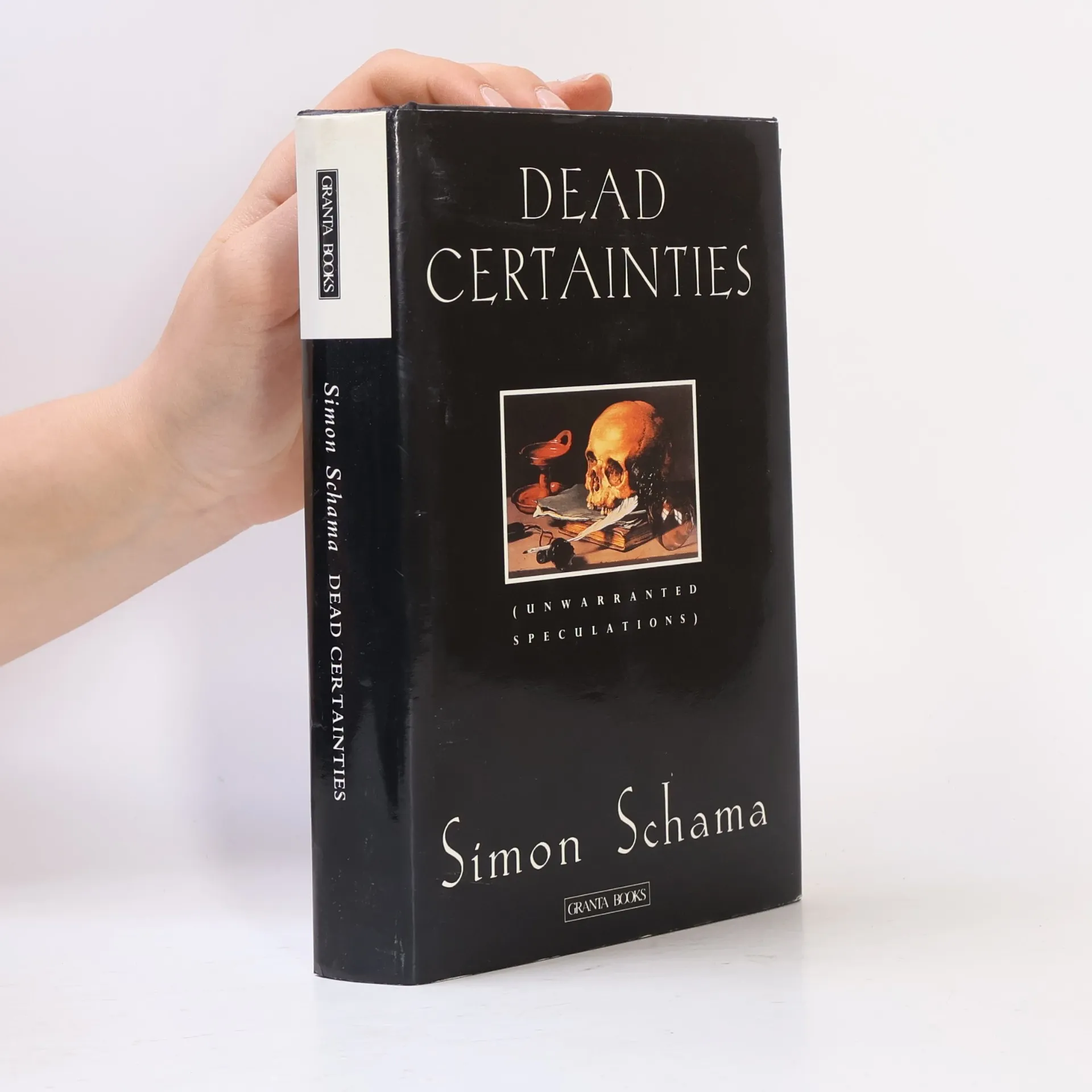
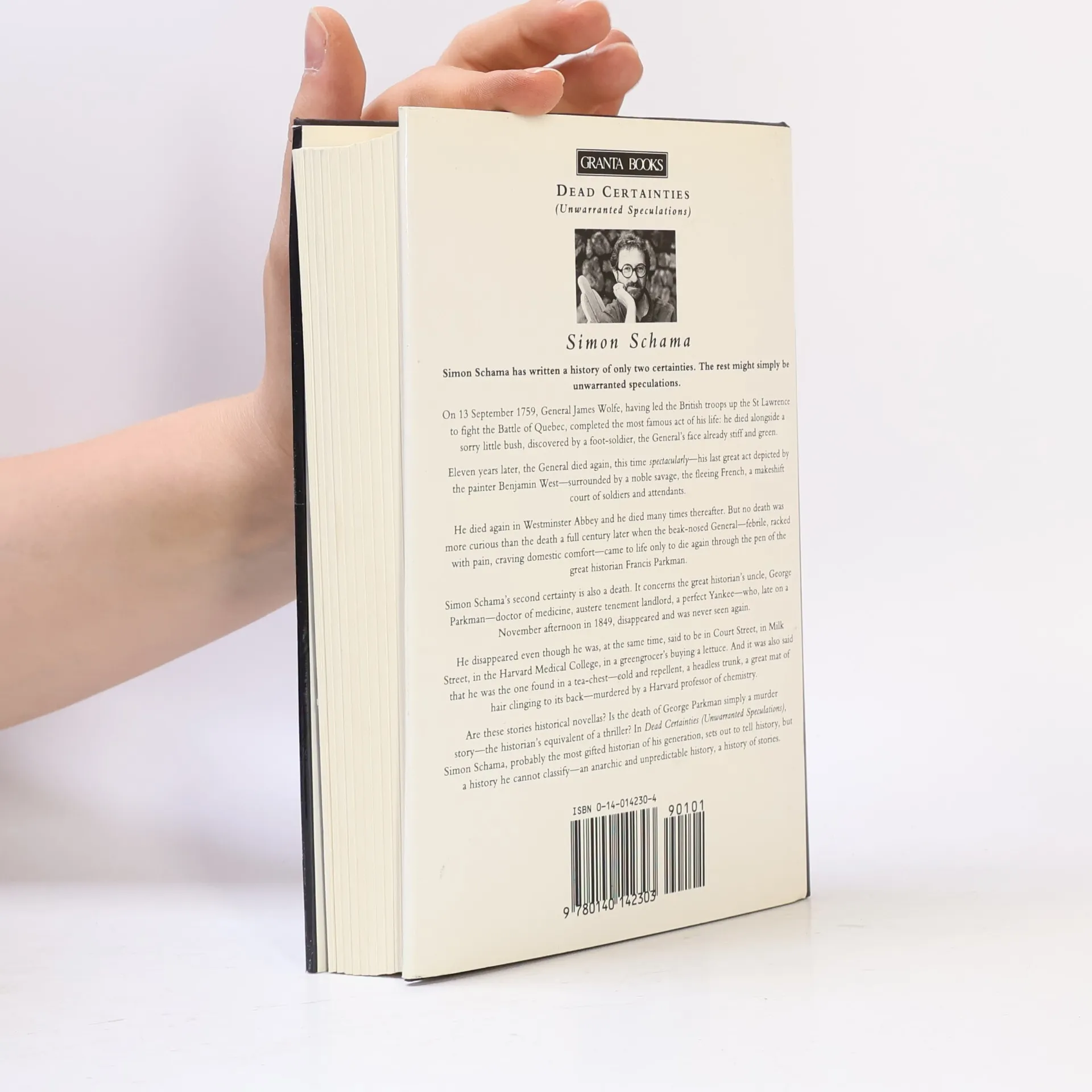
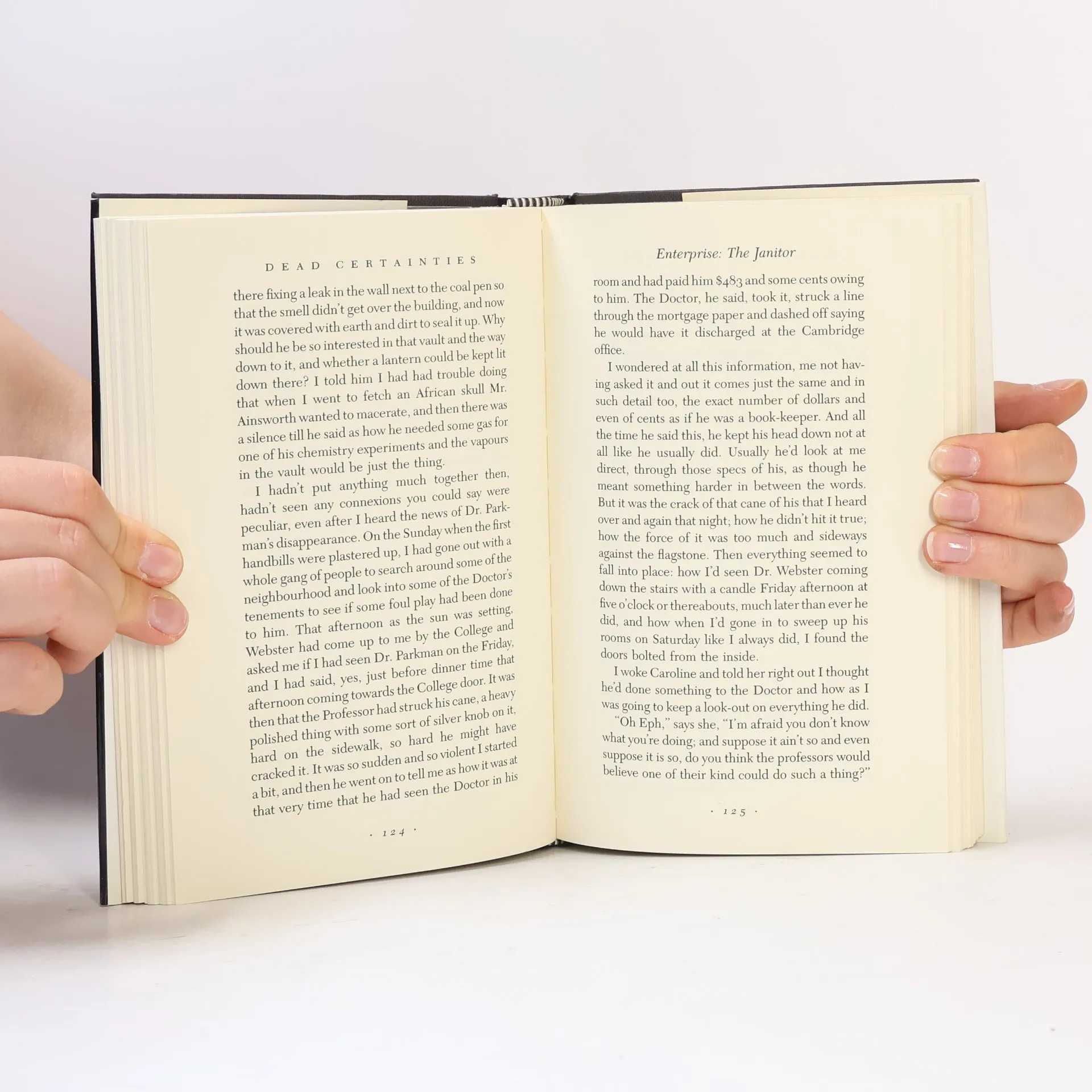
You'll get the exact copy in the photo

Parameters
- 333 pages
- 12 hours of reading
More about the book
On 13 September 1759, General James Wolfe, having led the British troops up the St. Lawrence River to victory in the Battle of Quebec, died on the Heights of Abraham. Schama examines this death, and how Wolfe was made to die again - through the spectacular painting by Benjamin West, and through the writings of the 19th-century historian Francis Parkman. Schama's second death concerns Parkman's uncle, George Parkman of Harvard Medical College, who disappeared in 1849 in mysterious circumstances and who was rumoured to have been murdered by a colleague. Through these incidents, Schama sheds light on the writing of history, the history of history, and the relationship of 'story' to 'history'.
Book purchase
Dead Certainties, Simon Schama
- Language

- Released
- 1991
- product-detail.submit-box.info.binding
- (Paperback),
- Book condition
- Damaged
- Price
- €5.24
Payment methods
No one has rated yet.
- Title
- Dead Certainties
- Subtitle
- Unwarranted Speculations
- Language
- English
- Authors
- Simon Schama
- Publisher
- Granta Books
- Released
- 1991
- Format
- Paperback
- Pages
- 333
- ISBN10
- 0140142304
- ISBN13
- 9780140142303
- Series
- Tags
- Non-Fiction, Historical Themes, Philosophy, 19th century, American History, Canada, University, College
- Description
- On 13 September 1759, General James Wolfe, having led the British troops up the St. Lawrence River to victory in the Battle of Quebec, died on the Heights of Abraham. Schama examines this death, and how Wolfe was made to die again - through the spectacular painting by Benjamin West, and through the writings of the 19th-century historian Francis Parkman. Schama's second death concerns Parkman's uncle, George Parkman of Harvard Medical College, who disappeared in 1849 in mysterious circumstances and who was rumoured to have been murdered by a colleague. Through these incidents, Schama sheds light on the writing of history, the history of history, and the relationship of 'story' to 'history'.