

Sold out
Parameters
- 339 pages
- 12 hours of reading
More about the book
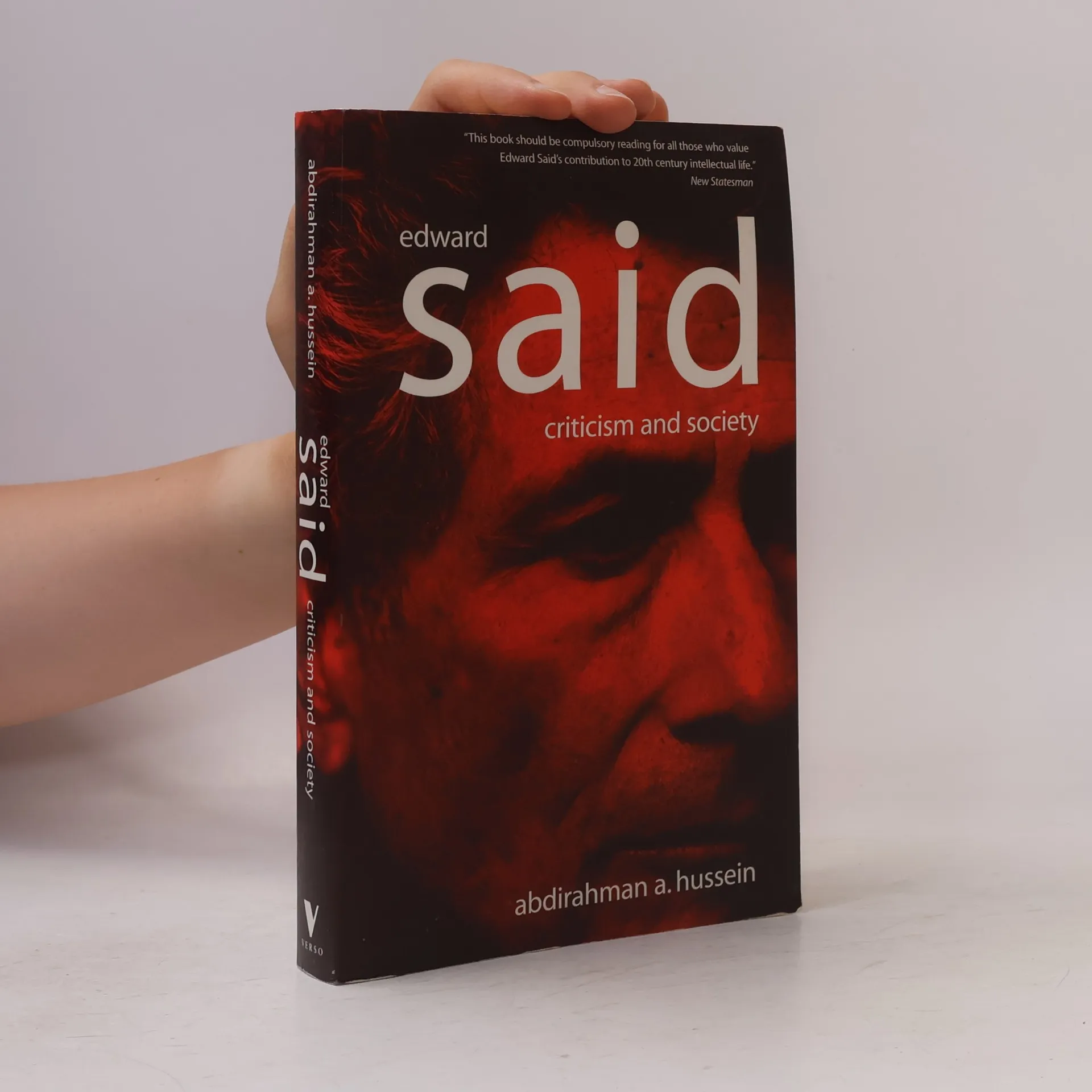
Few public intellectuals have had such a big impact outside the academy as Edward Said.This, the first full-length intellectual biography of the groundbreaking author of Orientalism , reveals some startling observations. Abdirahman Hussein argues that underneath Said’s carefully constructed eclecticism there is a global method in his work. Taking Beginnings as the key text Hussein asserts that the discontinuity of the Palestinian experience informs Said’s entire oeuvre but simultaneously transcends it in a permanent search for a new synthesis. Hussein argues that this informs Said’s approach not only to Conrad, Swift, and Eliot, but also to Lukács, Williams, Gramsci and Adorno.
Book purchase
Edward Said, Abdirahman A. Hussein
- Language

- Released
- 2004
- Binding
- (Paperback)
We’ll email you as soon as we track it down.
Payment methods
No one has rated yet.
- Title
- Edward Said
- Subtitle
- Criticism and Society
- Language
- English
- Authors
- Abdirahman A. Hussein
- Publisher
- Verso
- Released
- 2004
- Format
- Paperback
- Pages
- 339
- ISBN10
- 1859843905
- ISBN13
- 9781859843901
- Series
- Categories
- Tags
- Historical Themes, Business, Psychological Topics, Philosophical Topics, Art, Music Theme, Spirituality, Politics, USA, 20th century, Wars, Memories, Society, England, Feminism, Literary Criticism, Writing, Inspiration, 21st Century, Occultism, Romanticism, Marxism, Revolution, Enlightenment, Exile, Russian History, Literary Theory
- Description
- Few public intellectuals have had such a big impact outside the academy as Edward Said.This, the first full-length intellectual biography of the groundbreaking author of Orientalism , reveals some startling observations. Abdirahman Hussein argues that underneath Said’s carefully constructed eclecticism there is a global method in his work. Taking Beginnings as the key text Hussein asserts that the discontinuity of the Palestinian experience informs Said’s entire oeuvre but simultaneously transcends it in a permanent search for a new synthesis. Hussein argues that this informs Said’s approach not only to Conrad, Swift, and Eliot, but also to Lukács, Williams, Gramsci and Adorno.