



More about the book
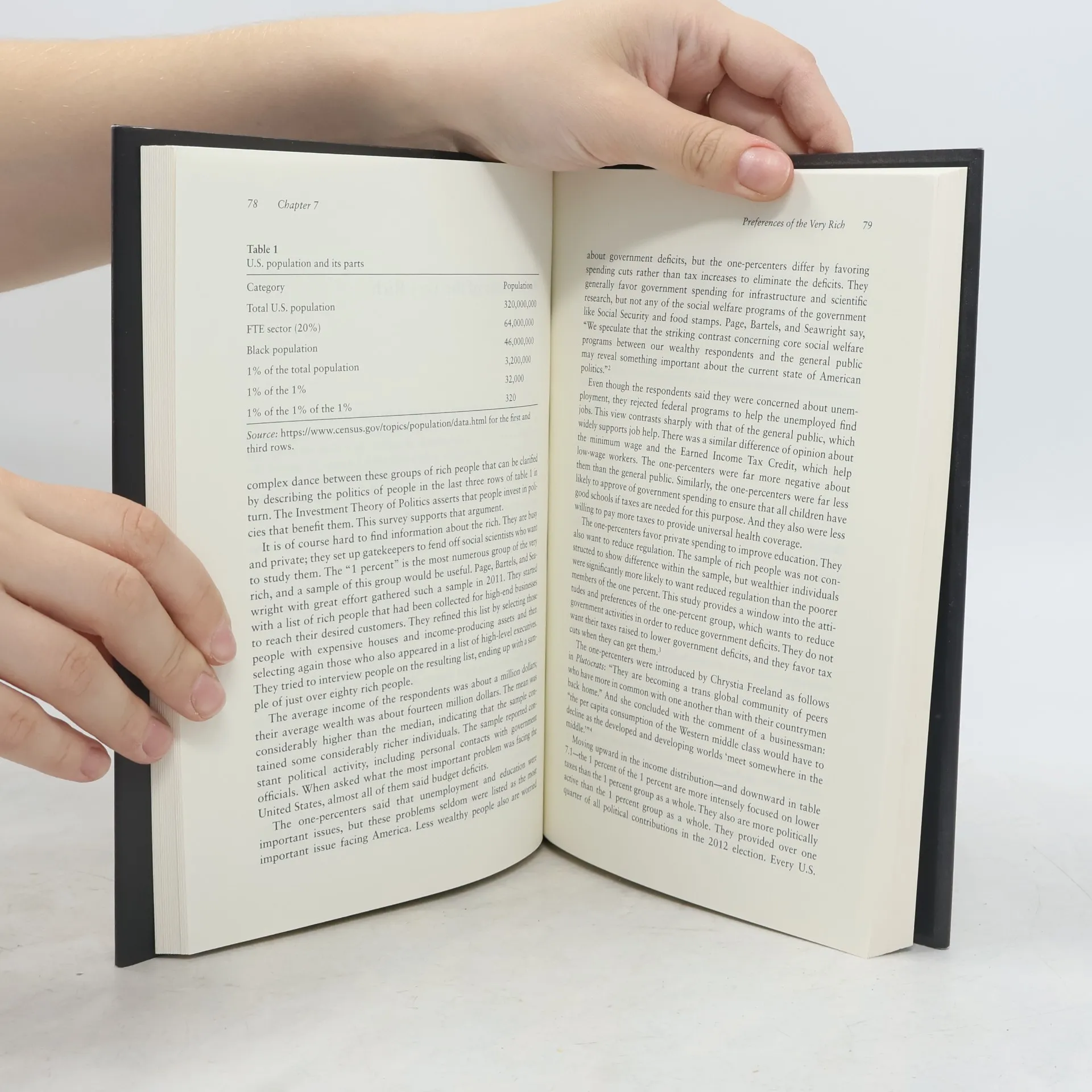
The United States is becoming a nation of rich and poor, with few families in the middle. In this book, MIT economist Peter Temin offers an illuminating way to look at the vanishing middle class. Temin argues that American history and politics, particularly slavery and its aftermath, play an important part in the widening gap between rich and poor. Temin employs a well-known, simple model of a dual economy to examine the dynamics of the rich/poor divide in America, and outlines ways to work toward greater equality so that America will no longer have one economy for the rich and one for the poor.Many poorer Americans live in conditions resembling those of a developing country -- substandard education, dilapidated housing, and few stable employment opportunities. And although almost half of black Americans are poor, most poor people are not black. Conservative white politicians still appeal to the racism of poor white voters to get support for policies that harm low-income people as a whole, casting recipients of social programs as the Other -- black, Latino, not like us. Moreover, politicians use mass incarceration as a tool to keep black and Latino Americans from participating fully in society. Money goes to a vast entrenched prison system rather than to education. In the dual justice system, the rich pay fines and the poor go to jail.
Book purchase
The Vanishing Middle Class, Peter Temin
- Language

- Released
- 2017
- product-detail.submit-box.info.binding
- (Hardcover),
- Book condition
- Very Good
- Price
- €10.99
Payment methods
No one has rated yet.
- Title
- The Vanishing Middle Class
- Subtitle
- Prejudice and Power in a Dual Economy
- Language
- English
- Authors
- Peter Temin
- Publisher
- The MIT Press
- Released
- 2017
- Format
- Hardcover
- Pages
- 234
- ISBN10
- 0262036169
- ISBN13
- 9780262036160
- Series
- Tags
- Non-Fiction, Social Sciences, Politics, Economics, USA, Sociology, Political Theories, Social Justice, Poverty, Economic Policy, Discrimination, Political Economy, Macroeconomics, Minorities, Social Classes
- Description
- The United States is becoming a nation of rich and poor, with few families in the middle. In this book, MIT economist Peter Temin offers an illuminating way to look at the vanishing middle class. Temin argues that American history and politics, particularly slavery and its aftermath, play an important part in the widening gap between rich and poor. Temin employs a well-known, simple model of a dual economy to examine the dynamics of the rich/poor divide in America, and outlines ways to work toward greater equality so that America will no longer have one economy for the rich and one for the poor.Many poorer Americans live in conditions resembling those of a developing country -- substandard education, dilapidated housing, and few stable employment opportunities. And although almost half of black Americans are poor, most poor people are not black. Conservative white politicians still appeal to the racism of poor white voters to get support for policies that harm low-income people as a whole, casting recipients of social programs as the Other -- black, Latino, not like us. Moreover, politicians use mass incarceration as a tool to keep black and Latino Americans from participating fully in society. Money goes to a vast entrenched prison system rather than to education. In the dual justice system, the rich pay fines and the poor go to jail.