



Series
More about the book
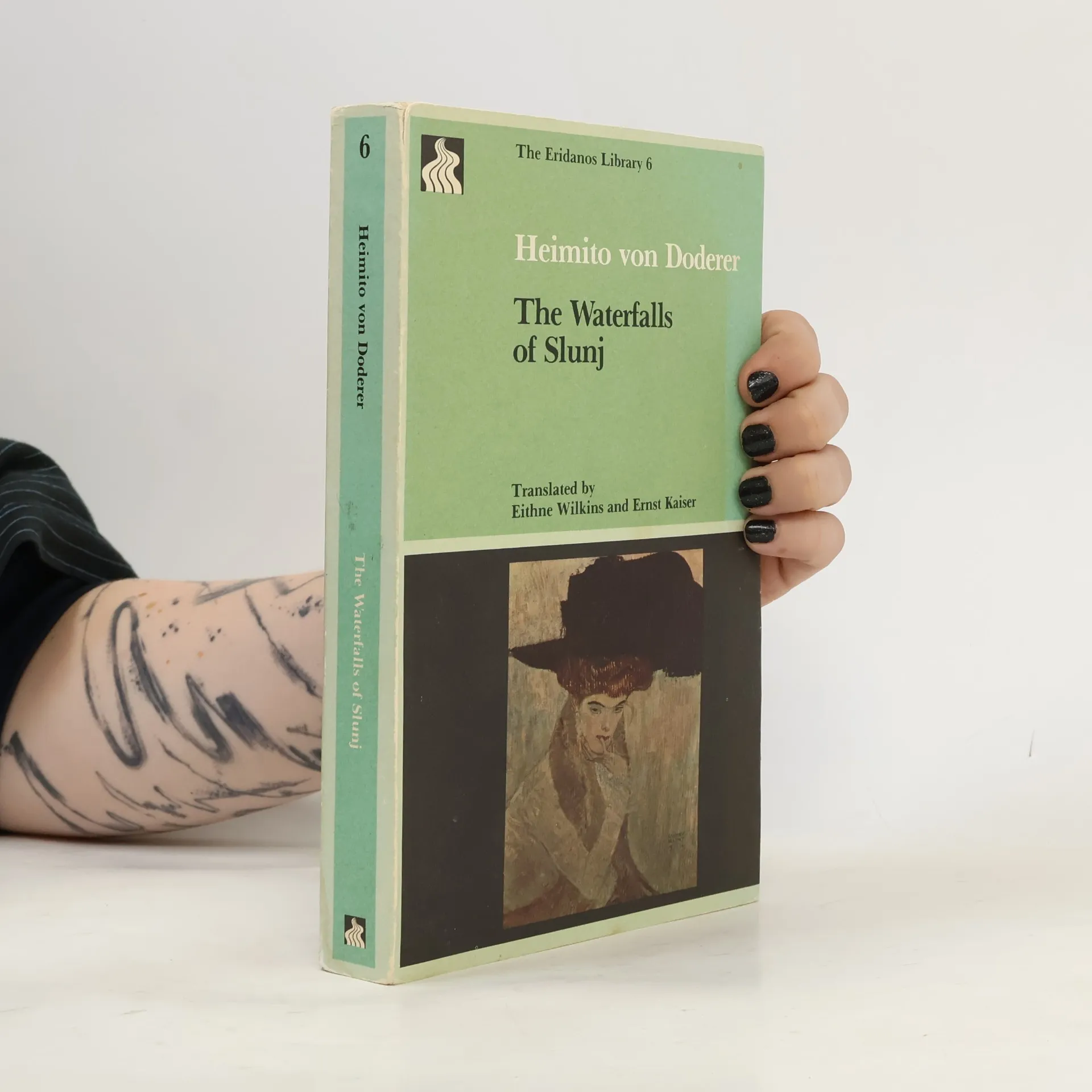
This book, the final and most mature work of the great Austrian novelist, revolves around the father and son team of English industrialists, Robert and Donald Clayton. The Claytons open a branch office of their business in Vienna, the center of that incredibly varied and complex universe that was the Austro-Hungarian Empire before World War I. Their ensuing social and personal entanglements furnish the materials of a superbly civilized family chronicle (quite the opposite from Sun & Moon's recent von Doderer novel, The Merowingians), whose central symbol is a gigantic, thundering mass of water -- a force that may be life-giving or terribly destructive. Beneath a staunchly bourgeois surface, von Doderer's story telling is heavily tinged with ironic social commentary and suffused with acute, post-Freudian psychology.

Book purchase
The Eridanos Library - 6: The Waterfalls of Slunj, Heimito von Doderer, Eithne Wilkins, Ernst Kaiser
- Language

- Released
- 1987
- Binding
- (Paperback),
- Book condition
- Damaged
- Price
- €21.14
Payment methods
We’re missing your review here.
- Language
- English
- Publisher
- Eridanos Press
- Released
- 1987
- Format
- Paperback
- Pages
- 406
- ISBN10
- 0941419118
- ISBN13
- 9780941419116
- Series
- Roman No. 7
- Tags
- Fiction, Historical Themes, German Literature, 20th century, Austria, Vienna, Austrian Literature
- Rating
- 3.95 out of 5
- Description
- This book, the final and most mature work of the great Austrian novelist, revolves around the father and son team of English industrialists, Robert and Donald Clayton. The Claytons open a branch office of their business in Vienna, the center of that incredibly varied and complex universe that was the Austro-Hungarian Empire before World War I. Their ensuing social and personal entanglements furnish the materials of a superbly civilized family chronicle (quite the opposite from Sun & Moon's recent von Doderer novel, The Merowingians), whose central symbol is a gigantic, thundering mass of water -- a force that may be life-giving or terribly destructive. Beneath a staunchly bourgeois surface, von Doderer's story telling is heavily tinged with ironic social commentary and suffused with acute, post-Freudian psychology.