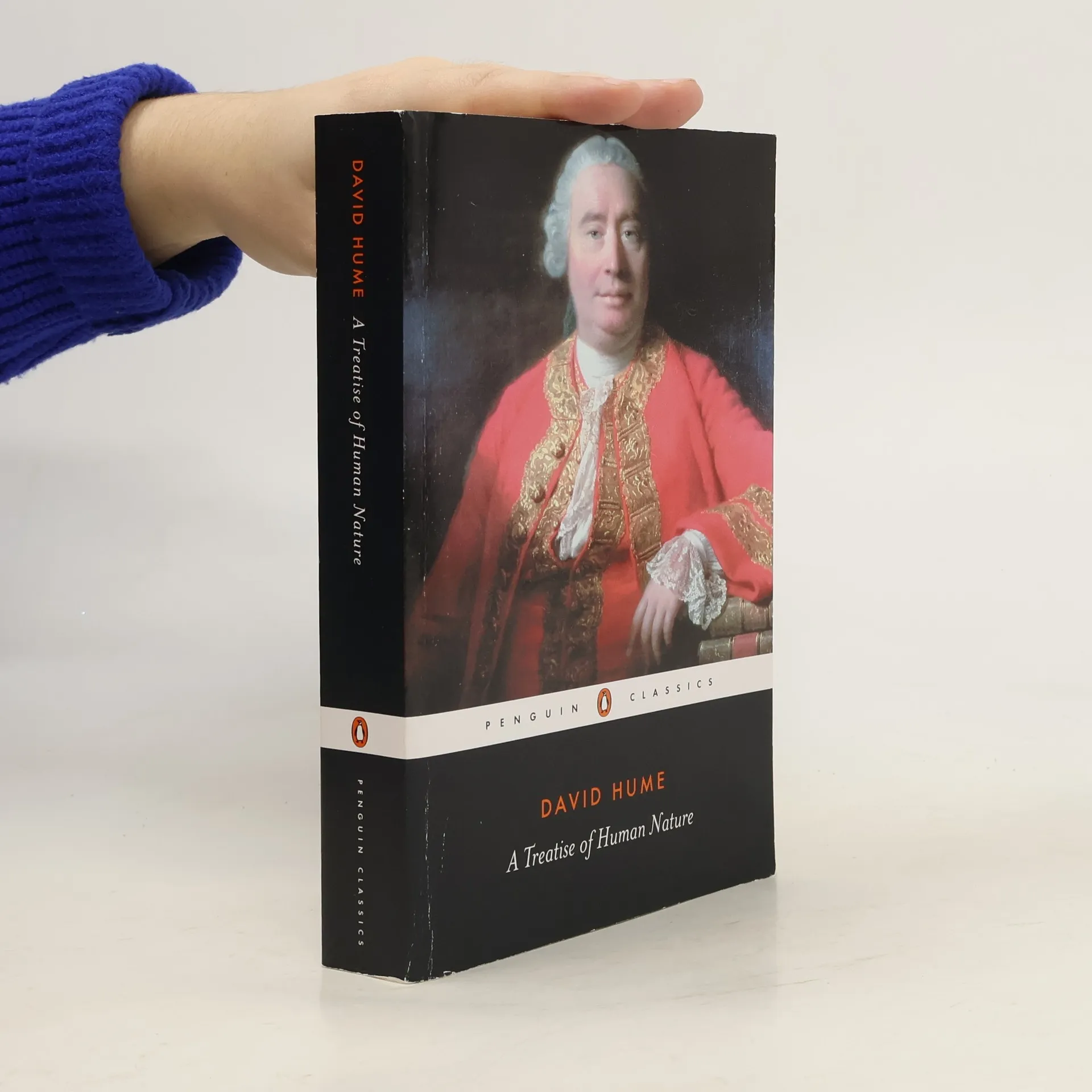
This foundational philosophical work delves into the very bedrock of the human mind and behavior. It rigorously examines our perceptions, emotions, and moral principles, championing an experimental approach to understanding ourselves. Readers will encounter a profound exploration of what constitutes human nature, stripped bare of prior assumptions. It remains a cornerstone for grasping the complexities of human experience.
The treatise explores the autonomy of human passions and moral nature, arguing against reason's influence. In the second volume, Hume transitions from skepticism to a more structured moral theory aligned with the sentimentalist school of the eighteenth century. Key topics include the nature of pride, humility, love, hatred, and the distinctions between virtue and vice, justice and injustice. This work delves into the complexities of human emotions and ethical considerations, offering a comprehensive view of Hume's moral philosophy.
One of the most significant works of Western philosophy, Hume's Treatise was published in 1739-40, before he was thirty years old. A pinnacle of English empiricism, it is a comprehensive attempt to apply scientific methods of observation to a study of human nature, and a vigorous attack upon the principles of traditional metaphysical thought. With masterly eloquence, Hume denies the immortality of the soul and the reality of space; considers the manner in which we form concepts of identity, cause and effect; and speculates upon the nature of freedom, virtue and emotion. Opposed both to metaphysics and to rationalism, Hume's philosophy of informed scepticism sees man not as a religious creation, nor as a machine, but as a creature dominated by sentiment, passion and appetite. For more than seventy years, Penguin has been the leading publisher of classic literature in the English-speaking world. With more than 1,700 titles, Penguin Classics represents a global bookshelf of the best works throughout history and across genres and disciplines. Readers trust the series to provide authoritative texts enhanced by introductions and notes by distinguished scholars and contemporary authors, as well as up-to-date translations by award-winning translators.
David Hume war zeitlebens unzufrieden mit der Breitenwirkung seiner Schriften. Er verfasste deshalb einige Neufassungen seiner Werke, so 1757 mit der »Dissertation on the Passions« eine von Buch II seines berühmten »Treatise of Human Nature«. Inhaltlich geht es um die Entstehung von Gefühlen und Humes Handlungstheorie. Mit bemerkenswerter Kreativität versucht er, die experimentelle Methode der Naturwissenschaften auf den Bereich der menschlichen Gefühlsregungen zu übertragen. Gerade seine Kürzungen lassen dabei die wesentlichen Punkte seiner Affekttheorie schärfer hervortreten. Dies verstand Hume nicht nur als inhaltlichen, sondern vor allem als stilistischen Fortschritt, der jedem Leser zugutekommt. Sprachen: Deutsch, Englisch