


Origins of Human Communication
- 408 pages
- 15 hours of reading
Presents an empirically based theory of the evolutionary origins of human communication that challenges the dominant Chomskian view
This lecture series delves into profound questions at the intersection of philosophy of mind, logic, and linguistics. It features cutting-edge research and insightful essays from leading global thinkers. Readers can expect stimulating discussions on consciousness, language, and the nature of knowledge. Each volume offers a unique perspective on pivotal issues within these fascinating disciplines.


Presents an empirically based theory of the evolutionary origins of human communication that challenges the dominant Chomskian view
Schillernd, enigmatisch, schwer zu fassen: Das Bewusstsein gilt als eines der großen Rätsel unserer Zeit. Viele, darunter auch Philosophen, behaupten, es sei unmöglich, es wie andere Phänomene zu erforschen. Bewusstsein sei »etwas anderes« oder »mehr« als bloße Biologie und würde sich einer wissenschaftlichen Erklärung entziehen. Daniel C. Dennett, ein prominenter Widersacher dieser Auffassung, plädiert leidenschaftlich für eine wissenschaftliche Untersuchung des Bewusstseins und ruft seine Zunft auf, sich diesem Thema zu widmen. Er argumentiert, dass Bewusstsein Teil unserer biologischen Ausstattung ist und mit naturwissenschaftlichen Methoden erforscht werden kann. Die Herausforderungen dabei kommen vor allem aus der philosophischen Tradition, die an subjektiven Erlebnisqualitäten festhält, die sich angeblich einer objektiven Erklärung entziehen. Dennett beleuchtet die zentralen Debatten über den Status des Bewusstseins, dekonstruiert berühmte philosophische Gedankenexperimente und fordert Gegner wie John Searle oder David Chalmers heraus. Schritt für Schritt entzaubert er die Illusionen, die aus einer festgefahrenen Haltung gegenüber intuitiven Vorstellungen resultieren, und zeigt auf, dass diese Träume die Erforschung des Bewusstseins behindern, anstatt sie zu fördern.
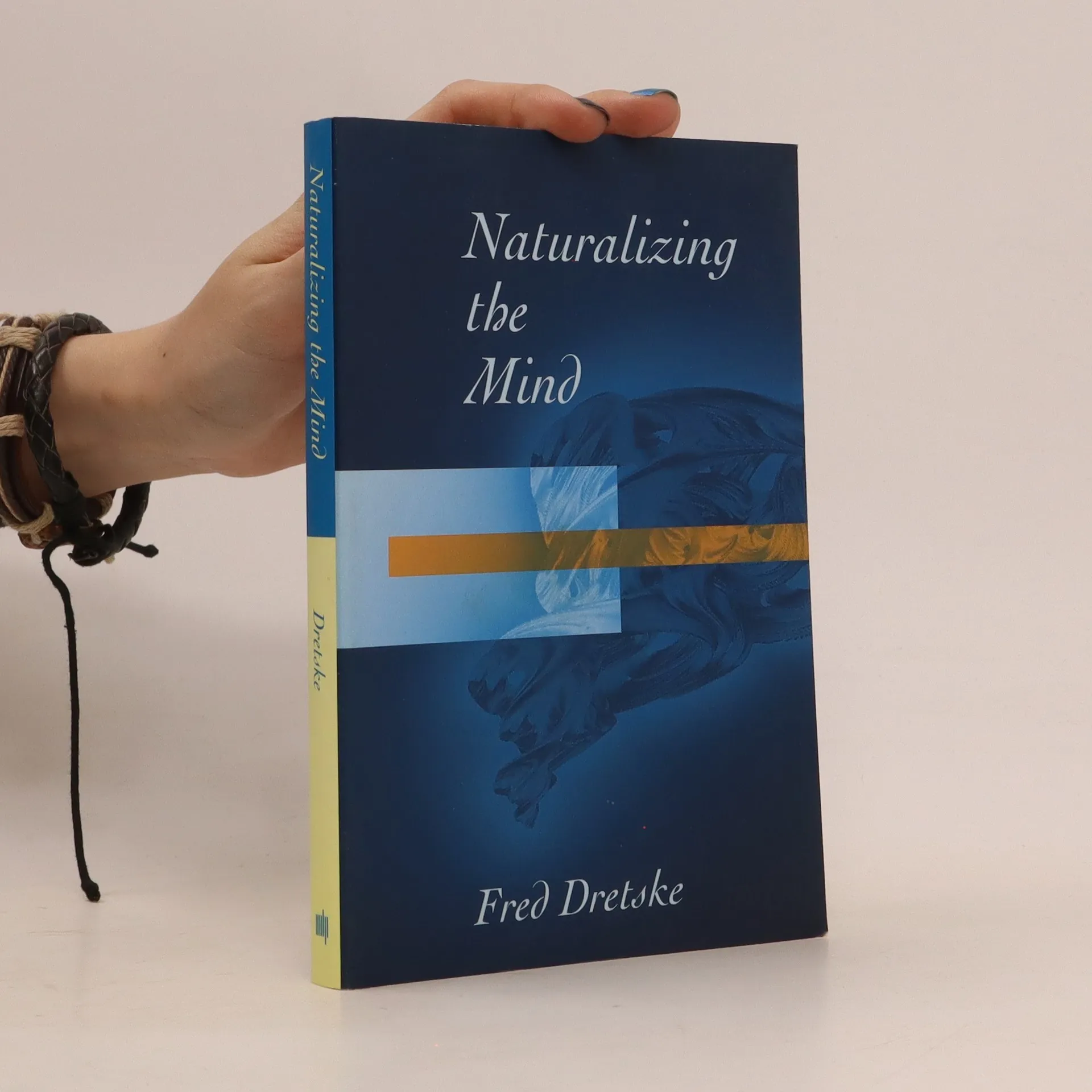
Naturalizing the Mind skillfully develops a representational theory of the qualitative, the phenomenal, the what-it-is-like aspects of the mind that have defied traditional forms of naturalism. How can the baffling problems of phenomenal experience be accounted for? In this provocative book, Fred Dretske argues that to achieve an understanding of the mind it is not enough to understand the biological machinery by means of which the mind does its job. One must understand what the mind's job is and how this task can be performed by a physical system—the nervous system. Naturalizing the Mind skillfully develops a representational theory of the qualitative, the phenomenal, the what-it-is-like aspects of the mind that have defied traditional forms of naturalism. Central to Dretske's approach is the claim that the phenomenal aspects of perceptual experiences are one and the same as external, real-world properties that experience represents objects as having. Combined with an evolutionary account of sensory representation, the result is a completely naturalistic account of phenomenal consciousness. * Not for sale in France or Belgium.