
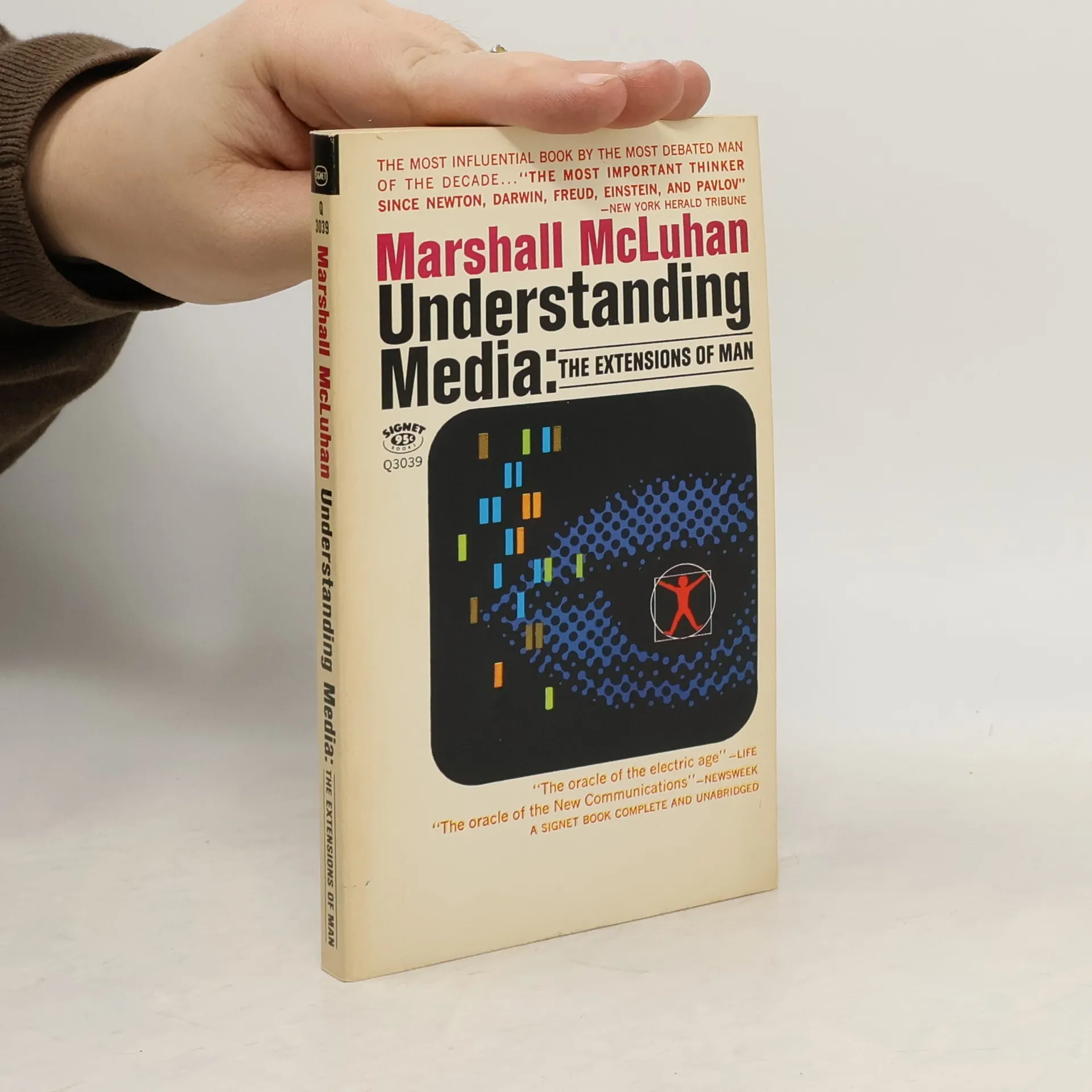
Terms and phrases such as "the global village" and "the medium is the message" are now part of the lexicon, and McLuhan's theories continue to challenge our sensibilities and our assumptions about how and what we communicate. This reissue of Understanding Media marks the thirtieth anniversary (1964-1994) of Marshall McLuhan's classic expose on the state of the then emerging phenomenon of mass media. Terms and phrases such as "the global village" and "the medium is the message" are now part of the lexicon, and McLuhan's theories continue to challenge our sensibilities and our assumptions about how and what we communicate. There has been a notable resurgence of interest in McLuhan's work in the last few years, fueled by the recent and continuing conjunctions between the cable companies and the regional phone companies, the appearance of magazines such as WiRed, and the development of new media models and information ecologies, many of which were spawned from MIT's Media Lab. In effect, media now begs to be redefined. In a new introduction to this edition of Understanding Media, Harper's editor Lewis Lapham reevaluates McLuhan's work in the light of the technological as well as the political and social changes that have occurred in the last part of this century.
Lewis H. Lapham Books
January 8, 1935 – July 23, 2024
Lewis Lapham's work delves into politics and current affairs, fearlessly exploring deeper themes and connections. His editorial work, notably at Harper's Magazine and later founding Lapham's Quarterly, showcased his talent for bringing together diverse authors and ideas. He emphasizes clarity and analytical depth, offering readers a comprehensive view of selected topics. His approach highlights the importance of discourse and linking historical perspectives with contemporary issues.


Age of Folly
- 384 pages
- 14 hours of reading
America's leading essayist on the frantic retreat of democracy, in the fire and smoke of the war on terror